---
title: "Choose LIFE HABITS That Feel Good — and Do Good"
author: "Written by a real living being"
url: "https://books.mutin.life/7/choose-life-habits-that-feel-good-and-do-good"
---
March 1st, 2025
Last updated: February 12th, 2026 (_AI and Education_)
_"To those who love wisdom, and prefer evidence to fantasies."_ -
Yuval Noah Harari
-----------------------------------------------------------------------------
# Why This Book
Feeling healthy, fitter, with more energy and clarity of mind, and spending more time with our loved ones — that is being happier.
Living in coherence, respecting the Earth's resources that life on this planet depends on — that is feeling serenity.
This book lays out the life habits worth adopting that do us good. For ourselves. And for the planet alike.
Feeling, from within, the benefits of these lifestyle changes is the best reward. And the best motivation for adopting this new way of living.
Why anchor all this in life habits? Because it is the only method that works.
Because the effects then last over time, and because we no longer need to think about it. It has become automatic.
Having these ways of living become habits — reflexes that no longer require thought or effort — is the only method that works. We act on autopilot. It even becomes pleasant, because we feel better in our bodies, in our minds, in inner coherence.
Life habits are the only method that works.
I am writing this book first and foremost to convince and motivate myself to change my own life habits.
Even though a number of these actions have already been in place in my life for more than 10 years. Like eating food produced as close as possible to where I live, without chemicals, almost entirely unprocessed, with as little packaging as possible. Like no longer flying. Like living locally, hardly ever travelling outside the French department where I live. And I have always preferred pedalling to getting around by car.
I nevertheless still have many life habits left to change, some of which are already underway.
In everything I write in this book, I fully include myself. I still have so many changes to make in my daily life. Changing a habit takes time. It is hard at first; it requires reflection and concentration. But once the reflex is in place, it's won — no more time needs to be spent on it, it happens by itself, and it is pure happiness.
Finally, many of the people close to me — family, friends, acquaintances — are even further behind me on this path, and continue to live a rather immoderate lifestyle. And yet I love them, unconditionally. And I will never stop loving them. I will never stop seeing them, communicating with them, undertaking projects with them, living with them.
I know what it is to be a human being — this book is not written by an artificial intelligence — living as a human is far from easy every day, especially when we face suffering.
In any case, it is certainly not by hating others that we will increase the chances of them changing their behaviour. On the contrary, hatred only breeds more opposition; hatred only generates yet more hatred in return. There is no chance that hating people pushed away in this manner will make them want to follow the injunctions of those who reject them.
Let us stay united — we need cohesion to get through this.
Important note: the written word can be misinterpreted or misunderstood. That is often the tragedy of writing.
Indeed, 93% of the content of a message is conveyed through:
- body language (55%)
- tone of voice (38%)
Only 7% of the message is conveyed through words.
Nothing replaces face-to-face communication.
Only face-to-face communication offers the best chances for a message to be understood and conveyed as closely as possible to what its author meant.
These pages will, moreover, be updated over time. For who never makes mistakes over the course of their life? A human being learns and evolves continuously. I will correct errors of direction, I will add new ideas, new life habits that do us good. I will therefore adjust the content of these pages as I go along.
Finally, the sooner we change our life habits, the sooner we will feel good and happy.
More lives will also be saved in the future.
Indeed, underground oil stocks exist in finite quantities, and world oil production already passed its peak in 2018. World oil production will be halved by 2050. Will oil-producing countries then decide to keep what remains for themselves, ending exports to countries with no oil under their soil, such as Europe?
Without oil, there is, among other things, no more transport between the four corners of the world. Without the transport of the various ores scattered across the four corners of the Earth, we no longer build or manufacture much of anything.
On top of which comes climate disruption, caused by greenhouse gas emissions and now irreversible, subjecting us every day to more storms, floods, droughts and fires.
Without oil, and under climate conditions that ravage crops, how will we organise ourselves to produce and transport enough food to feed everyone?
It seems vital to change our ways of living starting today, in order to be as ready as possible for the day when not a single drop of oil is imported into Europe anymore. Otherwise many of us risk dying of hunger and fighting to survive.
This is all the more important because, by definition, democracy is a bottom-up system: elected officials move when the base moves. For the top of a democracy to change, the base must change — that is, each one of us must change.
Living in a time of peace and democracy is a stroke of luck.
If feeding ourselves becomes a daily struggle, what will remain of peace and democracy?
The sooner we set a turn in our life habits in motion, the greater the number of lives saved in the future will be.
The sooner, too, we will be happy to feel so healthy thanks to a wholesome diet, to devote more time to our loved ones by owning fewer material things to manage, and to feel the inner coherence brought about by this more measured way of life.
Let us choose the life habits that do us good.
The Situation as It Is
# FACTS
-----------------------------------------------------------------------------
## FACT: underground oil stocks exist in finite quantities
The stocks of oil, gas, coal, and ores present underground exist in finite quantities.
These stocks are being emptied further and further every year.
Oil takes 40 to 400 million years to be produced naturally underground.
The peak of world production of oil, and of certain ores, has already been passed.
Indeed, the quantity of oil extracted worldwide has been declining since 2018.
By 2050, world oil production will be halved.
Which means that, in 25 years, the quantity of oil imported into Europe will be divided by a number between 2 and 20. Because oil-producing countries will most likely want to keep what remains for themselves.
The peak of gas production is expected around 2030.
The European Union imports 97% of its oil and 90% of its gas. Because Europe has no oil under its soil. Or too little and too scattered for it to be profitable to extract.
Almost any product we buy today required oil and at least one ore to manufacture.
Without oil, the manufacturing of almost every product we use today founders.
Without oil, a great number of machines stop running, including trucks, ships and planes: 98% of everything that rolls, flies or sails uses oil.
Without oil, there is therefore no more transport. There are no more exchanges between the four corners of the planet.
The end of globalisation.
Without oil, tractors no longer work, and agricultural production plummets.
Thanks to tractors and fertilisers, cereal yields in the Beauce region were multiplied by 6 to 8 between 1945 and 1975.
Thanks to oil, agricultural yields were multiplied many times over and caused the world population to explode, going from 1 billion to 8 billion in the space of 200 years.
In 1850, before the advent of oil, we managed to feed 1 billion people.
Today, without oil, how do we feed 8 billion individuals?
If we want to save at least a few thousand lives from famine in the coming decades, it is urgent to relocalise food production starting today.
-----------------------------------------------------------------------------
## FACT: too many greenhouse gases => storms and arid soils => falling harvests
The more the quantities of greenhouse gases increase, the more storms, floods, fires and droughts they generate.
The quantities of greenhouse gases already emitted into the atmosphere, which take thousands of years to disappear, are already too great and are already causing increasingly frequent extreme weather that ravages crops.
The area of land turned arid keeps growing.
Under these conditions, how can we manage to grow enough to feed the current population?
It is urgent to anticipate and to set in motion, starting today, a pivot to reduce the emissions of these greenhouse gases:
- Produce as locally as possible, depending as little as possible on resources coming from far away.
Because transport emits too much CO2 into the atmosphere.
- Stop deforestation. Replant tree species resistant to the climate to come.
Because trees absorb CO2 and reduce soil aridity by retaining water through their roots.
- Consume less, by buying only the essentials for living.
Every product or service we buy required oil and the extraction of at least one ore, contributing to the pollution of the natural resources indispensable to all life on this planet.
Mining discharges heavy metals into the water, which end up in the water we drink, and in the animals and plants we eat: arsenic, lead, mercury, cadmium...
*"We are living through the sixth mass extinction, caused essentially by ourselves…"*
Yann Arthus-Bertrand - Nature
*"We can convince ourselves of the inevitable outcome our current thoughtless practices may lead us to simply by examining the many past societies that destroyed themselves by undermining the foundations of their own subsistence, even though they possessed far less powerful means of self-destruction than ours."*
Jared Diamond - The Third Chimpanzee
*"Our refusal to take our history into account condemns us to repeat our past mistakes in ever more dangerous ways."*
Jared Diamond - The Third Chimpanzee
-----------------------------------------------------------------------------
## References - All the explanations here:
-----------------------------------------------------------------------------
The essentials summed up by Jean-Marc Jancovici (*world oil production halved by 2050: the last 4 minutes of the presentation at 1:02:30 in the video*):
+4°C over 10,000 years brought Europe out of the ice => +4°C in 100 years will be unlivable (in French)
-----------------------------------------------------------------------------
Report from Météo France: more heatwaves, intense rainfall, arid soils => with disastrous agricultural yields, how do we feed the population?
+2°C in 2030 => +2.7°C in 2050 => +4°C in 2100 in France (in French)
-----------------------------------------------------------------------------
Depletion of underground hydrocarbons and a disrupted climate: the great leap into the unknown - Figures interview, June 2026 (in French)
Energy = production, hence redistribution of wealth through social
benefits => Shrinking the energy system = impoverishment of the population
The time is no longer for asking how to have more. It is for asking how to keep the largest fraction of what we already have. (in French)
-----------------------------------------------------------------------------
Graphic novel "World Without End : An Illustrated Guide to the Climate Crisis" - Jean-Marc Jancovici - Christophe Blain (USA edition)
Graphic novel "World Without End" - Jean-Marc Jancovici - Christophe Blain (GB edition)
Graphic novel "Le Monde Sans Fin" - original French edition
-----------------------------------------------------------------------------
Graphic novel "Ressources - Un défi pour l'humanité" ("Resources - A Challenge for Humanity") - Philippe Bihouix - Vincent Perriot (in French, no English edition yet)
-----------------------------------------------------------------------------
Graphic novel "Le paradoxe de l'abondance" ("The Paradox of Abundance") - Hugo Clément (in French, no English edition yet)
-----------------------------------------------------------------------------
Documentary "Nature" - Yann Arthus-Bertrand
-----------------------------------------------------------------------------
Can we still drink tap water? - Le monde de Jamy (in French)
-----------------------------------------------------------------------------
Our children will remember these years as a period of unheard-of luxury and tremendous waste, when we amused ourselves debating pension reform - Gaspard Koenig (in French)
Habitability thus becomes the foundation of all other values: what good is freedom if we no longer have access to pure water, healthy soil, a viable climate? - Gaspard Koenig (in French)
And what if there were no end? What if, heatwave after heatwave, our environment became literally unlivable?
A world where plants die, where pavements burn, where rails expand, where asphalt melts, where cliffs collapse, where nuclear power plants shut down.
Of course, we knew.
But it is one thing to know the data of climatology, another to experience its effects in one's own flesh.
Eco-anxiety is not a psychological disorder but a healthy and rational reaction.
Once fully aware of one's actions and their consequences, who can still take a plane for a week's holiday or ask an AI to draw a duck?
Who can willingly contribute to the worsening of their own living conditions?
Every milligram of carbon counts. No one can shirk their responsibilities.
Before claiming to govern the country, the least precaution is to make sure it still exists in 50 years. - Gaspard Koenig (in French)
-----------------------------------------------------------------------------
The quantities of fossil energy underground will soon be depleted - Nate Hagens
The Great Simplification - Nate Hagens
-----------------------------------------------------------------------------
The system persists, not through violence alone, but through the participation of ordinary people in their daily rituals, which they know to be false
-----------------------------------------------------------------------------
Sur le front - The aberrations of free trade -
Hugo Clément (in French)
-----------------------------------------------------------------------------
Goliath - The pesticide lobbies' grip on the European Parliament - Film by Frédéric Tellier
-----------------------------------------------------------------------------
Jean-Marc Jancovici's hearing at the French National Assembly, 2022 (in French)
Jancovici's hearing at the French Senate, 2024 (in French)
Jancovici's hearing at the French National Assembly, 2025 - For a low-carbon, resilient and prosperous agriculture (in French)
-----------------------------------------------------------------------------
Hugo Décrypte - Is humanity heading for the wall? (in French)
Hugo Décrypte - Will humanity pull through? (in French)
-----------------------------------------------------------------------------
Jancovici's channel (in French)
Jancovici's posts, roughly one every day
Jancovici's website
-----------------------------------------------------------------------------
Dictatorships, wars, famines, diseases... if we do not change our habits quickly:
There is no limit to the follies we are capable of committing out of desperation (in French)
Let us imagine and make films that carry us in the right direction (in French)
Oil crisis, collapse, food riots (in French)
The lumberjack's slap (in French)
# So What Is Going to Happen?
Without oil, and under the devastations of climate disruption: what is going to happen?
-----------------------------------------------------------------------------
## What oil made possible
Oil, exploited since the 1850s, makes immense economic gains possible.
- It is thanks to these immense economic gains, thanks to vastly multiplied agricultural yields, that the world population exploded: 7 billion additional human beings in just 200 years.
- It is thanks to these immense economic gains that paid holidays, pensions, social security, long studies, and welfare in all its forms appeared...
- It is also thanks to these immense economic gains that slavery and inequality between men and women decreased. Because without oil, the number of human beings greedy for economic gain who resort without any scruple to the enslavement of men, women and children increases.
Without oil, what will remain of all these forms of solidarity and of these reduced inequalities?
Unemployment did not exist before the first oil shock of 1974.
The public debt of Western states was almost non-existent before the oil shocks.
Since 2005, public debts have been exploding, the employment rate has been falling, and inequalities have been growing.
-----------------------------------------------------------------------------
## The more the population grows, the more forests and biodiversity are destroyed
Before the discovery of oil, which multiplied agricultural yields many times over, harvests were very small relative to the area under cultivation.
To feed the entire population, we therefore had to cultivate large areas to make up for these low yields.
In every country in the world, when the population grew, we thus cut down ever more forests to cultivate more land, in order to manage to feed everyone.
It is a fact that has been observed everywhere in the world:
The more the population grows, the more deforestation increases.
When there is no more oil, with 8 billion human beings to feed, what will remain of the forest, which is already dramatically depleted?
The hyperbolic growth of the population is responsible for the dizzying destruction of biodiversity. When oil is gone, and this gigantic population clears the last forests to feed itself, what will remain of biodiversity?
*"Deforestation and the predation of wild species are potentially deadly for part of humanity"*
*"Preserve the world's forests because our lives depend on them"*
*"What we struggle to accept in the name of protecting the environment, perhaps we would do much more easily if it were quite simply a matter of staying alive."*
Jancovici
-----------------------------------------------------------------------------
## Without oil, how do we feed 8 billion human beings?
There is an even higher priority: simply feeding ourselves.
Without oil, we will be forced back to the way of life of before 1850.
Except that in 1850, there were "only" 1 billion human beings to feed on the planet.
Today, there are 8 billion human beings to feed.
And today, agricultural yields are being devastated a little more each year by the disrupted climate.
Without oil, with climate disruption already underway, feeding more than 8 billion human beings is impossible.
The crops we manage to produce without the help of agricultural machinery will be regularly ravaged by storms or droughts. Hunting and fishing will not be enough to make up for this lack of food.
There will therefore inevitably be deaths.
In 10 or 20 years, it may well mean total disorganisation, chaos.
Famines, wars, diseases, floods, droughts, fires, storms, dictatorships.
The consequences of the end of fossil fuels (in French)
The question is how to save as many lives as possible.
That is, how best to anticipate agricultural production without oil, on those areas of the planet that have not yet turned arid or that are not yet under water.
The quantity of electrical energy and the quantity of electric machines we manage to produce before the end of oil in Europe will be a meagre parachute to slow down the likely all-out brawl for survival.
This quantity of electrical energy and electric machines will nevertheless have the merit of representing the proportion of the population we manage to save.
In 2050, we will remember those who, years in advance, made the right choices for the future.
In only 100 years, because of global warming, forecasts say there will be far fewer humans on Earth. And that those humans will live with far less than today.
The Earth is already no longer livable for part of humanity, because of floods, droughts, and arid soils. The fraction of people for whom the Earth is no longer livable will grow a little more each year.
-----------------------------------------------------------------------------
## With underground oil stocks already past their production peak, growth has become impossible
Infinite growth in a finite world is impossible.
It is self-evident.
Perhaps hard to accept, but impossible to ignore.
In fact, economic recession already began with the second oil shock in 2008; we can feel it, and some are even already experiencing it acutely today.
The proof lies in the facts — production in Europe today is still below what it was in 2007:
- the number of tonnes loaded onto trucks has done nothing but decline
- the number of buildings constructed has done nothing but decline
Growth will not come back.
There is no point in believing the false GDP calculations whose flawed inflation adjustments still try to keep up the illusion, and which, above all, are not calculated from the stocks of the Earth's resources. The stocks of the Earth's resources ought to be the input data of these GDP calculations, yet they are simply not part of the equation.
*Today, everything that is traded commercially continues to be based on withdrawals from nature: we take natural resources (soils, photosynthesis, ores, hydrocarbons, etc.) and we "use" them to make products, some called "natural", even when we used artificial auxiliaries (for example apples, which are harvested with a tractor) and others "artificial" (for example an adjustable wrench).*
*This observation already leads to another: without natural resources, no more GDP! And, dear reader, look around you as you read these lines: everything you see is nothing but natural resources, transformed by human hands or not. Nothing escapes it.*
...
*Humanity's gross domestic product amounted in 2010 to about 60,000 billion dollars. To enable this production of goods and services of every kind we have:*
- *consumed (and therefore destroyed) about 3.9 billion tonnes of oil, roughly 2.7 billion tonnes of oil equivalent of gas, and 6.7 billion tonnes of coal (source: BP Statistical Review),*
- *emitted into the atmosphere about 50 billion tonnes of CO2 equivalent of greenhouse gases, causing a future climate disturbance that will last at least thousands of years,*
- *used (and therefore destroyed) a billion tonnes of iron ore, and from a few thousand tonnes to a few hundred million tonnes of the other ores (from copper to indium, by way of just about every element of the periodic table),*
- *deforested between 10 and 15 million hectares of forest (out of a global area of roughly 3.6 billion hectares),*
- *and further paved over a few tens of thousands of km², wiped out living species, slightly acidified the ocean, reduced certain fish stocks, shrunk the sea ice, made a few more people obese — and the list of "minuses" would have put you to sleep before it was finished.*
*Question: beyond what values for all of this are we fooling ourselves completely in thinking that we grew richer overall that year? For true enrichment is only achieved if the marginal value of the goods we created in 2010 (i.e. the year's GDP) is greater than the marginal value of the "natural" stocks we destroyed (immediately or in deferred fashion) to achieve it.*
*The multiplication of bottlenecks in the availability of natural resources, starting with oil stocks, and a stable climate to boot, will make sustaining economic growth increasingly difficult. Quite logically, if trends continue, economic crises that "nobody sees coming" will, alas, occur more and more often, even as we are awash in human capital (including financial capital) and available labour — we will quite simply no longer have resources to feed into the gleaming factories employing workers standing idle. It is urgent to change glasses!*
Jancovici
*Let us remember that our planet abounds in natural assets that are indispensable to life and yet are free. Without even going as far as living species, the existence of an atmosphere and of a water cycle are indispensable to any business, and yet they appear on no income statement.*
Jancovici
So there is no point in believing the kind of talk that announces the "return of growth" or "rising purchasing power", because it is physically and geologically impossible: the stocks of oil, gas, coal, and ores are running out; most have already passed their production peak and will never return to rising production.
Without fuel or raw materials, machines no longer run, no longer produce; there is no more growth. And therefore no rise in purchasing power.
Let us not wait until we are starving to change our life habits.
Especially when these more measured life habits lead to better health and inner coherence — and therefore to a happier life.
# So What Do We Do?
So what do we do? Do we panic? Or we can act: action cancels fear.
The probability that things will turn out better increases if:
- there is an understanding, among the widest possible fraction of the population, of
- the situation as it is
- the possible ways out
- and the beginning of spontaneous organisation of the population to move in the right direction, within all small-scale organisations: companies, local authorities, associations, neighbourhoods...
The goal being that everyone finds a role and a social status in this new organisation.
We thus increase the chances that this understanding of the situation, and the organisation flowing from it, rise to the tops of countries' hierarchies, and help prevent the emergence of dictatorships.
-----------------------------------------------------------------------------
## Change can only come from the bottom of a hierarchy
By definition, democracy is a bottom-up system: elected officials only move when the base moves.
As long as we are not a majority changing our ways of living, elected officials will not change.
Change will come only from the base. From all of us.
And not from the top of a hierarchy.
It starts by choosing more measured life habits.
That is, consuming less: less oil, gas, coal and ores.
That is, buying fewer things, produced as close to home as possible, with as few machines as possible.
A more measured life leads to better health and inner coherence — and therefore to a happier life. It is worth it.
If, in addition to adopting a more measured way of life, we prepare plans and organise ourselves in advance, then on the day the shock arrives, things will go better than if we remain passive.
Instead of waiting for the last drop of oil, it is in our interest to once again produce locally everything essential for survival, starting with food.
-----------------------------------------------------------------------------
## Voting with our wallets
To support and encourage this local production, the first thing we can do is buy only local products, buying what has been produced locally and is essential for survival.
By buying, as a priority, local food, as unmechanised as possible, having used as little fertiliser and pesticide as possible, as unprocessed as possible, in as little packaging as possible.
This is called voting with your wallet.
And it is the only effective way to vote, because today money runs the world.
When we buy what is necessary for living and produced locally, it represents a vote for what we wish for.
In the same way, everything we do not buy is a vote against what we do not wish for — it is a way of voting against what we do not want.
Everything that is not essential for living, everything we do not buy, besides being a way of voting, also saves an enormous amount of money.
What we refuse to buy and what we buy are two ways of voting, and they are the only effective ways of voting.
Because producers whose customers dwindle every day eventually shut up shop.
Those whose customers grow every day endure.
*"When we have enough to feed and shelter ourselves, why chase money and power?"*
Sapiens - A Brief History of Humankind - Yuval Noah Harari
Is it not better to preserve a democracy, happy to have enough to feed and shelter ourselves, rather than spend everything we can on products we do not really need, and find ourselves under a dictatorial regime because of the then-inevitable onset of famines?
-----------------------------------------------------------------------------
## Cohesion
Changing our life habits, and keeping them up over time, is not easy when we are among the forerunners. It is a genuinely courageous act to keep up this measured way of life when the majority of the population continues to live immoderately.
For this, it is important to surround ourselves with people making these same choices of measured living.
To surround ourselves with people who want to move forward, with a positive mindset and a real desire to change, starting with themselves. People who act concretely, by genuinely changing their way of life.
Concrete action. Not just talk.
Acting reduces anguish and anxiety.
Action creates optimism.
The more of us there are changing our way of life, the better our chances of pulling through.
Alone, holed up in a bunker, there is no chance of making it: after a while, the stock of canned food runs out.
The network we have built for ourselves — that is, the people we have helped and who are ready to help us — is a survival factor.
The life habits we have put in place are a survival factor.
-----------------------------------------------------------------------------
## Turning the flock of sheep
In summary:
- Awareness of the situation
- Adopting measured life habits that make us happier
- Voting with our wallets
- Cohesion: mutual aid, collective projects, human values
There is an observation to be made.
As soon as a certain number of sheep changing direction is reached, the whole rest of the flock suddenly follows this new direction as one.
The population behaves like a flock of sheep.
Because the majority of the population does not have the time, or is too lazy, to think about the current situation. This majority of the population therefore relies on others to think and decide in their place.
If more and more people change their life habits, it is enough for a certain small percentage of the population to have adopted a measured way of life for the whole rest of the population to suddenly follow and swerve towards that same way of life.
This turn towards a measured way of life can take place if those who currently own the most are the ones making the greatest efforts to adopt this more measured way of life. Because otherwise, those who own the least will feel nothing but a sense of injustice, which leads only to anger and conflict. It is up to those who currently consume the most to reduce these non-essential energy expenditures, starting for example by giving up private jets, chauffeur-driven cars, tourist trips to space...
If those who own the most set a good example, we have a chance of pulling through.
-----------------------------------------------------------------------------
### What would happen if the majority of the base adopted a measured way of life?
Let us imagine what would happen if the majority of the population, overnight, bought very few things — only the essentials for living, produced as close to home as possible, with as little mechanisation as possible.
What would happen?
Many industries would be forced to change course or shut up shop.
These industries, to survive, would have to reorganise their operations by setting up as close as possible to consumers, producing with as many local resources as possible, with as little transport as possible, and with as few machines as possible.
The number of small farms would increase; more and more people would return to work in agriculture.
To feed those remaining in the cities, rail transport would take precedence over leisure travel, which is far less vital than ensuring the transfer of food to densely populated areas. Cargo bikes and electrically assisted bikes with trailers would multiply in the cities to redistribute this food from the stations to the shops, complementing the existing fleet of electric vehicles, which would in fact be mostly present in the countryside to transport foodstuffs from the farms to local points of sale and stations.
River transport would resume its role of old, supplying ports with construction materials for the renovation of existing buildings.
Demand in organic food shops and points of sale would explode; the number of shops and jobs in the sector would consequently multiply. The number of bicycle manufacturers and repairers would increase, the number of jobs in building heat pumps in the country would increase, sales of locally produced insulation materials for building renovation would increase, and sales of quality clothing made from healthy, local materials would increase.
People would be in better health, have more energy, be happier, more cooperative, more motivated, more effective, more confident. Useful group activities would multiply; hedge planting to protect crops from the wind would multiply thanks to these groups, as would the planting of tree species resistant to climate change.
Seeing this unexpected transformation that will have happened all by itself, observing that the majority of the population has adopted a measured way of life — one that moreover makes people happier — elected officials would finally change the content of their programmes in order to keep being elected, and would finally stop promising impossible growth and a now-pointless rise in purchasing power, thereby ceasing to squander our tax money on the very destruction of the Earth's resources essential to our survival.
To speed up this turn of the flock, if a writer-director managed to imagine a realistic, genuinely plausible story of a population changing its life habits, thereby forcing industry and agricultural production to change, and thus in fact changing elected officials too — and if this writer managed to make it into a film that grips the heart and genuinely makes people want to change their life habits — we would no doubt manage to reach and carry along more quickly all those who carry on with their heads down, without the time or the desire to look up.
For the story of such a film to be genuinely plausible, so that we can truly believe it and truly want to do the same, it will be important to consult people competent in the field, scientists and others, starting for example with the reports of the Shift Project:
Shift Project - Plan for the Transformation of the French Economy
Shift Project - Agriculture
Shift Project - Publications
Feeling that the majority of the population is beginning a turn towards a more measured life is infectious, and motivates us all the more to change our own life habits in that direction.
Reaching that small percentage of the population adopting a measured way of life — one that in fact makes them happier — is the only hope for the rest of the population to then follow as a single block.
The Importance of Choosing Life Habits That Do Us Good
# Change Can Only Come from the Bottom of Hierarchies
By definition, democracy is a bottom-up system:
- nationally elected officials are a reflection of public opinion with a 3-year lag
- locally elected officials are a reflection of public opinion with a 6-month lag
Elected officials only move when the base moves.
So it is strictly useless to go and see elected officials to explain that we have a good idea.
Because elected officials only move if there is a real threat of losing a good share of their voters.
That is called democracy.
In the same way, we choose the companies we work for.
If we disagree with the way a particular company is run, we refuse to work in that kind of firm: we do not apply to work there, and we resign if we discover after the fact that the company's management runs contrary to our values.
A company nobody wants to work for anymore is then forced to review its workings and its values if it wants to survive.
Likewise, when what a company produces does not suit us, is contrary to our values and to what we wish for, we stop buying its products.
A company without customers shuts up shop. If it wants to survive, it is then forced to produce something else, or in another way.
The only way to change the current order of the world is for the majority of the population to want to change and to actually change its way of living day to day.
Change can only come from the base, and not from the top of a hierarchy.
The leaders of all democratic countries, in order to be elected, promise and do only what the population wants to hear. As long as the majority of the population is not convinced of the need to adopt a more measured way of life, candidates will continue to propose programmes that keep destroying the Earth's resources without which all life on this planet is impossible, because their only objective is to be elected.
At present all candidates display "the return of growth" and "rising purchasing power" in their programmes, which leaves us only the choice of finding the least bad one to vote for.
We are lucky to still live in a democracy; let us make sure we stay in one.
For that, change can only come from the base:
let more and more of us adopt a measured way of life, in order to avoid the disorganisation and chaos that lead to totalitarian regimes.
There is nothing to expect from the top of a hierarchy.
Whether it be the hierarchies of companies, countries, or unions of countries.
-----------------------------------------------------------------------------
## The irresponsible behaviour of the tops of hierarchies
That there is nothing to expect from the top of a hierarchy is a fact. A fact observed over decades.
The European Union, like any country in the world, has only one word on its lips: "Growth". A single priority: growth.
Even though the finite stocks of the Earth's resources, without which growth cannot exist, have for some already passed their production peak and are being emptied a little more each year, these tops of hierarchies still continue to believe, against all logic, that growth is possible.
Being governed by such irresponsible people is frightening. Truly.
Not a single line in the European Union's roadmap about the approaching end of oil imported into Europe, or about the vital organisation to be put in place to manage to feed the European population without oil. Not one line. The subject does not exist. It is not discussed within the EU.
The fact that in 10 or 20 years there will no longer be enough oil imported into Europe is not among the subjects addressed by Europe's leaders.
Has the European Union even once mentioned the importance of adopting a more measured way of life?
Is the European Union anticipating the millions of famine deaths to come when there is no longer enough oil in Europe to produce enough to feed the whole population?
Such irresponsible behaviour from the tops of hierarchies sends shivers down the spine.
These elected leaders are totally disconnected from the physical reality on the ground, from geological reality, from the fact that the Earth's resources — oil, gas, ores — exist in finite quantities underground.
Is it because they now live solely in offices, and because they are supposed to manage a territory far too vast for a single brain to encompass all the physical and geological variations and particularities of this immense territory, that they are in fact completely disconnected from this reality of the planet's physical limits?
Above all, the only thing that matters in their eyes is keeping their elected seat. They therefore focus only on a short-term vision, proclaiming — in order to be elected — this false promise of "growth" and "increased purchasing power" that is impossible to keep since the stocks of the Earth's resources are close to empty, and deliberately deciding to keep wasting and destroying these Earth resources without which the human species, like any other species on Earth, has little chance of surviving.
Even the future of their own children does not seem to concern them; it matters little to them that their own children may experience famine, wars or diseases. Besides, how many elderly people often answer that "fortunately they will no longer be here" — they will be dead before experiencing that period of horror when the planet is no longer livable for the majority of the population. And the reality is that we are mostly governed by the old, most of whom think only of saving what little skin they have left, no matter what happens to the rest of the world.
In fact, the taxes we pay in all their forms continue, among other things, to finance the pensions that many elderly people have no scruples about spending while squandering oil resources through their immoderate lifestyle, contributing ever more to the destruction of the Earth's resources; it is all the same to them that future generations — who will never know the existence of the word "pension" — will then tear each other apart to survive, as long as these elderly people themselves experience no suffering in their lifetime. We oblige the young generations to show solidarity with the old by guaranteeing them a decent living for the rest of their days, but some of the old show no solidarity with the young generations and continue to contribute to climate disruption and the squandering of resources, because the future is all the same to them since they will be dead before the chaos comes.
And unfortunately, the majority of our elected officials are old, whose only objective is that the rest of their life be comfortable; the future of the coming generations is all the same to them. If the chaos arrives sooner than expected, accelerated by their irresponsible behaviour, and the pension system no longer exists, they must not come crying for us to take care of them.
Of course we want to take care of our elders who accompanied us in our youth, but we would like to be able to choose whom we help; we would wish to help those who truly deserve to be helped because they are not demolishing our future — and for that, the only way is to know the people we help. Instead of our taxes going into funds to be redistributed to people totally unknown to us.
And all of us, by voting for these leaders who are irresponsible with regard to the future of humanity, also contribute to our own downfall.
Our tax money, which feeds the leaky coffers of the State and of Europe, finances this destruction of the Earth's resources without which we cannot survive.
-----------------------------------------------------------------------------
### The irresponsible example set by the European Union
The European Union pursues, and has always pursued, this objective as a priority above all others: free trade — that is, "the Economy first".
Recently, Europe has been trying to impose environmental standards. But these stand in total opposition to free trade.
The two are not compatible. It is one or the other. It is high time to choose.
Free trade means exchanging products between the four corners of the world.
The massive greenhouse gas emissions generated by this transport over utterly excessive distances, accelerating climate disruption, leave Europe completely indifferent.
As do the monstrous pollutions generated by the extraction of fossil fuels and ores.
Priority goes to the economic gains harvested thanks to cheap labour and to the disastrous environmental practices of faraway countries — massive deforestation in the front line, industrial livestock farming and pesticides in the second.
All of this matters little to Europe; it comes after "growth" — growth that has not existed since the first oil shocks, but the EU keeps burying its head in the sand and digging the chasm that is swallowing it.
The European Union means the free movement of everything.
The countries with the highest GDP relocate their factories to countries where GDP is lower and labour is cheaper, to increase economic gains. As a result, many people in the countries that initially had a higher GDP lose their jobs. GDPs across the world's countries balance out, by taking jobs from some to give them to others. Justice? Fairness?
The day there is no more oil imported into Europe to power transport between countries, will we be ready overnight to produce locally again? Are we organising for it? Is Europe anticipating it?
Europe continues to promote free trade, which prevents local farmers from surviving.
The European Union continues to prioritise free trade with countries on the other side of the planet, which creates unfair competition for European farmers and therefore prevents them from surviving, multiplying, and transforming their agricultural practices: the latter are indeed subject to environmental standards imposed by this same European Union, which consequently push up their selling prices. Unlike food produced in faraway countries that have no constraints of this kind and can sell at very low cost despite the cost of transport over such long distances.
European farmers therefore have great difficulty surviving. Their numbers are not increasing. Their farming practices are changing even less.
The day there is no more oil imported into Europe, will European countries be ready and organised to feed their entire populations? It was possible 2 centuries ago, before the advent of oil, because the size of the world's population was a function of what we were able to produce as food with our arms and a few draught animals. But today, the current size of the world's population cannot be fed without the help of oil.
The question, then, is to anticipate as well and as quickly as possible how to produce our food without the help of oil, starting today, to avoid thousands of famine deaths in a few decades.
Europe views everything primarily through the lens of the Economy.
The more consumption of cigarettes, of sugar, of big heavy cars like SUVs — the more consumption of anything at all — the better for the Economy.
The harmful consequences for humans, forests, biodiversity, groundwater — these weigh nothing compared with economic gains, even though those economic gains have been falling since the oil shocks without anyone asking serious questions on the subject.
The European Union invests considerable sums in 5G or 6G, so that the population can watch videos in the metro, as if that were indispensable.
Likewise Europe, just like the insatiable GAFA, is investing monumental sums in artificial intelligence and immense data centres, even though the Internet network cannot be maintained in the future, once the stocks of ores run dry.
5G and AI will feed no one.
Instead, those same millions invested in reorganising local, diversified agriculture across the whole territory would save thousands of lives in the future.
The fact that without the physical and biological resources necessary to all life on Earth there is no future for any living being — Europe could not care less; it comes second.
The fact that quantities of products toxic to humans and to the Environment are produced and freely traded around the world and kill thousands of people — Europe does not care.
The toxic particles emitted by all the coal-fired power plants, which kill thousands of people — Europe does not care. Including Germany, which owns staggering numbers of coal plants, because the country cannot do without them to compensate for the intermittency of its gigantic areas of wind turbines and solar panels — areas that have been paved over and are therefore no longer available for growing food or replanting forests.
The numbers of deaths due to obesity and the overconsumption of sugar also come after economic gains: the priority is for people to buy as many products as possible; that they die of it comes second.
Meat stuffed with carcinogenic hormones and antibiotics from the Mercosur countries, just like the carcinogenic pesticides used in those same countries to produce feed for European livestock — all that comes after the futile attempts to recover an impossible growth.
The day there is no more oil imported into Europe to power transport, will we be ready overnight to feed the whole population locally?
Finally, in 2025, the European Union wishes to "negotiate", or even withdraw and cancel entirely, the Green Deal.
The observation:
- free trade comes before the preservation of the Earth's resources vital to humanity
- free trade comes before the health of human beings
The only thing that matters in Europe's eyes is economic growth, even though this growth has not existed for years and can no longer exist.
Moreover, with an open market, planning is impossible.
Yet for energy we need to plan for the long term.
It is high time Europe understood this. Failing that, would it be time to leave it?
Some would still like to keep hope, explaining that the European Union is a democracy, that it can "hear" the voices of reason trying to express themselves through associations and think tanks.
But what do these small organisations with little budget weigh, against the lobbies of the big industrialists who have all the financial means flowing freely to pay as many people as necessary to convince the members of the European Parliament and wear them down or corrupt them?
It is these big industrial lobbies who, in the end, "run" Europe. Let us not be blind.
The European Union follows the financial interests of big industrialists,
focusing solely on the short term,
refusing to anticipate the long term — which consequently risks being violent, in terms of chaos and disorganisation, as people struggle to survive in a world without oil.
No anticipation whatsoever from Europe in the face of the approaching end of oil.
EU regulation is the result of a democratic process between countries
that are lobbying in favor of their local industries against others in
the same economic bloc
The road to Hell is paved with good intentions: regulating to defend generally does not work. The heavier the regulation, the more it favours big
companies, such as those from the USA, which have the means to pay the biggest
lobbies, who end up making European regulation the most favourable for them. (in French)
-----------------------------------------------------------------------------
### Only a small territory can be managed sensibly
The territory managed by the European Union is in fact outsized — far too large, concerning a population far too numerous — for the EU to be effective and responsive.
Indeed, the administrative complexity put in place to manage Europe slows down every process.
One need only mention the Common Agricultural Policy (CAP), which forces farmers to spend more time behind their computers than on the work that produces the vital food without which a country founders when no one eats anymore.
We are still in a democracy; however, the hierarchies currently in place are experienced in some cases as disguised dictatorships, since once elected, leaders do as they please and allow themselves to apply the opposite of the programme they initially displayed before the elections — without deaths or torture, admittedly, but unjustly subjecting people to fines or to unfair competition from faraway countries. Farmers in particular live under these pseudo-dictatorships.
All the people paid to manage and check that the laws of such a gigantic territory are properly applied, from their offices far from the reality on the ground, would be far more useful if they were employed instead in the fields, anticipating local food production, so as to be ready for the day when there is no more oil in Europe.
Our taxes serve, among other things, to pay these countless office "inspectors" who in the end sink the farmers of their own country under a burden of standards and laws to comply with, making them lose precious time on paperwork and forms to fill in that hamper their productivity. They must not come crying with hunger when oil runs short in Europe and local agriculture is not sufficiently organised to feed everyone.
It seems obvious that the larger the population of a territory, the longer it takes to convince everyone to change direction.
As a result, every decision takes such an inordinate amount of time that any decision that was initially urgent ends up being enacted too late — the damage has long since been done.
It took more than 10 years, for example, for the ban on bisphenol A in materials in contact with foodstuffs to finally be "considered" (only considered...). And it has still not come into force... It is already too late for so many people affected by serious illnesses linked to this endocrine disruptor, including endometriosis. Inevitably, with the industrial lobbies whose first priority is to sell off their stocks of canned goods, Teflon-type non-stick pans, and carcinogenic plastic containers, consumers' health comes second.
It is for the same reason that many carcinogenic pesticides are still authorised in Europe: the lobbies of the big agrochemical producers have all the money needed to put whatever pressure they want on the members of the European Parliament in order to keep the sale of their products authorised in Europe.
If we want to take care of our health, we cannot trust hierarchies: we have no alternative but to inform ourselves as best we can, and to decide for ourselves to no longer buy, consume, or use products harmful to our health.
Let us become realistic again, and accept that the size of a territory and its population must be reasonable in order to be managed effectively, fairly, sensibly.
-----------------------------------------------------------------------------
## Reducing the size of the area and population being governed makes the tops of hierarchies more accountable
Who can claim to know every particularity of a territory when it covers an immense area and a voluminous population?
Who can claim to know everything and to have enough time to absorb all the information needed to guarantee systematically making the right decisions — information that is different for each physically and geographically distinct part of the territory, information that is different for each part of the population with a different local culture?
It is quite simply impossible.
Continuing to want to centralise decisions to the extreme over an ever-vaster territory covering an ever-larger population, with the sole aim of imposing by force laws that only a few people judge "just", "fair", "logical", when those few can know in their lifetime only a tiny part of the reality on the ground of this immense territory and the massive population that inhabits it, leads to absurd decisions and poor management of priorities.
Indeed, out of ignorance and lack of information impossible to collect in a limited time, we have lost count of the cases where the decision taken among the various possible options failed to consider the ranking of the lesser harms generated by each of them.
For that is generally what it comes down to when leaders must make a decision: which option will generate the least damage, the fewest disasters, the fewest deaths? How can the right decision be made without knowing all the information about the territory concerned?
Examples illustrating the absurdity of such an extremely centralised system are not lacking; they are legion. Let us take a true example to illustrate it.
It started with good intentions: a civil servant in an office in a big city, a specialist in biodiversity protection, imposes on a small village far from that big city a ban on goats grazing in an area where a protected plant has been located: for the survival of this species, goats must on no account come and munch on it. Yet it so happens that the region surrounding this village presents extremely high fire risks, known for a long time, with local obligations to clear brush in this very area where the protected species had been located. It was the goats that had, from time immemorial, carried out this mandatory brush-clearing task, the only way to slow the progress of flames in case of fire. The shepherd in question, who was also the mayor of the village, had all the trouble in the world accepting this absurd management of priorities imposed on him by a stranger in an office in a distant city who did not even know the region in question and its fire risks. For it was indeed a matter of saving human lives. The drawback represented by the risk of this plant disappearing — a plant that would have ended up burning anyway in a fire — was minor compared with the risk of deaths in case of fire.
Climate disruption is increasing the frequency of fires, and we cannot ignore the devastation caused by the recent fires in Australia, or more recently still in Los Angeles, for example, where the surrounding vegetation was not kept short enough to limit the spread of the flames.
So much time lost and wasted on both sides, simply because a centralised power cannot know the entirety of a territory that is too vast.
What is more, placing all power in the hands of only a few people at the top of hierarchies is dangerous: this power, which can be imposed through just a few heads, attracts corruption and abuse.
It is obviously so tempting for companies to manage to convince these few heads — sitting on the continuous stream of money collected by force through taxes and levies — to buy their products or services, even when these prove more harmful than beneficial to the population, resorting to corruption if necessary.
And many of us take part in these misdeeds when we work in these unscrupulous companies, or when we are civil servants infantilised by these hierarchical systems that impose obedience and who therefore ask themselves no questions: a plethora of companies and service providers of every kind rush towards these tops of hierarchies in order to extract maximum profit for themselves. This is how we see companies advising and convincing senior civil servants to invest millions in projects that run counter to all logic.
Public administrations are regarded as inexhaustible geese laying golden eggs, from which money flows endlessly: big industrialists do not hesitate to use every means to extract the most from this windfall.
Here again, let us take one example among so many to illustrate this phenomenon.
A company making hydrogen-powered rubbish trucks manages to convince regional elected officials to impose the use of their trucks in the countryside. The rural municipalities thus have imposed on them, without any say in the matter, the use of a rubbish truck costing several hundred thousand euros to manufacture a single truck, and weighing several dozen tonnes, which will inevitably destroy the small country and village roads, which will then have to be rebuilt.
Moreover, it is known and proven that the energy efficiency of hydrogen is deplorable: an enormous quantity of energy is needed to produce hydrogen. Consequently, using hydrogen for transport is an aberration.
Not only is the elected official or civil servant imposing this decision unaware of the disastrous efficiency of hydrogen production, because they did not even bother to inform themselves, but being shut away in a city office far from the reality of the countryside, they do not realise that this truck weighs tonnes and will wreck all the fragile little roads of the countryside and villages.
All the CO2 that would not have been emitted by an oil-powered rubbish truck will be emitted in equivalent or even greater doses through all the CO2 generated to manufacture the hydrogen and all the CO2 emitted to manufacture the concrete needed to rebuild the roads.
All while digging the chasm of public debt a little deeper, given the thousands spent on manufacturing this single truck, as well as the thousands needed for the slightest repair of such a truck — which can only be repaired in a country other than ours — to which are added the further thousands needed to repair all the country roads.
Why do the people imposing this kind of disastrous decision not follow the reasoning through to the end before generating monumental, irreversible damage? Because they are too disconnected from the reality on the ground. It is not by staying shut away in an office in a big city that one can become aware of the specificities of each part of a territory far too vast to manage.
It is no doubt also because they do not risk losing their job in the event of a serious mistake.
Some civil servants may indeed have a doubt, telling themselves inwardly that there may be a risk of being wrong in deciding to invest colossal sums in a project that may do more harm than good, but this is the flaw of the French administration: "everyone makes mistakes", they tell themselves, "if it really turns out to be a mistake, it does not matter, since taxpayers' taxes and levies are compulsory and will in any case replenish the coffers even if they are leaky — and besides, dismissing civil servants is prohibited by law, and my salary increases automatically with my seniority whatever I do, so no risk for me."
It is for exactly the same reason that countries' borrowing rates are so low compared with private-sector borrowing rates: "in any case, the taxes and levies the population is obliged to pay will always repay the countries' loans", even if these countries are managed any old way and throw money out of the windows.
We are entitled to wonder why borrowing rates in the public sector are so low when we observe how public administrations are managed and how the amounts of these loans are used. Nobody, absolutely nobody, would lend to a private company managed the same way as a country: it is the guarantee of never seeing the loaned money again.
When a customer is not satisfied with a company's services, they stop buying that company's products or services. On the other hand, even if we are not satisfied with public services, we are compelled and forced, through taxes and levies, to pay the public administration.
When we suffer the dictatorship of this kind of absurd decision, which runs counter to all logic with respect to the specificities of the territory to which it applies, and which does more damage than anything else, how can we not be outraged? How can we not want to revolt?
If we passed the people behind these disasters in the street — that is, if these people managed territories small enough for us to have the chance of passing them — we could at least inform them beforehand of the irreparable consequences their decisions would cause. These leaders would also find it harder to hold our gaze when we pass them, once the damage has been experienced and endured; they would therefore think a little harder about the consequences of their decisions before taking and imposing them, all the more so as they would themselves suffer the unpleasant consequences, since they live in that territory.
Hence the importance of decentralising power to territories as small as possible in terms of area and population size — the only way for a territory to be managed sensibly, thereby enabling quality public services.
Why keep wanting to centralise to the maximum when it is impossible to properly manage a territory too vast to be known in its full extent, with all its local particularities?
Why persist in this dead end?
A dead end that carries this same danger of putting too much power in too few pairs of hands, which attracts corruption.
It is indeed so much easier for big industrial companies to wear down or corrupt only a few hundred members of the European Parliament, who then impose their dictatorship on an entire immense population, than to have to persuade thousands of village mayors per country, or millions of consumers per country, to buy their products and services with massive advertising campaigns that pollute their private lives.
This monumental hierarchy that is the European Union is in fact steered from the shadows by the lobbies of big industrialists, who see only their short-term interest and do not anticipate what will become of their companies the day there is no more oil imported into Europe.
For how else can we explain that Europe is not planning for the future, concentrating all its efforts on production that is as local as possible and as unmechanised as possible, starting with agriculture, so that on the day the last drop of oil imported into Europe is gone, we are ready to feed ourselves sufficiently, being as self-reliant as possible?
It is absurd to have centralised so much, as if we wished to set up a kind of disguised dictatorship in order to impose by force — through fines to be paid in case of non-compliance with the laws — what a few people "believe to be right for such a vast territory" when they personally know only a tiny part of it, far too little to make the right decisions wherever they are applied.
Faced with such an absurd system, the only remaining option is to leave the country — provided one could find another country where power is as decentralised as possible, if any exists.
In the meantime, since we cannot refuse to pay taxes and levies for poor-quality public services, at least for all the private companies we can decide which products and services we buy, choosing quality ones, contenting ourselves with what is essential for living.
*Disasters are most likely to occur in centralised states where wealth is concentrated in the hands of rulers who have no personal contact with the environment.* - The Third Chimpanzee - Jared Diamond
We broadly have an urban elite accustomed to manipulating conventional notions (money, or law) that are increasingly disconnected from the real world — that is, from the material things that keep us alive, and which are found outside the cities: fields, mines, forests, living species, rivers, factories, and so on. For candidates to make promises in line with physical possibilities, the population must desire it; that is how democracy works (in French)
It is illusory to believe that politicians pursue a hypothetical general interest. The best way to reduce corruption is to reduce the role of the State, whose interference in too many aspects of everyone's life is rarely done with good intentions. (in French)
-----------------------------------------------------------------------------
### Territories of at most 150 people for a sensible organisation
*"Most people cannot intimately know more than 150 individuals.*
*This is why the critical threshold of human organisations' capacity lies around 150.*
*Below this threshold of 150, communities, companies, social networks and military units can sustain themselves mainly on intimate knowledge and passed-along gossip. There is no need for official ranks, titles or codes of law to maintain order."*
Sapiens - A Brief History of Humankind - Yuval Noah Harari
A territory inhabited by no more than 150 people can be managed sensibly and effectively without hierarchy.
Because it is possible for each member of this territory to know the 149 other members.
Because it is possible for each member of this small territory to know its particularities, its physics, its geography, its climate, its existing resources.
Failing the possibility of returning too soon to such small territories, given the outsized population today, we could in the meantime at least decentralise as much as possible, starting by giving maximum power back to the municipalities.
So that a leader is as little disconnected as possible from the reality on the ground, from the territory they govern and the population that inhabits it, in order to make the best possible decisions concerning it.
It is also harder for the leader of a very small territory to be corrupted, or to make bad decisions that affect its inhabitants, whom they pass every day and whose gaze they will have to hold.
In any case, the day there is no more oil in Europe — finding ourselves without means of transport, with roads less used and no longer maintainable, and perhaps even without means of communicating at a distance if the Internet and telephone networks can no longer be maintained — we will have no choice but to relocalise decisions to small territories that can be covered on foot or by bicycle by those who govern them.
Finally, agriculture, which imposes a sedentary life, was possible for 12,000 years because the climate had become stable. It is likely that in the future the climate will be so disrupted that human beings will become nomadic hunter-gatherers again, living in small groups of fewer than 150, thus requiring no hierarchy, rediscovering their spirit of mutual aid and cohesion.
-----------------------------------------------------------------------------
## Relying on hierarchies is infantilising
Letting the entire responsibility for our lives rest on the leaders of hierarchies is infantilising.
Whether within a country or a company.
Likewise, it is too easy to blame the tops of hierarchies for all the ills of the planet.
For we are consumers.
Everything we buy has an enormous impact. The more products and services we buy, the more we degrade our own Earth resources vital to our survival.
It is too easy to vote for increased purchasing power while continuing, on the side, to buy the cheapest meat from industrial farms on the other side of the world — squandering oil resources that could instead be used to reorganise local food production, and releasing tonnes of greenhouse gases emitted by this international transport, triggering ever more storms, floods, fires and droughts.
Let us not then go and accuse only the public authorities of being incompetent.
They are incompetent above all because they do not know how to explain to the population that rising purchasing power and the survival of the human species are incompatible.
Let us expect nothing more from the tops of hierarchies, especially those covering an outsized territory.
It is time to take responsibility for ourselves.
In a world without hierarchies in place, we would all be obliged to take responsibility, each doing our best, respecting and helping those around us as best we can; we would be far more cooperative and respectful.
Failing, unfortunately, the ability to replace the dictatorship of these extremely centralised hierarchies, the only room for manoeuvre we have is to change our ways of living, to adopt a more measured way of life.
It is the only lever at our disposal.
Let us choose to concretely adopt a measured way of life.
Let us choose to vote with our wallets.
Let us choose to vote by consuming as little as possible, buying only what is necessary for living.
We are happier when we take our responsibilities into our own hands.
Giving power to individuals has virtuous effects and brings forth fraternity - Decentralisation of power to the level of bioregions -
Gaspard Koenig and Michel Onfray (in French)
Decentralisation: giving power to bioregions (in French)
Political party programmes: smokescreens - Abstract theories detached from all practice - Nothing can change without decentralisation, where democracy can finally exist (in French)
The dehumanisation of the civil service - We have resigned ourselves to having our every deed and gesture constantly measured, scrutinised, weighed, acronymised, evaluated, validated. Our existence is, by default, subject to authorisation by administrative oversight (in French)
The real fraudsters will always be one step ahead, especially in this era of super-powerful AI. Harassing honest small entrepreneurs will not benefit public finances. So much effort, money and energy is going to be wasted. So much petty quibbling compared with the grave challenges of our time. Anger is building in the ranks of all the small producers. It feeds political resentment. It pours out in imprecations against the Brussels technocracy. The total absence of empathy from decision-makers for the mental load they impose will be paid at a heavy price. The productivity gains that obsess them will seem quite derisory in the face of the democratic disaster they are in the process of creating. (in French)
# Cohesion
Oil has made our lives so much easier that we need others less in order to survive. As a result, we have lost our spirit of cohesion. We mostly live centred on ourselves, withdrawn into ourselves or into our family unit. This lack of mutual aid, this felt loneliness, can lead to depression. Oil, which allows us to live so much more comfortably than before, should have made us happy — yet the number of unhappy people remains staggering.
It is time to rediscover our spirit of cohesion.
Let us start by ceasing to tear each other apart.
Following what was described in the previous chapter, for example, some may still believe in the European Union, believe that it can still come back to reason. Even though Europe in fact imposes the dictatorship of the big industrial lobbies.
Some may still hope to see imposed, through these same dictatorial methods, laws preserving the Earth's resources vital to humanity. Even though we are entitled to wonder which lobbies with sufficient financial means could outdo the industrialists' lobbies.
So yes, of course, the urge can be strong to want to impose by force the laws we believe just, through the dictatorship of authoritarian hierarchies, even resorting to violence to have them applied.
Indeed, a good number of people do not have the time, or are too lazy, to think about every subject affecting their life and the lives of others. So they let hierarchies decide in their place. These are what we might call "followers". So why not put a dictatorship in place to govern all those people, we might say.
Worse, some will think there are too many incompetent people, not intelligent enough to decide what is good or not for each person and for the population as a whole. When in reality, given time, everyone is capable of it.
Hence the existence of hierarchies in place since forever. This is also called infantilisation.
Farewell personal responsibility. Infantilisation reigns.
But history does not lack examples demonstrating the failure of authoritarian methods. Dictatorships, of the left as of the right, have only generated thousands of deaths and thousands of tortured people who never recover, without justice reigning afterwards or the standard of living becoming acceptable for all.
Dictatorships have never solved anything; on the contrary, they have only made situations worse, leaving atrocious scars that never really heal.
The escalation of violence leads only to the abyss.
Moreover, who can claim to be educated enough and informed enough about everything — with sufficient knowledge of the immensity and diversity of the territory they govern — to guarantee that they will always make just and good choices?
It is impossible for a human being to have complete knowledge of every subject, or complete knowledge of the diverse particularities of an immense territory they have no time to travel through themselves.
As a result, a dictatorship systematically leads, at one moment or another, to bad choices, to unjust decisions.
Furthermore, these human beings at the head of great powers remain humans, who can be corrupted. And the industrial lobbies are never far behind, ready to try their luck at buying them.
Not to mention that the larger the area and population governed by a hierarchy, the slower and more laborious its modes of operation are to put in place, sometimes taking years before being decided and enacted, making the system totally ineffective. Responsiveness is close to zero.
Finally, when lifestyle changes are endured rather than chosen — as under a dictatorship, more or less harsh depending on the degree of "punishment" — this only breeds revolt inside those who endure them without having first been convinced. To make the law "reign", the rebellious are rebuked, even locked up, and in the worst cases tortured and killed. History does not lack examples of dictatorships set up supposedly for the "common good" that in the end left millions tortured and killed.
The only effective way to change ways of living is education.
Exchanging, communicating, discussing, so as to gradually lead the whole population to understand and be convinced of the need to adopt these changes of habits, which now make sense in their eyes.
Making each person responsible, letting each person form their own opinion.
Without going as far as real dictatorships, some may want to impose what they believe just through "softer" dictatorships such as the European Union.
But after the observations made in the previous chapter, after the results seen over the last decades of this European Union policy, we can understand that some no longer believe in it.
We can understand that in the eyes of some, the urgent thing is to leave the European Union, to escape the grip and dictatorship of the industrial lobbies, in order to save as many lives as possible from famine in the near future.
We have the right to disagree among ourselves about the solutions to implement.
We have the right to disagree among ourselves about whether or not to stay in the European Union.
On the other hand, it is important to remain in cohesion. We need to stay united to pull through.
So even if we disagree among ourselves, let us stay in contact, and communicate with each other calmly and respectfully.
If, despite attempts at communication, certain people only generate hatred around them, then unfortunately there is no other solution: it becomes vital to avoid them and cut off all communication with them. Unless we have shoulders strong enough to stay calm and not be swept up in the escalation of violence these people generate. Few people are strong enough to stay calm and keep communicating with such people. If we feel too fragile, it is a matter of survival to avoid this kind of person.
Finally, it is not only those around us who can become violent and generate hatred.
The media can generate hatred through their writing or their reporting.
Too many social networks generate hatred through their content.
Elected officials and politicians of all stripes can generate hatred through their aggressive and violent behaviour towards their opponents, putting on display their most miserable and deplorable sides, shouting and spitting the worst insults in each other's faces.
Let us learn to recognise human misery when it displays itself in full public view.
Let us be adults, and refuse to watch, listen to, or read such behaviour, such words, such acts, which only generate hatred that rubs off on us, and which are largely responsible for the escalation of violence.
-----------------------------------------------------------------------------
## Too many media and politicians generate the hatred responsible for the escalation of violence
Many media outlets, social networks, and politicians do not set an example.
These hierarchies in place create nothing but struggles for positions of power, each fighting to keep their little elected seat. We continuously witness public battles of rare verbal violence between political figures of all stripes, incapable of communicating with each other calmly and respectfully to find common agreements. Their only objective is to be elected at the next elections, no matter the collateral damage.
A real schoolyard. One cannot say they set a good example.
This violence is relayed and encouraged by the majority of the media, whose broadcast content grows more and more violent in tone.
These incessant public quarrels of politicians and the media only rub off on the population, which reproduces these scenes of violence in the image of those who govern the country; hatred spreads everywhere, going so far as to break friendships and family ties.
Yet it is not worth tearing each other apart over children's battles, where everyone fights to be the boss. And who, once boss, do no better than the others. It really is not worth it.
Let us not be fooled. Let us behave — unlike those who want to govern us — like adults, staying calm, taking a step back. And for that, it is our responsibility not to read or watch content that generates hatred within us.
While reading or watching a video, if we feel hatred rising within us, let us have the adult reflex to immediately stop and to no longer consult the media outlet that broadcasts these hate generators.
33% of the information available is produced by only 1% of accounts on social networks, this third containing the most radical statements that generate hatred. This third therefore does not at all represent what a third of the population thinks, but what less than 1% of the population thinks (since part of the population has never created an account on any social network).
Extrapolating and deducing that this third of information represents what the majority of the population thinks is a mistake. Worse, modifying one's judgement, values and choices to conform to what we believe the majority thinks, to be "like the majority" out of fear of being rejected, is an even bigger mistake.
Any subject can be raised and explained calmly, without generating hatred.
It is up to the media and politicians to adopt this adult behaviour, staying calm, communicating composedly. The media and politicians have the responsibility to set a good example.
Let us learn to sort.
Let us focus on the media and politicians who generate hope without generating any hatred.
-----------------------------------------------------------------------------
#### Staying united to act collectively
We need cohesion.
We need to stay united at the base if we want to pull through.
Let us not be taken in by the disastrous example set by election candidates or journalists through their hateful and aggressive behaviour. Let us be more exemplary than they are — we are worth more than they are.
When some of our loved ones vote differently from us, let us stay calm and take the time to communicate calmly with them. If only to understand what led them to vote for X or Y.
For indeed, the main problem stems from the fact that we vote for a person, and not for each law.
No candidate's programme contains all the points, and only the points, for which a person would wish to vote.
As a result, we have no choice but to vote for a programme containing the maximum number of points that seem to us priorities, or for the programme containing the point that is the priority in our eyes.
Failing the possibility of voting on each law, we try to vote for the programme that seems least bad to us.
Some therefore vote for the programme containing the point that is most important in their eyes. Regardless of the person representing that programme.
That may be a mistake.
This way of voting can be risky. Especially when the person representing that programme clearly displays aggressive and violent behaviour in public and in the media. The candidates who shout the loudest in public are the worst and the most dangerous.
In that case, it is no doubt more reasonable to vote for a candidate's personality, almost regardless of the content of their programme. The essential thing is that the candidate knows how to remain calm and composed, able to step back, showing respect towards people with different opinions, keeping continuously informed, showing an attentive ear and an open mind, taking time to reflect before acting, able to hold a course over the long term.
Nevertheless, let us remain wary. For appearances are not everything. We often find these violent temperaments at the extremes, left as well as right. But also "in the middle". Moreover, some candidates know very well how to hide, behind a calm and composed appearance, their odious or spineless personality — mere puppets turning their coats every other morning for the highest bidder.
One need only mention the dictatorial way the covid crisis was managed in many countries. Under pressure from the big pharmaceutical lobbies, even elected officials from the so-called "Centre" imposed vaccination and a vaccine pass, even though these hastily developed vaccines, with no hindsight on long-term effects, were dangerous to health as well as ineffective. These vaccines being ineffective, the vaccinated and holders of vaccine passes resumed their former lives and continued to move around freely and spread covid, killing the most fragile people — many without asking themselves any questions, being totally infantilised: they obeyed "dutifully" without thinking. Most unfortunately had no choice but to undergo vaccination in order to keep the right to practise their profession. While, encouraged by the country's president, some cheerfully denounced and pointed fingers at the unvaccinated — who, for their part, were careful to stay home as much as possible so as not to spread covid.
Dictatorships can take many forms and can come from any party across the political spectrum. Let us be wary. Let us remain vigilant. Let us open our eyes.
Besides, it is well known that any candidate's programme is only a smokescreen: it contains only the results of polls carried out beforehand to find out what the majority of the population wants to hear, with the sole aim of being elected.
Once elected, the leader then does as they see fit.
There is no lack of examples of elected officials acting in opposition to their initial programme.
We are powerless in the face of the fact that every candidate's programme is designed solely to get elected, powerless in the face of the fact that once elected, leaders then act as they please.
So really, there is no point in tearing each other apart over this.
It really is not worth falling out and hating each other over such a useless electoral system.
Take the example of the rift between those who still believe in Europe and those who no longer do. Some had initially believed in the European Union: they would have wished for the unity of Europe, and even of the world, with the ideal that the same just and moral laws be applied over an immense territory, as wide as possible.
Unfortunately, in view of what was described in the previous chapter, these people who had believed in the European Union bitterly observe the deleterious effects of putting too much power in only a few pairs of hands. These people note with dismay that it is free trade and the interests of big industrialists that prevail over the well-being of humanity, massacring the Earth's resources vital for the future.
These people are opening their eyes today, and observe that the European Union is in reality a totalitarian system in the image of those past empires that imposed their dictatorship — imposing its laws in the sole interest of a few people at the head of big industries, who could not care less about the future of coming generations, including their own children.
In their eyes today, the European Union is a dictatorship that does more harm than good.
These people no longer believe in the European Union today.
In view of what was described in the previous chapter, can we blame them for no longer believing in it?
That is how these people come to vote to leave the European Union.
Because the urgent thing in their eyes, the priority for saving as many lives as possible in the coming decades, is to relocalise food production, with as little mechanisation as possible.
Yet the European Union prevents this relocalisation, prevents it from taking shape, because it promotes free trade and competition, which prevent local farmers from surviving such rivalry. If a country does not have enough farmers and has not organised itself early enough to autonomously produce food that is as unmechanised as possible to feed its population, then the day there is no more oil imported into Europe, there will be famine.
Moreover, the free trade of these products between the four corners of the world continues to release ever more CO2 into the atmosphere, generating ever more storms, floods, fires and droughts, which will further reduce agricultural yields.
It is also so much oil squandered and wasted on transport between countries located on opposite sides of the planet — so much less oil, while stocks are running out, that could have been used to reduce the chaos to come: this oil would be more useful for making electric agricultural machines, electric transport vehicles, healthcare equipment, maintaining the railway network... everything that could help save more lives in the coming decades.
Finally, the European Union constantly pushes us towards overconsumption, pushes us to consume ever more — it is one of its priorities — pushing us towards our downfall. It invests, for example, millions in 5G and Artificial Intelligence, thereby encouraging the population to consume ever more bandwidth and to buy ever more phones compatible with 5G or 6G.
Every smartphone or computer replacement is that much less oil stock for preparing the future. A smartphone, a computer, 5G, AI will not feed us. Unlike a small tractor running on biogas generated locally from farm waste, for example, which can feed a number of people.
Instead, those same millions invested in reorganising local, diversified agriculture across the whole territory, as independent of oil as possible, would save thousands of lives in the future.
Not to mention the heaviness and slowness of this gigantic administrative system, of outsized complexity, incapable of making decisions quickly and being responsive. The longer we wait to relocalise food production, making it as independent of machines as possible, the greater the chaos and disorganisation will be, and the greater the number of deaths in the coming decades. By the time all the countries agree, it will be too late.
Which is better?
To give priority to other points in the various candidates' programmes, while continuing to have fewer and fewer local means to feed and house an ever-growing list of people who end up on the street, while continuing the destruction of resources, forests and climate that is slowly killing the human species?
Or to relocalise as much as possible the production of food and essential products in a responsible way, so as to be capable of feeding and housing at least a minimum of people — that is, saving more lives in the future?
Both options have terrible and damaging consequences, but which of the two has fewer?
On a sinking ship, should we first attend to other matters than plugging the leaks — such as fishing out those who have fallen overboard — or should we tackle repairing the leaks first, to save as many lives as possible?
Once a ship has sunk, it saves no one.
It is to save as many lives as possible that these people vote to leave the European Union. Because in their eyes this point takes priority over all others for saving the maximum number of lives.
We cannot blame people whose only wish is to save as many lives as possible.
Because in their eyes the priority is to repair what we can of the sinking ship we are on, to save as many lives as possible.
We have the right to disagree with them. On the other hand, we cannot hold it against them, given the results of what the European Union has produced over the last decades.
Let us not cut ties with our loved ones over voting disagreements. Especially when we know that leaders, once elected, do as they please — a ballot paper has so little impact.
Only here is the thing: each person chooses to vote according to what seems wisest to them — voting either primarily for a point in a programme, or primarily for a personality. And no one can know how another person decided their vote without having asked them first.
So let us avoid hasty judgements. The worst reaction is to cut off communication outright, refusing to know. That only generates hatred, and contributes to the escalation of violence.
We may disagree among ourselves about the means and priorities for saving as many lives as possible — in that case we discuss it and exchange calmly with each other, which allows each of us to reflect and evolve on what seems most logical and sensible for saving the most lives.
On the other hand, rejecting one another because one line of reasoning or another seems absurd to us only generates an escalation of hatred and violence. When we all wish to save as many lives as possible.
Reacting violently and cutting ties only makes the situation worse.
Let us not take part in the escalation of violence by generating hatred.
Let us not take quick shortcuts about people's value systems based solely on their vote. The choice of a ballot in a box is by no means the sole benchmark for classifying people as having an "acceptable" value system or not. Let us be open and attentive, let us agree to communicate calmly and respectfully, if only to check the truth of assumptions made through shortcuts full of ready-made prejudices.
Let us stay calm and attentive, let us accept that others think differently while continuing nonetheless to respect and appreciate them. Who never makes mistakes? Who never changes their mind?
Cutting off communication, or generating hatred with an aggressive tone or behaviour, only makes it even harder for anyone to change their mind, entrenching and confirming each person in their positions. Hatred only generates hatred; hating someone only triggers hatred in the other.
Conversely, respecting each other means leaving everyone the freedom to change their mind.
-----------------------------------------------------------------------------
## Only a person's life habits reveal their value system
Only a person's daily way of life — including what they buy and what they do not buy — reflects that person's value system.
Today money runs the world; what we buy and what we refuse to buy are the only effective votes.
It is ridiculous and pitiful to be proud of our vote for X or Y if we continue to take planes for a few days of tourism and leisure, if we get around in big SUV-type cars and continue to make long car journeys for our holidays or leisure, if we do not check whether the food we buy comes from the other side of the planet or is produced with pesticides, if we eat a lot of meat, if we do not replace our oil or gas boiler with a heat pump even though we have the means, if we continue to buy smartphones, computers, screens, clothes, furniture, appliances we do not really need.
How many behave day to day in total contradiction with their ballot paper?
Worse still, voting to assuage our guilt, and continuing to live immoderately with a clear conscience because we have delegated to others the responsibility of managing the disastrous consequences of our way of life.
Clearing one's conscience with a ballot paper without changing anything in one's way of life is like clearing one's conscience by buying carbon credits while continuing to pollute with one's company.
The only way to clear our conscience is to adopt a measured way of life. There is no other.
It comes through making an effort on our own way of life — and not by offloading all responsibility onto others, asking others, via a ballot paper, to take care of fixing inequalities by making the standard of living of the whole population on Earth catch up with our immoderate way of life.
Besides, it is an aberration to wish for more and more people to pollute and undermine the resources indispensable to the survival of the human species on this planet. If we want to fix inequalities, it is our own immoderate way of life that we must bring back to a moderate one. That is where the real act of courage lies, the real act representative of a person's value system. So before proudly proclaiming our vote and pitifully denouncing other people's votes, let us first set the example ourselves by adopting a measured way of life.
Far more important than the choice of ballot paper to drop into a box, our life habits are decisive; they carry much more weight and impact.
If we had to vote on laws, and not for people:
- How many would vote to produce our food locally and exclusively — thus banning imports — in order to be ready to survive when there is no more oil in Europe to grow and transport food? Knowing that this implies a rise in food prices, which are currently nowhere near their true value. One need only spend a season with a market gardener who uses no machines to realise the true value of such manual labour. We do not realise the abnormally low price at which we buy our food, compared with what we are willing to spend elsewhere on the superfluous.
- How many would vote for the obligation to buy manufactured products only from within the country, and only products essential for living? For the same reasons: the end of oil in Europe will limit transport, there will be no more imports from abroad, so we might as well be ready as early as possible to produce as locally as possible what we need to live, supporting only local businesses. Here again, this would often mean higher prices.
- How many would be willing to vote for a ban on flying for leisure, holidays, corporate retreats, sporting and cultural events?
- How many would vote to restrict the consumption of meat, sodas, alcohol, processed and packaged products? The production of processed food and packaging indeed contributes to wasted energy and greenhouse gas emissions: ready meals, yoghurt pots, bottled water, spreads, sugary drinks, alcoholic drinks... This would therefore mean cooking much more ourselves.
- How many would vote for a ban on streaming — that is, how many would vote for a ban on watching films, playing video games, listening to music, all online?
- How many would vote to limit travel to sporting or cultural events, allowing only a maximum distance not to be exceeded?
- How many would vote for a ban on advertising in public places, on television, in the media, on social networks, in letterboxes, in email inboxes and on private telephones?
- How many would vote for a reduction in the consumption of chocolate, coffee, and other foods that cannot be produced locally and are therefore imported from the other side of the planet?
The list could go on much longer.
If a candidate put all of that in their programme, how many would vote for them today?
Only these votes for or against laws would be truly representative of each person's value system.
The majority of people unfortunately do not have the time, or are too lazy, to look into what is good or not for them, for each person and for the population as a whole.
How easy it is then to say, when everything goes wrong, "it's not my fault, it's the State that is incompetent". Admittedly, the State does not help. Admittedly, we have no choice today but to endure the dictatorship of the hierarchies currently in place, on pain of paying fines or ending up in prison.
But what are we doing in our daily lives to improve the situation?
We are consumers. What we consume, or do not consume, has an enormous impact. Do we take the initiative to consume less?
We observe a daily growing hatred of these big industrialists, solely because they are too rich, fattening themselves on excessive margins — but why then do we continue to buy their products and services?
If we hate them because we disapprove of their sometimes inhumane practices towards their employees, what are we waiting for to stop buying their products and turn instead to those of small, more virtuous local businesses?
What are we waiting for to stop buying food stuffed with pesticides or from industrial farms? Let us stop buying food produced with pesticides — farmers will then stop buying pesticides and convert their way of producing, and the agrochemical producers will then fall.
What are we waiting for to stop buying a multitude of products we do not really need in supermarkets or online on the big retail sites? What are we waiting for to stop buying non-repairable computers and smartphones that must be replaced after only a few years, turning instead to computers and smartphones whose defective parts can be replaced? What are we waiting for to stop logging in with an account on our browsers, on video sites, on social networks — thereby receiving a torrent of targeted advertising that invades our private lives and pushes us to consume ever more? What are we waiting for to install ad blockers on our browsers, to stop watching television, to switch our phones to "whitelist" mode, to stick "No advertising" labels on our letterboxes?
What are we waiting for to stop consuming oil for journeys that concern only leisure? Admittedly, oil is so useful everywhere that it will inevitably be consumed down to the last drop of the stocks existing underground. Nevertheless, by not squandering it on trivialities, there is hope that it will be used more wisely to prepare us to face the future that awaits us.
It is time to look at our own contradictions and sweep in front of our own doors before accusing only those at the head of the world who fail to set a good example.
Do we wish to remain infantilised by these hierarchies all our lives?
Admittedly, all these changes of habits represent major undertakings in our lives. Each change of habit takes time to put in place. Nevertheless, have we started to change one of them? Have we set in motion a change of behaviour for at least one of these life habits?
That is where real courage lies. And not in the choice of a ballot paper in a box.
At the very least, we can take responsibility for ourselves.
Set the example.
Disappointed by hierarchies throughout the ages, we could almost come to this: would the world not be better off without hierarchies in place? Forcing everyone to take responsibility.
With only the forces of order needed to defend the population in cases of proven theft or assault. For however much we communicate and spread as much information as possible so that everyone takes responsibility, there will always be a few people everywhere on this planet with harmful and malicious intentions, who let themselves be ruled by hatred and violence.
No need for a hierarchy, and its multitude of inspectors paid to check that the imposed laws are properly respected — people who would be more useful in the local production of resources essential for living.
It is only by ceasing to buy the products of harmful industrialists that the latter will fall — and not by hoping that a corruptible hierarchy will impose it on them. For the big industrialists have all the money needed to buy the heads of these hierarchies or to pay lobbies to wear them down.
To change these consumption habits, only education is effective — that is, a wide dissemination of information, communicating calmly and respectfully.
Until the population's tipping point.
# Freedom of Expression
Who can claim to hold the truth and be certain of never being wrong?
Who can claim to know everything and decide what is good for all of humanity?
No one.
Those who believe themselves entitled to impose on all of humanity what may be said and what may not be said are dangerous. To be avoided like the plague: they represent an extreme danger.
For they are the ones who put in place dictatorships that cause thousands of deaths.
There are enough examples in the past to observe and record that as soon as free speech is suppressed under a dictatorship, the number of tortured and dead is disastrous.
Moreover, banning certain speech by force only increases the hatred felt by those thus oppressed.
Banning free speech triggers hatred and accelerates the escalation of violence.
-----------------------------------------------------------------------------
## Preserving freedom of expression
It is vital to preserve freedom of expression.
It is by communicating with others, by exchanging different ideas and points of view, that we evolve and progress towards better paths.
Conversely, cutting off communication freezes the current situation as it is; nothing moves or evolves anymore, everyone remains stuck on their ideas and beliefs, and there is then no hope of improvement.
Shutting ourselves away in a microcosm of people who think exactly like us is reassuring and comfortable, because no one contradicts us. On the other hand, it closes the door to any evolution that could have led us to something even better. What is the risk? If we consider our values solid enough, then we are not afraid to listen to opinions different from ours, as long as they are expressed calmly. In the same way, if we want our ideas to be understood and perhaps even adopted, it is necessary to talk about them, to communicate.
Always remaining calm.
It is an exchange, a sharing of ideas, which brings reflection, and which allows us to evolve — or not. We may hold our positions, but we may also move forward and modify our perceptions and our understanding to build slightly different, or even very different, opinions.
On the other hand, if everyone stays in their little social comfort zone, associating only with people who think exactly like them, that is certainly not how the world will get better. Intolerance leads only to wars and conflicts. Closed-mindedness leads only to hatred and violence.
So it is not by staying in our circle of people who think exactly like us, refusing to see and communicate with people who have different opinions, that the world will get better.
Cutting off communication only generates hatred and contributes to the escalation of violence.
Whatever the messages or ideas we wish to communicate, we can communicate them calmly, in a neutral tone. Remaining open and attentive to feedback, while staying calm, whether others' opinions go in the same direction as ours or differ.
Communicating calmly and exchanging with people who hold different opinions allows us to reflect, to ask ourselves questions, to move forward while forming our own opinion along the way. The more numerous and varied the exchanges have been, the lower the risk of error and of going down the wrong path.
The best way to communicate is to meet face to face, because this allows us to see the other person's behaviour and hear the tone of their voice.
Indeed, when we wish to convey a message or make an idea understood, 93% of the content of exchanges passes essentially through body language (55%) and tone of voice (38%). Only 7% of the message passes through words.
Written messages, without seeing or hearing each other — and especially very short messages — do nothing but damage, often irreversible.
Meeting in person to exchange is the only way to guarantee real understanding of the message we wish to convey, or that our interlocutor wanted to transmit to us.
-----------------------------------------------------------------------------
## Communicating calmly and respectfully
If we find ourselves facing people who express themselves aggressively, in a violent tone, who generate hatred among their interlocutors and within ourselves, there are two options:
- Either we are solid enough to stay calm and try to communicate with these people, attempting to soothe their tone
- Or we are too fragile for that, because these people frighten us or make a growing hatred rise within us — and in that case, if we are no longer capable of staying calm, it is better to flee these people and no longer see them. It is indeed less bad than responding with remarks as aggressive as theirs, which only exacerbate the hatred and violence on the other side.
It is a real tour de force, and the mark of great inner strength, to know how to stay calm and cool-headed in the face of someone whose tone is rising, or who acts perversely. People who manage to keep their cool are rare, and of great value.
If we are not solid enough to stay calm and open-minded and to keep speaking calmly to people with violent behaviour, then the lesser evil is to cut off communication with these people, before letting ourselves be invaded by a hatred that destroys us.
When associating with a person, or when listening to or reading certain media, only sows and nurtures hatred within us towards others, or destroys us inwardly, it is up to each of us to be responsible enough to cut off communication with that person, or to stop listening to or reading the information broadcast by those media.
Finally, if people or media harass us, it is then a matter for the courts; it is up to each person to call on the forces of order.
There is indeed a big difference between:
- leaving everyone the freedom to express themselves, leaving anyone who so chooses free to listen to or read their words
- prohibiting anyone from forcing someone to listen to them and follow them, through harassment or threats
If a person harasses us and does not respect our private life, we can then call on the forces of order.
It is in this last case only that the use of force is necessary: as soon as there is verbal or physical assault, or proven harassment.
That is the only case where the forces of order intervene: in the case of legitimate defence.
To a lesser extent, admittedly — but the establishment of dictatorships often begins there — it is important not to let any form of advertising invade our private lives. It is through this channel that all propaganda begins. Advertising, growing scam attempts and unsolicited propaganda messages increasingly invade our letterboxes, our email inboxes, our phones, our voicemail, our text messages, television, the websites and social networks we consult.
It is a form of harassment, against which we should go to the courts and report the prohibited practices via the services currently in place — even if these services are currently completely overwhelmed by the number of complaints and are therefore, for the moment, not very effective.
To protect ourselves from advertising, we can at least stop watching television and add an ad blocker to our browsers so we are no longer invaded on the websites we consult. Behind these advertisements that push us to consume ever more things we do not really need are those same lobbies of big industrialists who run countries and the European Union from the shadows. Let us not let them influence us by letting them invade our private lives.
Let us know how to put up protective barriers against this kind of forced intrusion into our private lives, which we did not ask for, and which often does not respect the laws currently in place — laws that are unfortunately still too permissive.
-----------------------------------------------------------------------------
## The importance of choosing media with a calm and respectful tone
Each of us chooses the people we wish to meet, see, and exchange with, according to whether they are people who communicate calmly — or unless we are solid enough to exchange with them calmly.
Likewise, each of us chooses the sources of information we wish to watch or read: newspapers, videos, websites...
We force no one to read, listen to, or watch any particular media.
It is each person's responsibility to choose the media or sources of information they wish to read or listen to. If media — whatever their political colour, or apolitical — advocate violence or generate hatred within us, it is each person's responsibility to stop reading, listening to, or watching them.
Take merely a debate between politicians or journalists spitting accusations in each other's faces: it is being responsible not to watch or listen to these outbursts of violence, which then rub off on us by generating hatred within us.
Or to choose the even more radical option of no longer listening to or reading the news, cutting ourselves off from the media and no longer knowing what is happening beyond our own neighbourhood: this solution is still less bad than listening to media that generate violence and hatred.
In the same way, social networks represent an extreme danger in that the algorithms that select the messages displayed on a user's screen are programmed to show only content matching the interests identified for that particular user. The user will therefore see only messages whose content matches their ideas, their beliefs, their subjects of interest. Not only will they never evolve in their thought patterns, which will stagnate in their current state, but on top of that, this user will have the impression that the whole world thinks like them, since they see only messages they like, without being aware that the algorithms have pre-sorted upstream.
This is how many people get indoctrinated into dangerous and extreme systems of thought, which can lead to violence.
If we want to avoid this kind of very perverse pitfall, let us flee social networks — or at least all those that spread hatred and aggression.
Let us flee the people and the media that generate hatred within us towards others.
-----------------------------------------------------------------------------
## The importance of respecting privacy
The more difficult the situation becomes with the dwindling of the Earth's resources, the more the emergence of dictatorships is to be feared.
The past does not lack examples of the horrors that totalitarian regimes — of the left as of the right, or even of the "centre" — are capable of when they start monitoring the content of anyone's messages.
The slightest misinterpretation, the slightest remark they do not like, and the author ends up in gulags or concentration camps, after being atrociously tortured.
It is upstream that we should protect the exchanges we wish to keep private.
It is because freedom of expression is constantly under threat that the content of our exchanges should remain hidden.
Messaging services in particular should all be private spaces and respect the confidentiality of our exchanges; no one has the right to know the content of our exchanges with others. The content of our messages should therefore be encrypted — that is, indecipherable to strangers.
It is therefore wise to opt for messaging services that are encrypted, and ideally end-to-end encrypted, like Signal.
An end-to-end encrypted messaging service means that only the authors of the messages hold the keys to decrypt their messages.
An encrypted messaging service that is not end-to-end means that the company offering the service holds the keys to decrypt the messages of all its customers.
Unfortunately, regarding email, even using services like Proton and Tuta that encrypt end-to-end, the recipients we write to would also need to have opted for the same secure email service. But what hope do we have of convincing everyone to use the same email service?
Besides, for the moment the majority of the population is unaware of the importance of encrypting the content of their emails, and mostly uses unencrypted email services. Even if a small group of people decided to use the same end-to-end encrypted email service, it only takes one recipient of an email inadvertently forwarding it to another person using an unencrypted mailbox and — presto — the content of that message has become readable by any intruder or any algorithm. If we truly care about the content of our messages remaining confidential, let us above all not use email. Using encrypted email services nevertheless prevents any employee or any algorithm of the company in question from having access to the content of our messages without even needing a key to decrypt them.
Curious how there has recently been very strong attention on the importance of encrypting message content on apps like Signal, whereas for email there is no such requirement.
Nevertheless, using an encrypted messaging service is not enough, since under pressure from police authorities, these messaging services can be ordered to disclose the content of our messages, or failing that, our IP addresses. Proton, for example, has already yielded more than once by disclosing the IP addresses of some of its users, leading notably to the arrest of climate activists.
Let us keep in mind that using the Internet, the telephone, and to a lesser extent paper mail, always carries a risk of our communications being intercepted. Especially via the Internet and the telephone — it has become so simple for algorithms to automatically harvest personal information about us. If we want to increase our security on the Internet by masking our IP addresses, it becomes essential to use a VPN, and even to combine it with the Tor network.
Despite this, security flaws are always possible. If only through one of our contacts, who may have a password too easy to guess, or who unintentionally discloses their password, thus allowing a malicious individual to impersonate them and try to extort personal information from us.
Let us keep in mind that even with services that encrypt our data, the authorities in any country are able to change the laws at any time, thereby forcing companies to disclose and decrypt data.
If we really want to keep certain opinions, ideas, or any other aspect of our personality private and hidden, we must not disclose them via the Internet, nor by telephone, nor by mail.
It may seem exaggerated and paranoid to wish for our conversations to remain private; many indeed like to retort that they have nothing to hide and therefore fear nothing.
Nevertheless, the perversity of certain human beings needs no further proof, and history does not lack examples of mass surveillance proving that it is necessary to remain vigilant about the private character of our messages.
Why are our personal data continuously monitored and analysed by algorithms? Because it makes it possible to control us better. To constrain us better, subjugate us better, manipulate us better.
Directly, by denying us access to certain rights and services if our behaviour is judged "bad".
Indirectly and insidiously, by knowing which advertisements to show us to push us to consume ever more, by knowing which speeches to deliver to win votes and be elected, by knowing which news and information feeds to display on social networks and other platforms to spread fear or to push us, through the pressure of the media and other small groups, towards a single, totalitarian mode of behaviour and thought.
Why would our personal data be continuously analysed if not to control us?
Accepting to be under permanent surveillance is renouncing freedom of expression.
*Saying "I have nothing to hide because I am doing nothing wrong" amounts to saying "I don't care about freedom of expression because I have nothing to say."*
Edward Snowden
Freedom of expression is never "guaranteed": the proof is that messages posted on social networks — thus unencrypted messages, whose authors wish them to be read by as many people as possible — are regularly deleted by the administrators of these social networks
because they are judged "unacceptable" or contrary to the "majority line of thought" of the moment.
The people at the head of these social networks also sometimes take the decision to delete a user's account outright, removing their ability to recreate an account so that they can no longer express their ideas and opinions on these social networks.
Likewise, certain media receive threats from the State (non-renewal of TV channels, fines, criminal prosecution...) when some of their content is judged "unacceptable" in the eyes of those in power at that moment.
From there to the same kind of restrictions being applied following the analysis of our private messages by algorithms, there is only one step.
An example of the dramatic consequences mass surveillance could produce:
*The algorithms that analyse our digital data are able to establish a "score" for each of us, based on criminal records, what we say on social networks, what we buy, and even the score of our friends.*
*This score, established from mediocre algorithms, does not represent who we are: we cannot be reduced to our digital data; we are more than that. Only those close to us, who really know us because they regularly see us act before their eyes, are capable of saying whether we are trustworthy.*
*If we have a low score, it could prevent us from getting a job, a bank loan, a professional appointment, a visa...*
***Social pressure is the strongest and most subtle form of control.***
*This creates a society where self-censorship and risk aversion are the new norm.*
*When algorithms judge everything we do, we must protect the right to make mistakes.*
*When everything is memorised by "big data", the right for our mistakes to be forgotten is necessary.*
*Privacy is having the right to be human.*
Freedom and a healthy lifestyle - Pavel Durov
# Living in Coherence
Two possible scenarios can unfold in the future:
- Chaos: some will die of famine, some will massacre each other to steal something to eat, wars will breed diseases
- The majority of the population pivots in time to organise itself sufficiently in advance to produce, as locally as possible and with as few machines as possible, enough to feed everyone and limit the damage
If a certain threshold of the population is reached — convinced, and consequently changing its habits for a more measured way of life — then the rest of the population will suddenly follow.
Indeed, the majority of people are "followers", because they do not have the time, or the courage, to look into the question of a lasting future for human beings if we continue to live immoderately.
Like all animals, accumulating and being lazy is a reflex embedded in us, because this reflex was a survival factor for millennia.
On the other hand, unlike animals, we are lucky enough to be able to think and to be able to resist these primal instincts.
Unlike animals that keep reproducing without measure and without thinking, devastating the resources indispensable to their survival until the species goes extinct, we humans have the good fortune of being able to reflect and anticipate the consequences that await us if we continue to destroy our environment and the Earth's resources without which we would not exist.
We are worth more than animals. We have the capacity to regulate our animal instincts, for the survival of the species. Let us cease our devastating habits, for the survival of the human species.
In an ideal world, when the majority of the population is convinced and already acting in the right direction, there is no longer any need for a hierarchy to impose and control anything.
On the other hand, the condition for this to last: keep communicating, while staying calm.
Freedom of expression, spreading as much information as possible, so that local decisions are made in full knowledge of the facts.
And once again, nothing replaces face-to-face communication: let us communicate with our neighbours and those who live around us by going to see them. The day we are no longer able to maintain the Internet network, we will indeed be forced to communicate only with the people we are able to go and see within walking or cycling distance.
Of course, as everywhere, there will always be, even at a local level, a few people acting contrary to what would do the most good for the majority of the population. It is then necessary to discuss and exchange with these people, while staying calm. And if, despite these attempts at discussion, it turns out that these people are harming others, that is where the forces of order step in.
In the meantime, failing the possibility of extracting ourselves from the hierarchies in place, we can at least begin to change our life habits.
To take responsibility for ourselves.
By concretely adopting a more measured way of life.
And by communicating calmly with others.
It is through each person's understanding and desire to modify their life habits
that a growing percentage of the population will, little by little, change its life habits.
Until the moment when a certain percentage of the population has adopted a measured way of life — a percentage that will suddenly tip the whole rest of the population over to this new way of life.
Once we have understood the importance and the impact of our daily life habits, a whole host of spontaneous actions follows that we want to take, a whole host of daily habit changes that we want to adopt.
Starting with consuming less.
Buying fewer products and services, focusing solely on the essentials for living.
Our life habits are decisive and carry far more weight than any ballot paper.
Once we have started and set these lifestyle changes in motion, we feel an inner coherence that does us good; we feel we are on the right path; we are proud to display this social status of virtue that we have chosen, deciding to improve our habits every day to move towards an ever more measured way of life.
Action — the act of changing our habits — also makes fear and anguish disappear.
Actions in coherence with the environment and the Earth's resources, on which we depend for survival, make us happy.
With all the following benefits:
- Peace and stability
- Useful collective actions
- Lasting jobs
- Social usefulness for each person, which makes us proud
Let each of us act, starting by adopting a more measured way of life.
Until the necessary percentage of the population having chosen a measured way of life is reached, so that the whole rest of the population follows suddenly, as one.
Only action can calm fear and anxiety.
Living in a time of peace is a stroke of luck. Let us make sure we stay there.
The Life Habits That Do Us Good
# Let's Choose the Life Habits That Do Us Good
Let us choose to adopt a measured way of life because it does us good.
Us. Others. The environment that allows us to exist.
Moreover, the one and only "symbol of success" of a person is the fact of being happy — that is, feeling in coherence with the environment indispensable to their survival.
When we live in a measured way, we are in better health, we feel an inner coherence, we have more energy, and we are therefore happier.
All the habits that do us good and are listed in this book concern consuming fewer of the planet's resources, and thereby releasing fewer greenhouse gases.
Even when we choose to take a bicycle instead of a car to get around, the production of a bicycle required the extraction of the Earth's resources and generated greenhouse gases — but so much less, nevertheless, than the production of a car and its daily use.
Small gestures like switching off the lights or using reusable coffee cups really weigh nothing in the balance next to tackling the real big problems that genuinely generate astronomical quantities of greenhouse gases and deplete the Earth's resources:
- getting around by car
- heating a home with a gas or oil boiler
- buying a considerable quantity of products and services of every kind that are not essential for living: excess junk food, clothes, computers, smartphones, appliances...
- flying
- ...
Changing our life habits takes time at first.
It is difficult.
Because it requires thinking about it beforehand, organising ourselves, concentrating on what we are doing, taking the time to consciously perform new gestures which are, as a result, not as quick as our old habits.
But once the new habits are in place, we no longer think about them; they have become reflexes, and we are once again quick and effective. Besides feeling better, in better health, physical and inner.
At first it takes an effort, it is true; it is not very pleasant in the early days.
It is a bit like pedalling in the first days when we have not exercised for a long time, or like starting to eat vegetables when we are among the sugar addicts. The first days are thus not very pleasant.
Nevertheless, as the days go by, these new habits become pleasant — it is even surprising. The body has grown used to them and integrates their beneficial effects, to the point that it is the body itself that starts demanding to go pedalling because the calves itch with the urge to move, or demanding vegetables because the body remembers how much good they did it, inside, for its health, from eating them regularly.
Admittedly, the craving for vegetables will never be as strong as the withdrawal felt by sugar addicts. Nevertheless, it will make itself felt — and even after too big a dose of sugar it is worth it, precisely because the body knows that eating green vegetables right afterwards will help it mitigate the damage that this overly violent sugar intake will cause.
The key is to change habits one after the other, climbing small steps each time — easy to climb, one after the other.
To become aware of our progress each day, we can note down every evening each small step that has stuck and become a life habit. Let us note 10 small positive things that happened in each of our days, to realise and take in everything that does us good in our life.
Start with one small step. And continue only with small steps.
Once a small step has become a habit, a reflex, there is no more need to think about it; it is no longer an effort. We can choose another small step.
We then feel within us, every day, the benefits of these new habits that do us good.
Moreover, action does us good. Action is the only way to cancel fear and anxiety.
On top of that, we are proud of our virtuous social status, proud of our measured way of life, which shows in the well-being and inner coherence we feel — which others can see, and which makes them want, in turn, to follow the same path.
It really is worth it.
- The fact, for example, that exercise is addictive is already a well-known phenomenon.
Quite simply because feeling good in one's body is addictive.
We want to keep feeling good. We no longer want to leave these inner sensations that are so pleasant.
There are other examples.
- No longer eating processed products, or as little as possible: when we stop mainly consuming frozen meals, tins of ravioli, pasta, sugary drinks, spreads, yoghurts, alcoholic drinks, aperitif crackers, packets of biscuits... we are in far better health, and we feel it inside.
- Eating only vegetables in the evening. Eating very early, like the English, around 5 or 6 pm for example, or even earlier. Or even: not eating at all in the evening.
It is addictive because digestion is so light that we fall asleep faster and sleep better. It is addictive to sleep so well and to wake up so refreshed in the morning with a body that has been able to "do its housekeeping". Especially when we practise intermittent fasting, which consists of taking our meals within an 8-hour window — by skipping dinner for example — allowing the body to fast and clean itself from the inside.
- Getting around by bicycle
It is addictive to feel one's body supple and toned from pedalling regularly.
It is addictive to feel the energy that comes from a body that regularly engages in physical activity.
When we have not cycled for a day or two, we start to feel the lack; the urge to pedal itches. It is a virtuous circle.
- Stretching 10 or 15 minutes a day
It is addictive to feel one's body supple and relaxed through stretching.
It is addictive to take a break in one's day to calm the brain. For example in the evening before going to bed, to prevent the brain from churning all night.
The more relaxed we are, the less we throw ourselves at all kinds of drugs, whether food, sugar, tobacco, alcohol, series and films watched via streaming, impulse purchases of clothes and objects of every kind that are not really necessary...
- Going to bed early, with no screens beforehand
It is addictive to go to bed early without having been glued to a screen just before: indeed, the light of screens in the evening before bed prevents us from falling asleep. Moreover, the hours of sleep before midnight are the most beneficial.
It is addictive to sleep well and wake up refreshed the next day.
It is addictive to know that, whatever happens early in the evening, we have decided to stop doing what we are doing in order to sleep and finally rest.
Finally, we often forget to think about or see what is positive in our lives.
Let us think of it regularly during our day, or write it down each evening before going to bed, for example.
We are lucky to:
- live in a country at peace and in a democracy
- have enough to eat
- live under a roof, heated in winter
- wear warm clothes in winter
- have free time, if only to go for a walk: weekends, evenings, holidays
- share moments with our loved ones
- ...
*"When we have enough to feed and shelter ourselves, why chase money and power?"*
Sapiens - A Brief History of Humankind - Yuval Noah Harari
Let us choose the life habits that do us good.
# Buy Local
*The truck is now the "red blood cell" of the economic system. Without it, the end of supply chains: not one factory runs anymore, not one shop is stocked, not one building site takes place, not one harvest is delivered.*
Jancovici
The day there is no more oil, today's trucks will no longer be able to run.
Nor will tractors.
It takes time to reorganise locally, to once again produce locally what is essential for living. Decades will be needed for this reorganisation.
Let us not wait to starve. Let us anticipate and organise ourselves now, in order to manage to feed the whole population locally.
-----------------------------------------------------------------------------
## Voting with our wallets
This is probably the first habit we can set in motion in our daily lives:
buy local.
Voting with our wallets, by buying mostly — or even only — products made as close to home as possible.
Starting with food.
Buying food produced as close to home as possible, with as few machines as possible, and as unprocessed as possible.
In the same way, we can vote with our wallets by buying mostly from local businesses the products and services we really need to live.
This vote with our personal money is far more powerful than a piece of paper in a ballot box that elects a corruptible person, who may change their mind, or who does not share our opinions on every subject.
The more things we buy, especially from far away,
=> the more ore extraction pollutes the atmosphere and the groundwater,
=> the more the quantity of CO2 released into the atmosphere increases the greenhouse effect
=> the more the temperature rises and the more drought makes the Earth's surface arid, impossible to cultivate
=> the more agricultural yields will fall
=> the more of us will die of hunger in a few decades, especially the day the underground oil stocks are almost empty and tractors consequently have no fuel to run and help us improve agricultural yields.
Conversely, every time we lower imports, using local added value, we lower our emissions of pollution and greenhouse gases, and we lower our dependence on hydrocarbons while supporting the country's economy.
Each transport avoided, each journey avoided, is that much CO2 kept out of the atmosphere.
Every product we buy required a lot of transport: for its manufacture, and for its delivery. So let us minimise transport by buying locally.
Let us relocalise production to anticipate the future without fossil fuels that we will be subjected to, and thereby gain new lasting jobs in the country.
That is what democracy is: to show that we want to relocalise production in our country, let us buy local.
What we buy is our real ballot paper.
-----------------------------------------------------------------------------
## Eating local, and as unmechanised as possible
To support and encourage this local agricultural production, let us buy, as a priority, local food, as unmechanised as possible, having used as little fertiliser and pesticide as possible, as unprocessed as possible, in as little packaging as possible.
Without oil, there is no more fuel for tractors, nor for making fertilisers and pesticides. Without oil, agricultural yields will collapse.
The day there is no more oil imported into Europe, if the number of farmers is not sufficient, and local agricultural production is not sufficient to feed the population, there will be famine.
It is urgent to organise ourselves now, so as to be ready to feed the local population when there is no more oil. Let us encourage the establishment of many new farmers around us, by buying food produced as close to home as possible.
Prioritising food that has used as few machines as possible: without fertilisers or pesticides, without ploughing, produced mostly by hand. So as to anticipate the future in which we will no longer have access to fossil fuels to run the machines.
When food is produced without fertilisers or pesticides, and without the help of tractors, yields are lower. As a result, the cost of such food is higher, so that producers can make a living from their work. And this cost of organic, minimally mechanised agriculture is in fact the true cost of what it is worth.
Indeed, it is the current, abnormally low cost of food that is a complete aberration.
Currently, only 7% of the food till receipt goes to farmers.
Because, with the majority of people living in cities, we mostly pay for:
- the transport of this food from the places of production,
- the construction of the trucks for this transport,
- the packaging for transport,
- the shelf-stocking in the shops,
- and the advertising to attract people into these shops.
18% of French farmers live below the poverty line.
Yet without them, we could not feed ourselves and work in turn.
It is time to pay them what they are truly worth.
Before the use of oil, half of what people earned was spent on food.
Today, eating costs between 10 and 15% of what people earn — and even then: most of what we pay is not food: shops, transport costs, sales staff, advertising, hypermarket shareholders' dividends...
In reality we pay for our food only 1/4 of the price at which we buy it. And that is for an unprocessed product...
We could say, for example, that we have paid more for advertising — that is, for a TV channel's airtime — than for food...
Today, it is only a few % of what we earn that we spend on food.
Moreover, the majority of people today no longer cook: they buy pasta, ready meals, tinned food, yoghurts, etc. — that is, processed products. So we pay the processors.
If we simply cooked our own vegetables, fish, meat, eggs, etc., farmers would already be better paid.
Farmers are paid even more when we buy their products directly at the farm, on site, on their holding, or at least as close as possible to their places of production (as little transport as possible).
Let us buy food that is as unprocessed as possible (in French)
In any case, whether savoury dishes or sweet desserts, nothing is ever better than what we prepare and cook at home. All these processed products are, every time, a disappointment in taste and flavour — matching the damage they cause to our health.
Some may retort that they have no time to cook. Nevertheless, will we find the time to treat ourselves once we are seriously ill from having eaten so badly?
Is it not better to organise ourselves to find the time to cook our own meals from organic ingredients — even if it means taking them to our workplaces — rather than letting these processed foods, stuffed with pesticides, hormones and antibiotics, poison our bodies slowly, destroy our health, sinking the social security debt a little deeper with each new patient?
The day there is no more oil and the responsibility-shedding social security system no longer exists, we will have to bear our own healthcare costs: on that day, we will pay much more attention to keeping our bodies healthy; we will pay attention to what we eat. Why wait?
Let us take responsibility, and take care of our health starting now, by choosing healthy, quality food.
*Let us recall that today, when we go through a shop checkout (most often a supermarket), less than 10% of the till receipt pays for the agriculture itself (in restaurants it is even less).*
*The rest is the wages of the people who warehouse and store, who ring up our purchases, who transport, who cook in our place (turning wheat into pasta, tomatoes into sauce, chicken into nuggets, milk into yoghurts...), who make the packaging (indispensable with transport), who build shops, factories and trucks (one in four to one in three transports something to eat or drink in our country), who do the advertising — not forgetting a few bankers and shareholders strolling here and there along the value chain.*
*The upshot: today food itself represents 2% of what we earn, with all the rest of the "food expenditure" paying for the added value of the intermediaries. That is roughly 10 times less than a century ago, for 3 times more meat.*
Jancovici
Organic, local, packaging-free food is more expensive, and yet so much closer to the price of its true value given the service rendered.
It is the price of industrial food that is an aberration. One need only spend a season with an organic market gardener who uses no machines to realise the labour it represents.
It is all very well to criticise and denounce oil producers — admittedly some of their practices are unacceptable — but on our side, are we ready to go back to working the fields by hand? Are we ready even just to pay those who work without machines what they are truly worth? Every time we buy food produced with fertilisers, pesticides, hormones, antibiotics, coming from the other side of the planet, sold in multiple layers of packaging, we take part in this immoderate consumption of oil.
Likewise, in another register, every time we put petrol in our vehicle, or take a plane to go on holiday miles away for example, we finance these oil-producing companies.
So before spitting on oil producers, let us first readjust our own oil consumption habits.
Before accusing others, even if it is legitimate, we should first sweep in front of our own door.
Those who feed us healthily deserve to be paid what they are truly worth.
Let us agree to pay the real cost of food, at its fair value.
We can also realise this simply by comparing the budget we currently allocate to food with the one we grant so much more willingly to drinks, tobacco, alcohol, smartphones, clothes...
People currently spend less on vegetables than on cigarettes.
People currently spend less on food than on digital subscriptions, computers, televisions, smartphones.
Should the share of our budget not be mostly allocated to what is essential for survival?
Currently, we devote less than 10% of our food budget to organic products.
Should the share of our food budget not be mostly allocated to what is healthy for our bodies, without deadly poisons, for us and for all life on this planet?
*In 2024, according to Les Echos, the French spent 12 billion euros on organic products. In 2023, household food expenditure (including non-alcoholic drinks) represented 184 billion euros. Organic is therefore less than 10% of this subset: that is not much.*
*If we look at this food expenditure in a little more detail, non-alcoholic drinks alone (in plain terms, bottled water and sodas) represented 15 billion euros.*
*Even if there is some overlap (organic syrups exist), just "switching over" this item, which is not exactly nutritionally indispensable, would double the organic market!*
*Better still, households spent 51 billion euros on "alcoholic drinks, tobacco and narcotics", including 24 billion euros on tobacco, whereas vegetables amount to only 20 billion (INSEE does not specify the fruit budget, but it must be even lower). We pay more to damage our health than to preserve it.*
*And incidentally, fuel does not cost us more than tobacco+alcohol combined... or than what we spend on TVs, computers, smartphones, and various digital subscriptions (also of the order of 50 billion per year).*
*All this to say that, in view of what we spend on many "comfort" items, for a good proportion of households it is largely a question of personal trade-offs — and therefore of choice — whether to buy organic or not.*
*There is another item that is very significant in our spending: restaurants, to which we leave 100 billion euros a year. When we eat out, the price of the food products is far from being what counts most in the bill: if we take their price at the farm gate, it will represent less — even much less — than 10% most of the time.*
Jancovici
Finally, let us be aware of the pitfalls of free trade pushed to the extreme.
The price of cereals is set by world markets, for example.
And as long as countries allow food imports, food produced in countries with no environmental constraints to respect is inevitably cheaper on the shelf, despite the cost of transport. When we buy this cheapest food — which has destroyed forests, which has used fertilisers and pesticides, which has released tonnes of CO2 just in transport from the other side of the world — we contribute to our own downfall.
There are only two solutions:
- either the tops of the hierarchies in place in each country ban food imports, and the only food source is then produced within the country, respecting environmental laws
- or we change our consumption habits by increasing the share of our budget devoted to healthy, local food
As we have already shown in the previous chapters that there is nothing to expect from the tops of hierarchies, only the second solution remains: taking responsibility for ourselves and allocating a larger share of our budget to what determines our health and our daily energy.
-----------------------------------------------------------------------------
## Buying from local businesses
In the same way, with a view to preparing for the future without oil, let us encourage local businesses that make products we really need to live: insulation and materials for building renovation, clothes, bicycles, heat pumps, washing machines, refrigerators...
Let us buy these products from the businesses closest to home, so that there are enough of them for the day when there is no more oil to transport all these products.
At the same time, buying as locally as possible means as little transport as possible, and therefore less CO2 released. Even if many ores from faraway countries remain necessary, we can at least choose to buy products whose final manufacture is close to home.
There are local businesses producing insulation materials to prevent heat loss from homes.
There are clothes made locally, right down to the natural raw materials produced locally: wool, linen, hemp.
When we have the means, we can replace our gas or oil boilers with heat pumps made in the country.
Besides preparing for the coming decades without oil, buying from local businesses recreates lasting jobs that we will need more and more in the future and that we will no longer be able to do without.
Whatever product we buy — appliances, computers, smartphones, clothes... — the best habit for the planet and for our wallet remains to buy as little as possible: only when we really need it.
Cotton comes from far away; on the other hand, France produces wool, linen and hemp.
Only clothes made of wool, linen or hemp can be 100% made in France.
A few examples of clothing, footwear, and bedding made in France, or failing that in Europe:
Loom
Picture
WeDressFair
Emoi Emoi
Lemahieu
1083
Atelier Tuffery
Le T-shirt propre
Ardelaine
Royal Mer
Juin Fait Le Lin
Mi Juin
Nunti Sunya
Oak Forest
Veets
Kleman
Jules & Jenn
MOEA
O.T.A
UBAC
Le slip français
Mina Storm
Missegle
Cygnes
Bonsoirs
# Buy Only the Essentials for Living
*"When we have enough to feed and shelter ourselves, why chase money and power?"*
Sapiens - A Brief History of Humankind - Yuval Noah Harari
Every product we buy, whatever it may be, required oil, gas or coal to be created — if only to create the machines needed for its creation,
=> and thus consumed part of the dwindling stocks of these energies,
=> consumed part of the stocks of the mines, which are also emptying little by little,
=> generated greenhouse gases, which in turn generate droughts and storms that devastate the world's harvests
The transformation of resources, renewable and non-renewable, to manufacture products generates pollution.
This pollution degrades the very resources we use:
- Climate disruption
- Erosion of biodiversity
- Overfishing
- Pesticides
- Pollutants in the groundwater
- ...
Every purchase contributes to this disaster.
Cars, especially big SUV-sized ones.
Smartphones, computers, appliances, clothes, furniture, kibble for dogs and cats...
Everything.
Behind every product we buy, there are people endangering their health in the mines; rivers and groundwater are polluted by mining residues; greenhouse gases are released into the atmosphere during the production and transport of this object.
So the very least we can do is to ask ourselves whether this object is really essential in our life.
Before any purchase, it is important to ask ourselves whether it is really worth it. Whether it is worth that much damage.
Admittedly, the product is already built and has already done its damage.
But the more we buy, the more the producers of these products build more of them, endlessly, since it earns them money.
The only way to put an end to it is to stop consuming so much. By prioritising our purchases, focusing solely on those essential for survival.
By buying only the essentials for living, we do good to the Earth's resources, but also to our wallets.
That is so much money saved, which we can devote to healthier food and essential products made as close to home as possible.
-----------------------------------------------------------------------------
## The real social status of success
The one and only "symbol of success" of a person is the fact of being happy, of feeling an inner coherence, because they live responsibly with regard to their own health and that of the planet without which they cannot survive.
The only valid symbol of social status is living in a measured way.
A life is successful when we feel happiness. To feel happiness requires the absence of inner conflicts.
If we obtain heaps of objects and services at the expense of others and of the Earth's resources necessary to our own survival, we feel inner conflicts.
We cannot be happy if what we have chosen to buy has generated the misfortune of other people.
We cannot be serene if what we have chosen to buy has contributed to destroying the resources essential to our future.
Buying a multitude of objects produced on the other side of the world by exploited human beings who destroy their health in the mines; whose mining pollutes the groundwater without which we could not drink clean water; whose manufacture emits so much CO2 into the atmosphere, increasing the number of storms and droughts, and releases so many toxic particles that slowly destroy our lungs and our health — this cannot generate in us the feeling of having succeeded in life.
Showing off possession of so many not-really-essential objects, solely in the hope of impressing others and displaying a so-called "social status" of someone who has succeeded because they could buy all these things, is deluding oneself.
Indeed, more and more of us are no longer taken in by this kind of grotesque and excessive display, which now inspires in us nothing but pity and disgust.
To the point that when we pass an SUV, for example, or when a driver tailgates us dangerously close while we are driving at the maximum authorised speed, and we notice that it is often, as if by chance, a big flashy SUV — we feel nothing but disgust for these people who have not yet opened their eyes and who moreover allow themselves to endanger the lives of others by not respecting safety distances.
A driver of a noisy Porsche, or of a backfiring motorbike that keeps everyone from sleeping at night or from simply enjoying the calm of a day, generates no less contempt and pity.
These people unfortunately feel so bad about their lives that they believe buying useless and overpriced objects will erase this malaise, and they keep buying ever more despite the observation that each newly acquired object still does not make them happy.
Let us not enter this vicious circle, identical to that of any other drug that never satisfies us and only makes us feel the lack a little more each time.
The more things we own, the more grumbling and dissatisfied we are.
Indeed — proof by observation — SUV drivers are often irritated, grumpy complainers never happy, so ill at ease are they with themselves.
The more things we own, the less time we have for the human. For we spend more time repairing and managing these material goods than enjoying our loved ones. The more houses, objects, cars, appliances we have... the more upkeep there is to do; there are constantly objects breaking down, administrative formalities to handle... That is so much less time to spend valuable moments with our loved ones.
Yet that is precisely what has the most value in life: spending moments with our loved ones, being truly present with them.
The only way to be happy is to live in a measured way, feeling every day the happiness and the good fortune of being able to eat healthily, of having a roof for shelter, and of being surrounded by our loved ones.
Let us consume less.
Let us above all do without the objects we do not really need.
Let us buy less.
Fewer smartphones, fewer computers, fewer screens, less digital stuff of every kind.
Fewer clothes.
Less furniture.
Fewer appliances.
Fewer toys.
...
Less of everything.
Let us buy only products truly essential for living.
If we buy, let us choose a product made as close to home as possible
=> less CO2 released by the oil used for transport
=> less oil squandered while the stocks run out
Let us stop buying toxic and carcinogenic products: all the perfumes, hairsprays, deodorants, almost all cosmetic products including make-up, nail polish, shower gels... even some toothpastes contain microbeads that poison us slowly.
Paints, cleaning products of every kind, aerosols... are no better.
Let us stop the tobacco that is killing us.
Let us stop buying useless gadget products: fireworks, toys galore, shoes that light up...
Let us buy fewer noisy motorbikes and mopeds, even noisier lawnmowers; let us banish the leaf blowers that wreck our ears.
Let us invest in quality, rather than having to endlessly buy again a heap of objects that break down too quickly or whose lifespan is pitiful. How many objects do we throw away very shortly after buying them because they are of poor quality? Appliances, clothes, toys...
Let us keep our smartphone and our computer as long as possible. For that, let us choose models whose parts can be replaced in order to make them last. Like the Fairphones for smartphones, and the Framework laptops for computers.
Let us choose quality clothes that last, made from healthy materials: wool, linen, hemp. Let us stop buying clothes made of polyester or "poly-something", derived from oil, which do not last and which contribute to the planet's microplastic pollution.
If we really must buy a car, let us choose a small car, electric if possible. And above all not an SUV — even an electric one — which weighs tonnes and is therefore an ecological disaster even worse than a small combustion car.
Let us also not give in to overmedication. Medicine consumption is excessive; we blindly place too much trust in doctors' prescriptions, when a good number of medicines do more damage in our bodies than good, through side effects that are sometimes genuinely dangerous. Doctors are human beings. Like any human being, they can make mistakes, get things wrong. Especially when they have no time to keep up to date, and let the big pharmaceutical laboratories — eager to pump the social security chasm ever harder — dictate their conduct. Let us remain vigilant.
Instead of believing that there will always be a medicine for whatever illness befalls us, let us take charge of our health upstream, by choosing a healthy diet, engaging in regular physical activity, and sleeping enough.
It is time to make this turn and adopt a more measured way of life.
It is not the fleet of big cars, nor the kilos of clothes in which we cannot practise any manual trade, that will allow us to feed ourselves in the future. Nor the overpopulation of dogs and cats, most of which are human creations by genetic selection that no longer know how to feed themselves in the wild. On the contrary, all these excesses, non-essential to survival, keep releasing ever more greenhouse gases, generating ever more droughts, floods, fires and storms, which further reduce agricultural yields already affected today.
We will look clever when, in a few decades, we are starving, with our cars left abandoned on the roadside because not a drop of oil is imported into Europe anymore, with all these futile, useless clothes lying at the bottom of wardrobes, with all these objects that will no longer work and can no longer be repaired...
We currently continue to consume, in a frenzy, down to the last drop, all the resources essential to our survival, without ensuring their renewal.
If we continue like this, once the stocks are depleted and gone, all that will remain for us is to die of famine, unbearable temperatures, diseases, droughts, floods... What a picture — this scene we are running straight towards — illustrating the so-called superiority of human intelligence over animals, which do not know how to anticipate the consequences of an immoderate consumption of the resources vital to the survival of the species.
_"We are living through the sixth mass extinction, caused essentially by ourselves…"_
Yann Arthus-Bertrand - Nature
Everything human beings have always believed to be the image of high social status is in reality only the image of the decadence and irresponsible stupidity of those who destroy their own survival resources.
When we pass owners of big flashy cars, wearing eccentric clothes and accessories, intoxicating others with suffocating and carcinogenic perfumes, we can feel only pity for these people so lacking in self-esteem, who have found nothing else to make themselves feel they exist.
In any case, we have no desire to associate with these people whose behaviour is excessive and irresponsible for the future of the human species.
Conversely, when we pass people who visibly have a measured way of life — through the sober, practical clothes they wear, through the fact that they get around by bicycle or in a small car, and even more through their behaviour and attitude, which show that they have heart and that they live happily in coherence with their environment — we admire them, we want to be like them, to follow their example; we want to meet them and to know them.
The majority of the human population has become pitiful through its daily behaviour, especially in Western countries.
Let us adopt a measured way of life. Let us become people proud of ourselves.
Let us display ourselves with the only social status that is truly a symbol of success: a measured life.
-----------------------------------------------------------------------------
## Let us value, promote and practise the trades essential to life
Let us value and give priority to the trades that allow us to live, without which the human species does not survive.
That is, all the trades that allow us to feed and house ourselves.
Farmers, market gardeners, carpenters, roofers... all those who produce our food and renovate our homes.
Let us value these trades in our speech, when we talk about them.
Let us value these trades by also agreeing to pay them what they are truly worth.
Let us practise these trades.
Let us choose to work in one of these vital fields:
- Healthy food
- Building renovation and insulation
- The least polluting means of transport possible: bicycles and small electric vehicles
Daily effort in an activity that is meaningful in our eyes makes us happy.
Let us choose a daily activity that has meaning for us.
In any case, in the future, these will be the only trades that survive.
-----------------------------------------------------------------------------
## Living locally
Let us use the car as little as possible.
Let us use it only when we really need it to live: to do our shopping when we live in the countryside, for example.
Let us stop flying, for good.
Let us live locally the majority of the time.
Since childhood, we have spent most of our lives shut away from morning to evening in classrooms, then in offices for most of us. These totally unbalanced days, forcing us into a sedentary life disastrous for our health, imposed over several decades of our short lives, should be reason enough for us to savour the slightest walk outside and to feel genuine inner happiness at finally being able to use our legs and our whole body, which is not made to remain seated and shut in 8 hours a day.
Let us stop taking the car to go far away on holiday, for our leisure, for sporting or cultural events.
Let us choose to travel only for local sporting competitions and local cultural events, close to home.
If we really wish to travel far, let us take the train.
In any case, one life is not enough to discover every corner of the planet. Often one life is not even enough to discover every corner of the country we live in. So if we really wish to discover new lands, let us start there. By taking the train. With the train, we can discover regions of our country that we do not yet know and that can surprise us — far more, in any case, than all those big cities, almost all identical whatever their location on the globe, so much has globalisation standardised our ways of living.
Let us keep in mind that even the train represents an enormous energy expenditure. A TGV crossing France, for example, is roughly equivalent to a family's electricity consumption for housing and heating for a year.
There remains the question of seeing our loved ones, today scattered to the four corners of a country or of the world.
Today it is often a person's job that determines where they live, which can be very far from the people who matter to them. Why, when oil is supposed to make our life easier, have we given priority to work, which often separates us from those we love?
When there is no more oil, we will in any case no longer be able to travel so far.
We will then have to choose in time the place where we wish to remain.
Ideally choosing a place shared with as many of our loved ones as possible, so as to be able to keep seeing them by bicycle or on foot. Finding and seeing our loved ones more often — those who matter to us — makes us happy, restores confidence, restores courage. We rediscover our spirit of cohesion and mutual aid.
We live happier when we create real, solid relationships with people who live near us, practising local activities, moving around locally over short distances.
Let us stay and live mostly around our homes.
The island where men forget to die (in French)
The island where people forget to die
-----------------------------------------------------------------------------
## Bicycles and public transport in the city
Let us use our cars as little as possible, especially in the city.
At least in the city, everything can be done by bicycle, or by public transport.
Moreover, a cyclist falls ill less often and works better. Because exercise generates better health than sitting in a car.
In the city, let us get around by bicycle or public transport.
For our shopping, let us add a basket or a trailer to the back of our bikes.
In the countryside, on the other hand, as long as there is no network of cycle paths, as long as cars skim past cyclists at 80 km/h, it is too dangerous. Cyclists risk their skin too much.
And as long as agriculture has not become mostly local again, with numerous points of sale in the countryside so that we can get there by bicycle with a basket or a trailer on the back to load up provisions, we have no choice for now but to take the car to do our shopping.
On the other hand, the day there is no more oil, we will be able to pedal on the country roads, outnumbering the rare electric vehicles still driving, and... we will no longer breathe exhaust fumes so harmful to our health.
There will also be another marvellous beneficial effect: we will rediscover calm.
Today, it has become almost impossible to find a quiet place on this planet where we do not hear the racket generated by cars, planes, trucks, motorbikes. We have turned the world into a noisy hell — one that is, moreover, harmful to our health and contributes to stress.
The end of oil will at least have this positive effect: rediscovering calm, and purer air to breathe.
# Eat More Healthily
Eat less, and of better quality.
By buying, as a priority, local food, as unmechanised as possible, having used as little fertiliser and pesticide as possible, as unprocessed as possible, sold in as little packaging as possible.
PFAS, microplastics, pesticide metabolites endanger our health - Gaspard Koenig (in French)
-----------------------------------------------------------------------------
## Eating less meat
Currently, 80% of the cultivated land in Western countries is used to feed the animals we then eat.
And currently, most animal feed is imported.
The day there is no more oil, there will not be enough agricultural land to feed all these animals. And even if there are then fewer animals to feed because many will have starved, we will probably not have enough agricultural land in the country to feed the whole population. Without oil, with drought and soil aridity increasing, with storms ravaging crops, agricultural yields will be lower and lower.
We will therefore need more and more arable land to compensate for these low yields: instead of continuing to clear the forests we need to survive, instead of reserving arable land to feed animals, we will have no choice but to cultivate the current agricultural land to feed ourselves directly — not animals.
So let us start by eating less meat.
No need to eat it at every meal.
The little meat we do eat, let us choose it local and from farms that respect animals that genuinely graze in the open air.
So let us take care to check where the meat we buy comes from and the farming conditions.
Here again, quality meat, from animals raised locally in the open air and few per hectare, means a higher price than meat from intensive farms that mistreat animals stuffed with hormones and antibiotics from the other side of the planet. On the other hand, by choosing to pay more for quality meat, we ensure we stay healthy, instead of ingesting hormones and antibiotics whose price we will later have to pay with our health.
Let us also banish carcinogenic barbecues.
And if there is one animal to remove from our diet as a priority, it is beef.
Indeed, cattle farming is the biggest emitter of greenhouse gases.
So, as a priority, eat less beef.
Or stop eating it altogether. So no veal, no steaks, no rib steaks, no flank steaks...
That also means no longer eating dairy products: no yoghurts, no crème fraîche, no butter, no cheese.
Let us go all the way.
It also means no longer eating almost all ready meals and desserts, because almost all of them contain dairy products (and often a lot of sugar, very bad for the health — as are milk and dairy products, for that matter).
Let us eat less meat, and choose it of good quality.
Let us eat fewer dairy products, and choose them of good quality.
We will be in better health.
-----------------------------------------------------------------------------
## Banishing sugar - No more sodas
Obesity and diabetes kill more people today than war.
Sugar, just like tobacco, alcoholic drinks and other drugs, kills.
Sugar only digs the social security debt chasm deeper.
Sugar is notably present in almost all processed products: ham, sausages, soups, tinned peas, sandwich bread, cereals, drinks... One need only see for oneself by reading the list of ingredients of the products we buy: sugar is everywhere.
Moreover, these ready meals are sold in a multitude of packagings whose manufacture has emitted tonnes of CO2 into the atmosphere.
Drinks represent 15 to 20% of the individual carbon footprint: sodas, alcohol, hence all fruit juices, beers...
All these drinks represent tonnes of packaging and therefore tonnes of CO2 emitted for their manufacture (see "Average carbon footprint per French person" in the next chapter).
Do we really need to drink all these drinks to survive?
These sodas and fruit juices in particular are veritable fast-sugar bombs, extremely harmful to health (diabetes, cardiovascular diseases...). Indeed, the absence of the fruit's fibre, which slows the absorption of sugar into the blood, makes the sugar level shoot up at once, causing dangerous glycaemic spikes.
Let us remove sugar from our breakfasts, which cause hypoglycaemia at the end of the morning as well as being disastrous for our health. No more jams, spreads, honey, sugar in drinks, brioches, packets of well-sugared cereals... Let us stop consuming these deleterious sugar bombs, dangerous for our health.
No need for desserts at the end of meals. Desserts slow down digestion, which is why we then doze off and are so ineffective. Let us skip dessert, let digestion run at full speed, and thereby preserve our energy.
No more yoghurts, creams, ice creams, pastries, cakes — all the desserts and snacks imaginable served in the hypermarket aisles.
Let us keep lightly sweet snacks for the afternoon break. Including fruit.
Let us stop the sweets, the chocolate bars, the packets of biscuits.
The budget we cheerfully agree to spend on all these poisons — sugar, tobacco, alcohol and other drugs combined — far exceeds the budget allocated to healthy food.
Today, the majority of the population chooses to pay dearly to... be killed... That is where we stand.
Have we lost our minds?
Let us no longer buy sweets, desserts, pastries, cakes.
Let us no longer buy sodas or fruit juices.
Nor bottled water: let us stop manufacturing tonnes of plastic bottles (often containing bisphenol A, a dangerous endocrine disruptor).
Let us avoid ready meals and all processed products.
Let us be sober about alcohol. One glass of alcohol a day is dangerous in the long run; addiction sets in, the feeling of craving takes over, alcoholism is never far away.
Let us drastically reduce our consumption of sugar, which is currently present almost everywhere.
Or better: let us eliminate sugar for good. Keeping only fruit and chestnuts.
Let us stop consuming every type of drug: whether sugar, alcohol, tobacco, or other chemical drugs. Let us regain the upper hand, let us become responsible for ourselves again — it is the only way to be happy.
-----------------------------------------------------------------------------
## Let us reduce the quantities of food coming from far away
For all the foods that cannot be produced locally, let us reduce the quantities.
Let us eat less chocolate.
Let us drink less coffee.
Besides, it is better for our health.
-----------------------------------------------------------------------------
## Let us eat less
Let us not eat more than we need.
As soon as we put on too much weight, let us take ourselves in hand before falling ill.
Let us reduce the quantities we eat, and choose food of better quality for our health.
Let us banish foods that are too sweet.
Let us banish foods that are too salty — all the aperitif crackers and crisps in the front line.
Let us eat fewer starchy foods: even though they are slow sugars, absorbed more slowly into the blood, they remain sugars. Sugars that make us gain weight and become obese in the long run.
Let us stop eating pizzas, tart bases, baguettes, pasta, semolina at every turn...
Especially since all these cereals and legumes are not very digestible. The human species lived for millions of years from hunting and gathering. Our digestive systems are designed to digest proteins, fats, and the carbohydrates found in plants such as vegetables and fruit. Our digestive tracts have not had time to evolve to digest these cereals which, admittedly, give the impression of being "filled up", but whose subsequent digestion is laborious. No wonder we feel like sleeping after a starchy meal.
Moreover, these cereals are increasingly tampered with by genetic selection to improve yields, and are in fact less and less digestible. No point in being surprised, then, at gluten intolerances that keep increasing.
In the same way, the human body is not designed to digest animal milk. Here again, let us not be surprised at lactose intolerances. It is quite simply normal when we do not eat what our body is capable of digesting.
Let us not be surprised that the number of cancers and other serious illnesses increases when we do not eat what our digestive system is designed for.
Let us eat what our body really needs: vegetables at will, eggs, a little meat and fish, good vegetable oils, almonds, chestnuts, hazelnuts and nuts of all kinds, few starchy foods, and fruit.
A little meat, some nuts, a few roots and occasional fruit were enough for our ancestors to hunt and cover long distances for gathering or for moving camp.
Why would we need to eat more — especially the majority of us who remain seated 8 hours a day?
And let us eat light in the evening. Only cooked vegetables, for example.
Let us dine early, as early as possible, like the English, to have time to digest before going to bed, and thus sleep better.
Or we can even skip dinner altogether. And thus practise intermittent fasting, which consists of taking our meals only within an 8-hour window, leaving the intestines 16 hours of rest — time to do their housekeeping and be in top form the next day.
Let us take care of our health: let us eat less.
Average carbon footprint per French person: 10 tonnes of CO2eq
# Blocking Out Advertising
Let us block out advertising.
And scam attempts at the same time.
Let us no longer allow advertising to forcibly invade our private lives without our having given permission.
This flood of intrusive advertising pushes us to buy ever more cars, junk food, appliances, furniture, clothes, cosmetics, smartphones, televisions, computers, games — a thousand things we do not really need.
Let us learn to erect barriers to protect our private lives. Our time is precious; let us not waste it reading, listening to, or watching advertisements. We have far more important things to do — if only to enjoy a moment of calm in this world that has become so noisy and so pressing, endlessly seeking to grab our attention.
*"We all pay for this new madness of mankind, advertising, with its hateful noises, its shameless lights, its insolent proportions, its cynical injunctions, its intrusions and its obsessions..."*
Georges Duhamel
The more we let advertising into our private lives, the more tempted we are to buy things we do not really need.
Besides being very bad for our wallets, every purchase contributes to the extraction of ores, to the pollution of the air we breathe and the groundwater we drink, to the emission of greenhouse gases that generate storms, floods, droughts and fires.
Stop.
Life is too short to let advertising invade us to this extent.
-----------------------------------------------------------------------------
## Getting rid of the television
It is high time we stopped letting the programme of what we watch be imposed on us.
The era of television is over. It belongs to another age.
Television constantly broadcasts unwanted advertising, interrupting programmes or even displaying it during them.
Let us banish this object from our homes.
Let us be responsible, and choose for ourselves on the web what we wish to watch and at the time that suits us. We are adult enough to decide for ourselves what interests us and when we are available for it.
-----------------------------------------------------------------------------
## Adding an ad blocker to web browsers
Whatever website we visit, it is generally invaded by advertisements of every kind trying to grab our attention. It is a true invasion.
Whatever web browser we use (Firefox, Chrome, Edge, Safari...), let us add an ad blocker.
A selection of free and paid ad blockers
Let us also develop the reflex of ticking "continue without accepting", or "refuse all non-essential cookies", on the popup that now systematically appears on every website we visit, asking permission to track our every move via cookies in order to better target the type of advertising it displays or sends us afterwards.
It has sometimes become a very difficult exercise to find this link, often written in tiny print, unlike the enormous, highly visible coloured "Accept" button — but it is only a matter of practice: after a while, it becomes a reflex for the eye to avoid looking at the big flashy buttons and to quickly spot the small link to click to refuse to be tracked.
It is a bit like the reflex we can develop to avoid the omnipresent advertising in public spaces: with a little practice, it becomes a reflex not to look at — let alone read — what is displayed on anything that looks like a billboard, especially if it is lit up and flashy, especially if it plays videos.
Let us also develop the reflex of not creating an account and not logging in on sites like YouTube or their equivalents. We can perfectly well watch videos without creating an account, without logging in — and thus without Google being able to link our personal details to what we watch.
In the same way, let us refuse to create an account and log in on our web browsers. We can perfectly well browse on Firefox, for example, without being logged in, without creating an account.
Finally, let us add a plugin to our browsers that removes all the video suggestions YouTube floods us with as soon as we watch a first video that actually did interest us:
UNHOOK - Block YouTube suggestions and comments
-----------------------------------------------------------------------------
## Fleeing social networks
As explained in a previous chapter, the danger of social networks is that they show us only articles and messages matching our interests, in order to create an addiction so that we stay on the site as long as possible. Indeed, the algorithms of social networks are designed to track every message or article we read, those to which we add positive emoticons, those we reply to... in order to show us only messages and articles on similar themes. It is a way of making the user addicted, like a junkie who can no longer stop scrolling.
With, of course, heaps of advertising related to the interests spotted by the algorithms.
We then get the impression that the whole world thinks like us. That we are therefore "right". If the majority thinks like us, it means we were not mistaken; we made the right choices, took the right decisions.
What a delusion. And what a risk.
Only reading articles and messages on varied themes, with varied ideas and opinions, is a source of reflection, of questioning, of possible reconsideration, of deeper research, of exchanges and inquiries with interlocutors from diverse horizons. It is the only way to evolve and move forward. It is above all the way that offers the best chances of avoiding being wrong.
To err is human. What is serious is remaining stuck there.
Let us stay open, attentive, on the lookout, constantly keeping watch in all directions.
Let us communicate, exchange, question people from worlds different from our own.
The key to a better path, a better way, lies there.
Let us flee social networks. Let us delete our accounts and never go back.
Not to mention that we have better things to do than waste so much time reading what is often mere nonsense — messages too short to be understood correctly and without sufficient argumentation to be convincing. And above all, the worst: the flood of comments that follow, which make one's eyes water, so hateful and aggressive is the tone.
To keep an eye on the articles and posts of specific, chosen, targeted users on social networks, there is no need to create an account or be logged in: many users have chosen to make their articles and posts public; one need only bookmark the public URLs of their profiles and consult them regularly.
Unfortunately, some social networks like LinkedIn try to force account creation after a certain number of "logged-out" views of a profile from the same browser: when we try to access the profile directly, LinkedIn automatically redirects to the login form (even in a private window).
To keep consulting public profiles without any time limit, there is the solution below:
- Install Firefox Developer Edition or Nightly
- Go to about:config (typed in place of the URL)
- Search for xpinstall.signatures.required and set it to false
- Restart Firefox
- Download this plugin
- Drag the .xpi file onto about:addons (or use "Install Add-on From File")
- Pin the plugin
When LinkedIn redirects to the login page, click on the plugin; two choices are then available:
- "Reopen this tab in a private window"
- "Reset LinkedIn" (after closing LinkedIn)
Unfortunately, for certain profiles that LinkedIn barricades particularly heavily, such as Arthur Mensch's, it is necessary to change browsers regularly (Firefox, Chrome, Edge, Safari...): our "quota" for each browser resets after a certain time.
In the settings of Firefox Developer Edition:
- Tick "Delete cookies and site data when Firefox Developer Edition is closed" (under "Browsing data")
- Tick "Never remember history" (under "History")
- Tick "Tell websites not to sell or share my data" (under "Additional protections")
-----------------------------------------------------------------------------
## Setting up one's phone in "whitelist" mode
The number of calls and text messages for advertising and scam attempts keeps growing and is becoming insane.
We may well "block" each number after an unwanted call, but new ones keep coming — it is absolutely endless.
Especially the numbers of scammers and fraudsters: they buy entire ranges of numbers, and then set algorithms to bombard us relentlessly.
It is absurd. Because of the telephone, would we no longer be entitled to a private life, without being constantly interrupted in our activities by calls and messages that do not interest us at all?
Today we receive more unwanted calls and messages than ones from people who matter to us.
Let us refuse this dictatorship.
It is only a matter of time before the telephone is abandoned for this very reason.
In the meantime, let us set our phones to "whitelist" mode so as to receive only calls from people we have previously added to our contacts.
- First step: filter calls so as to receive only those from people we have previously added to our contacts
This feature is already present on iPhones.
For Android, we can install the CallFilter app, which does not collect our personal data and displays no advertising.
Once installed:
*CallFilter => Settings => click on "Advanced settings" => Enable "Block everything except contacts"*
NB: This means our phone rings only for people we have previously added to our contacts.
Unfortunately, the other calls that were blocked remain visible in the call log, and trigger a missed-call notification.
=> In order not to be disturbed by these missed-call notifications, which do not interest us in the slightest, let us disable notifications and badges on the "Phone" app icons for missed calls.
If one of our contacts could not reach us, they can always leave a message, and we will receive the notification of a voicemail message waiting to be heard.
An example of what this can look like on an Android phone:
*Settings => Notifications => Advanced settings => Show system apps => Phone*
- *Untick "App icon badges"*
- *Missed calls: No sound or visual interruption (Low)*
That is not all, because the phone operator sets by default the sending of a text message for every missed call... As if missed-call notifications were not enough. Let us pollute people's private lives thoroughly to the very end; let us flood them with noisy notifications that break their concentration in all their activities and properly increase their stress.
To stop receiving a text for every missed call, we must call our voicemail number and follow the instructions...
For example, it can look like this: *press key 3 to "customise your voicemail" => then press key 4 "Your missed-call SMS notification service" => then press key 1 "To deactivate this service."*
Really, as if we had nothing better to do than spend so much time deactivating this flood-of-notifications system set up by default absolutely everywhere.
But even that is still not enough. Oh no, not yet. The problem, indeed, is that people who are not in our contacts, and whose calls have been blocked, can also leave us a message on our voicemail. Yes, really. Everything in this world is designed so that we receive advertising (and fraud attempts). As a result, we keep receiving these heaps of advertising and these scam attempts on our voicemail.
Indeed, a blocked call triggers "busy" mode, meaning that the caller hears the "fast" tone indicating that the person they are trying to reach is on the line (when this is not at all the case). Unfortunately, most phones are set up so that when the "busy" signal is triggered, the person trying to reach us is redirected to our voicemail to leave us a message.
In the same way, when our phone is switched off or in "airplane" mode — that is, when we are unreachable — the person trying to reach us is also by default redirected to our voicemail to leave a message, whether that person is in our contacts or not.
To prevent this, we can configure our phone's call handling differently, as explained in the following paragraph.
- Let us prevent people who are not in our contacts from leaving messages on our voicemail
An example of what this can look like on an Android phone:
*Phone => Settings => More settings => Call Forwarding => Voice Call*
- *Click on "Forward when busy": Disable*
- *Click on "Forward when unreachable": Disable*
This means that when our phone is on and has network signal, only people in our contacts can leave us a voicemail message if we do not pick up.
On the other hand, if our phone is off, or in "airplane" mode, no one can leave us a message: the person trying to reach us is automatically informed that we are "unreachable". If it is really important, that person will try to call back later when our phone is on — that is, when we are available.
Just because we own a mobile phone does not entitle the whole world to disturb us at any moment, at any hour. We have the right to a private life. We have the right to periods of rest, especially at night. We have the right to stay focused on our activities.
If we have a mobile phone, let us unplug the landline so as to no longer receive the carpet-sellers' advertising and the scam attempts of dishonest people.
On the other hand, unfortunately, mobile phones are designed in such a way that we are obliged to receive text messages.
Admittedly, we can blacklist numbers one by one. But as explained above, it is endless, hopeless.
So, failing an escape from this SMS dictatorship, let us disable notifications, visual and audible, so as to no longer be alerted when a text arrives.
If we know we are due to receive a confirmation code, we will go and check our texts to read it.
But at least we will no longer be disturbed by this intrusive advertising and these thousands of scam attempts.
An example of what this can look like on an Android phone:
*Settings => Notifications => Messages: Disabled*
*Settings => Notifications => Advanced settings => Show system apps => Phone => SMS: No sound or visual interruption (Low)*
Completely disabling visual and audible notifications for missed calls and texts means informing our loved ones that, to be certain of reaching us, it is better to use apps like Signal, for example.
Signal respects the private character of our messages, and can be configured free of charge so that no one can contact us from our phone number: if we want to communicate with a new person, we must first give them our username.
*Signal => Settings => Privacy:*
*Click on "Phone number" (Choose who can see your phone number and who can use it to find you on Signal)*
- *Who can see my phone number: select "Nobody"*
- *Who can find me by my phone number: select "Nobody"*
The username to give our loved ones is shown under our name and phone number in the "Settings".
NB: Another advantage of Signal, unlike other apps of the same kind, is that when we want to send a new message to a new person not yet in our contacts, if we randomly type the first letters of a possible username, the search feature displays no suggestions of existing usernames that are not already in our contacts.
=> Which means a fraudster cannot contact us unless they know our exact username.
NB: Yet another advantage of Signal is the ability to configure the automatic deletion of messages older than a defined duration (30 days, 6 months, a year...). For now this is only possible on Android, but the feature will soon be developed on iOS and Desktop as well.
For now, the usernames of apps like Signal are not yet "disclosed" and "scattered" into the wild the way all our phone numbers are, to the great delight of fraudsters and scammers who use every stratagem to extort money from us.
But one day, these usernames may suffer the same fate...
Today we make another sad observation: the proof that a human being exists is a SIM card or, failing that, a postal address. If we want to prove to the world that we really exist, we must hand over a mobile number... How sad.
Let us refuse to create an account whenever the form requires us to enter a mobile phone number. There are other ways to receive a confirmation code. There are also banks that provide personal devices generating codes linked to our account.
Especially since hackers today know how to clone SIM cards: nothing will ever stop them from hacking any identification system.
Unfortunately, the only way to prove the real existence of a particular human being is to know them in person.
One day, in a perhaps not-so-distant future, we will be forced to return to small communities of 150 people at most, who will thus be able to know one another.
-----------------------------------------------------------------------------
## The "whitelist by default" email service has yet to be invented
Unfortunately, an email service that receives only emails from people we have previously added to our contacts does not exist.
Not yet, anyway.
And it is missed.
Sorely.
Without even mentioning the flood of advertising emails we receive, the number of email fraud attempts keeps growing, just as by phone and text.
Our inboxes have become veritable dustbins.
Here again, blocking unwanted senders' email addresses one by one is endless.
Here again, unsubscribing one by one from all the advertising mailing lists is endless; companies keep adding new ones — new mailing lists, with new sender addresses.
Why should we accept this?
Fraud attempts will keep multiplying.
And these heaps of advertising will keep pushing us to consume ever more.
Likewise, the feature that automatically deletes all messages and calendar events older than a year or two still does not exist. Even though it would free up so much storage space, instead of polluting the planet a little more by storing gigabytes of chatter and advertising that is no longer relevant.
Here again, while waiting for something better, let us abandon our inboxes as much as possible, reserving them solely for administrative matters, which unfortunately cannot escape them.
Let us inform our loved ones that it is better to contact us on apps like Signal if they want to be sure of reaching us. Because in the end, an app like Signal is almost the same thing: we receive and send messages, with attachments, and we can even call.
And let us open that dustbin of an inbox only from time to time, to check whether administrative tasks await us.
-----------------------------------------------------------------------------
## Displaying a refusal of advertising on one's letterbox
As for our letterbox, let us no longer allow it to be invaded by kilos of paper advertising that goes straight into the bin without even being read, contributing yet again to the waste of the Earth's resources.
Let us stick, prominently, on our letterboxes a sticker indicating that any failure to respect a "No advertising" label is punishable by a €7,500 fine.
These stickers can be ordered online
We can add a note saying we will file a complaint straight away if we receive advertising despite the display of this sticker.
Let us also develop the reflex of configuring our public-service and other accounts to receive only emails and no more paper mail: "paperless" communications.
Admittedly, all the servers needed for this dematerialisation, which stay on 24/7, consume electricity and therefore resources. But less than all the resources needed to make all that paper, those printers, those envelopes, and then transport all that mail.
Every time we create an account, let us therefore develop the reflex of immediately looking in that account's settings for the "paperless" box to tick. Whether it is home or car insurance, taxes, banks...
Finally, to avoid the carpet-sellers and others who come knocking at our doors and disturbing our private lives to sell us anything and everything, trying to scam us as much as possible along the way, we can always unplug our doorbells — that will be that much less noise in our lives.
Let us not open our door unless we know in advance that we are expecting someone.
If we are due to receive a parcel, let us have it delivered to a pick-up point.
It is sad to have come to this; unfortunately we receive more bad visits today than pleasant ones.
# Insulating and Replacing Boilers with Heat Pumps
-----------------------------------------------------------------------------
## Insulating buildings
Let us insulate our homes to avoid heat loss in winter.
That will be so much saved on heating.
While emitting fewer greenhouse gases, and wasting fewer energy resources.
-----------------------------------------------------------------------------
## Replacing an oil or gas boiler with a heat pump
If we have the means, let us replace our old oil or gas boiler with a heat pump.
Or, failing that, with a wood-fired boiler.
Here again, to emit fewer greenhouse gases.
And in anticipation of the future when there will be no more oil — and soon no more gas either, since the peak of gas production is estimated around 2030.
-----------------------------------------------------------------------------
## A small electric car
If we really need a car, if we have no other choice, let us choose a small electric car.
The smallest possible.
Big cars like SUVs, even electric ones, are an aberration in terms of the quantities of energy wasted transporting such heavy vehicles. And so often barely occupied.
-----------------------------------------------------------------------------
## Investing in bicycles
If we live in the city, let us get around by bicycle as much as possible.
Even in the countryside, let us invest in bicycles, at least for our small journeys nearby, if only to get some fresh air.
It is also an investment for the future. The day there is no more oil, and perhaps not enough electricity to get around in a small electric car, we will be very glad to have at least a bicycle.
# Limiting Streaming and AI as Much as Possible
The carbon footprint of digital technology is far from negligible.
Using the Internet means using an immense global network that has required considerable quantities of ores for the manufacture of cables, computers, servers, smartphones, tablets...
It also requires phenomenal quantities of servers that stay on continuously, 24/7, and therefore consume an immense amount of electrical energy.
Digital technology accounted for 4% of global emissions in 2021 — the same emissions as all the trucks and heavy utility vehicles in the world (or twice the merchant navy).
A large half corresponds to the electricity powering networks, servers and devices (computers, connected TVs, smartphones...), and a small half to the annual manufacture of hardware components.
We have become hooked on digital technology. Here again, one more form of addiction.
Let us be aware that we are addicted to the "click". When we start reading a news feed, we struggle to stop; we scroll endlessly, we click on links to read ever more articles, ever more information. A true addiction, which devours a phenomenal amount of our time, whose news often stresses us more than anything else, making us ever more sedentary.
All drugs lead to depression.
Let us be aware of this new form of drug. Let us regain the upper hand and free ourselves from this addiction.
Let us spend less time behind screens, unsubscribe from newspapers whose news makes us depressed, delete our social network accounts, and spend all this time — regained and reclaimed — on manual or sporting activities, on walks outside, or on real, in-person moments with our loved ones.
Let us feel from within what does us the most good, what benefits us most, which activities make us happiest. Let us choose the activities that do us the most good; let us choose how we wish to spend the little free time we have over the course of our short life.
-----------------------------------------------------------------------------
## Stopping streaming
The worst carbon footprint in digital technology is streaming.
Starting with videos, which weigh far more than simply listening to music or a podcast, or reading an article or browsing a website.
Let us cancel our video subscriptions as a priority.
Let us stop watching films via streaming.
Let us stop online video games.
Let us reduce as much as possible the watching of videos on YouTube or its equivalents.
Let us stop listening to music online.
Let us reduce our podcast listening.
Let us buy music and keep it once and for all on our computers or our smartphones. The same for films.
Let us reduce the time spent behind screens, so deleterious for our health.
Instead, let us exercise.
We are living beings, with arms and legs made to move — not to remain seated 8 hours a day.
Even just a little strength training or stretching at home, in the evening before bed:
screens in the evening prevent us from falling asleep afterwards, and we have bad nights.
Even just 10 minutes of physical activity at least per day would do us so much more good than those hours glued to screens.
The more physical activity we do,
- the healthier we are
- the better we sleep
- the better our morale
- the more present and effective we are in what we do
-----------------------------------------------------------------------------
## Not encouraging Artificial Intelligence
The use of artificial intelligence (AI) requires gigantic data centres — that is, gigantic quantities of servers running permanently, day and night — all that for... what, exactly?
Some might be tempted to say that it is safer to hand over to artificial intelligence the task of deciding our lives in our place, of deciding what is best for the human being, because it will make fewer mistakes than we do. But for that, one must still be capable of knowing what to tell the model that trains the AI — that is, capable of saying, for each answer or result provided by the AI during training, whether it is a good or a bad answer, whether this result is good or not for the human being.
There is an initial training of this AI, which therefore requires human decisions upstream in any case, even if the goal afterwards is for humans to no longer have to make decisions.
Would we know how to say — how to indicate to the model training the artificial intelligence — what is good for the human species, what we truly wish for?
Do we know how to say what is our priority?
Thus, to the question "what is good for the human species?", which of these two answers will the humans training the AI models choose to label as the "right answer"?
- Ever-higher purchasing power to consume ever more (*=> hence with more pollution and obesity slowly killing millions of people and triggering ever more storms, floods and droughts*)?
- Or a more measured way of life, with fewer objects invading our living spaces, more real relationships with those around us, more calm and clean air, and the better health and good morale that flow from it?
Putting our lives in the hands of machines — is that really what we wish for? Do we really wish to no longer use our brains to think, keep learning, evolve and progress?
Does it really make us happy to no longer have to think?
Are we reduced to being like mere beasts that only need feeding?
Is enduring the infantilisation of the hierarchies currently in place not already enough for us?
Rather than investing billions in AI, would we not do better to invest these colossal sums in the local production of food and energy, which are truly essential to our survival?
The day there is no more oil, it is not AI that will feed us.
If we nevertheless decide to use AI anyway, then let us make sure:
- That it is for a good cause
=> accelerating, in one way or another, the development of food self-sufficiency, for example
- To use the most ethical and local AI possible, to maximise the chances that it serves our interests
=> French AI, whose creators display nobler intentions than those of the USA in particular, by making their models freely available so that anyone can train them differently, thereby multiplying the diversity of the answers and information that can be provided for the same question or topic.
*We propose a decentralised approach. When we make our open models available, we allow everyone to appropriate them, modify them, introduce their editorial biases, their culture, their language. Unlike Big Tech, which has a very American vision — to each their own — we do not want to impose our representation of the world. Hence the emphasis we place on linguistic diversity in our models.*
_The real danger with artificial intelligence is that it is becoming the **information portal of tomorrow**. So what happens if two or three American companies completely control the way we access information, and have a major influence on the way people think around the world?_
*Arthur Mensch - Mistral AI*
In the eyes of *Mistral AI*, AI is an accelerator of **creativity**: the point is to **free up time** to do what requires more **creativity**.
Failing the ability to produce food, may AI help us find solutions and work as a priority towards the development of food self-sufficiency — without the help of oil, whose stocks will soon be empty, and under a disrupted climate whose damage reduces agricultural yields a little more each year.
MISTRAL AI
Europe cannot afford to become a passive consumer of technologies
designed elsewhere, trained on our knowledge, languages and culture, yet
reflecting neither our values nor our diversity
Of course you need to use open-source models if you’re an enterprise leader. Close model providers, that are now forcing data retention, are gaining immense leverage on your business if you don’t.
You also need to store your data and records in open systems, or your software vendors might block you from building AI systems outside of the walled garden they have set up for you.
You need to set up your own continuous training flywheel, so that you can improve your AI systems based on their interaction with your employees and your users. This is how you turn the edges of your business into AI systems your vendors and competitors cannot replicate.
It’s also how you reduce deployment cost as well, as you can shrink models according to model input distribution. Those bills are getting substantial, we need to collectively become efficient if we want AI development to continue, so that matters.
Frontier AI can accelerate the growth of your business, but if it’s not in your hands, it’s not going to be your growth.
Conceptual compression to unleash the best ideas and thus give anyone a chance to fight back
The motivations of those at the controls of AI in the USA:
What motivates those at the head of the "AI ecosystem" is neither human happiness, nor the environment, nor lower unemployment, nor peace or harmony. No — what motivates them is domination and power, a form of quest for immortality, the pursuit of personal dreams, and, quite explicitly for a large portion of them, the replacement of democracy with an "algorithmocracy" of which they will be the masters (in French)
Infantile thinking - Asking the machine for advice (that is, asking the statistical average of human beings) is already renouncing thinking as a singular individual -
Gaspard Koenig (in French)
-----------------------------------------------------------------------------
## Choosing repairable smartphones and computers
As already mentioned in a previous chapter, if we really need to buy a smartphone or a computer, let us choose models whose parts are repairable or replaceable.
The Fairphones for smartphones, for example
The Framework laptops for computers, for example
# Useful Hands-On Group Activities
Directly useful manual activities carried out in a group make us happy.
Because it is in useful, manual effort that we feel the most cohesion with others.
It is also the only way to really know someone. Confining ourselves to chatter does not allow us to truly know a person — what they have deep in their guts and deep in their heart.
The smoothest talkers are not necessarily the trustworthy ones.
Less chatter.
Written messages exchanged via the many existing apps do not replace seeing others face to face. Especially when the messages are too short and misinterpreted.
We only really know a person well when we work alongside them at an activity that demands effort from us both — real labour. That is where we see how the other person tackles difficulties and reacts, what their behaviour is, their motivation, their will and their energy.
It is in effort that we give the best of ourselves and show what we are capable of.
And what satisfaction, what happiness, to behold the work accomplished together, as a group, knowing that what we have just finished will be of service and directly useful.
This felt happiness is not present only at the end: it is present throughout the activity carried out as a group. It is a mixture of the organisation we set up among ourselves, the mutual aid in accomplishing difficult tasks, the suggestions and ideas for doing better.
That feeling of being a tight-knit team capable of accomplishing anything.
Nothing replaces such a feeling.
Let us rediscover our spirit of cohesion; let us act as a group through concrete, directly useful actions.
For example,
- Let us plant hedges to protect crops from the wind
- Let us replant tree species resistant to the future climate
- Let us help each other insulate and renovate our homes
- Let us lend a hand setting up forest gardens and vegetable patches
- Let us lend a hand to the market gardeners near us
Land consolidation polluted our water: let us replant hedges (in French)
Planteurs d'avenir
Ecotree
Moreover, making ourselves useful to others increases the chances of receiving their support in case of difficulties.
And if we go as far as choosing a genuinely useful professional activity, such as feeding the population, we become part of those without whom no one survives: we will then be able to count on the population's support when it begins to feel hunger.
From the moment yields are no longer sufficient to feed the population, we will also have no choice but for more and more of us to return to work in agriculture. The earlier we anticipate the organisation of food production without oil, and under a disrupted climate, the more this transition will take place in a climate of peace.
Wherever we are, there is another way to partly escape insecurity: being useful enough to others to be able to count on their support when hard times come.
Being useful enough to others to be able to count on their support when hard times come (in French)
# Communicating
-----------------------------------------------------------------------------
## Education
Let us never stop communicating.
With those around us.
Through local talks, articles, books...
Communicating and exchanging ideas is the only way to evolve and move forward.
Let us calmly spread around us all these habits that do us good.
- Let us buy local: what is produced closest to home, with food as the priority
- Let us buy only the essentials: only what we need to live, of good quality, that lasts
- Let us live locally, travel less far, mostly using the bicycle and public transport such as the train
- Let us eat less: buying healthier, quality food, without chemical poisons
- Let us insulate our homes and replace our oil or gas boilers with heat pumps
- Let us block out advertising
- Let us reduce the time spent behind screens, stop streaming
- Let us rediscover our spirit of cohesion, act as a group through concrete, directly useful actions; plant hedges and tree species resistant to the future climate; help each other insulate and renovate our homes, and set up forest gardens and vegetable patches
These life habits take time to put in place at first.
On the other hand, once they have become reflexes, we no longer have to think; we are once again quick and effective.
And above all: we are in better health, and happier. We feel an inner coherence that shows on the outside, and which is the only sign of the social status of success.
Finally, the larger the world's human population grows, the more disastrous the impact on biodiversity. Forests in the front line.
And the closer a human being's way of life is to the Western way of life, the more it contributes to climate disruption and to the pollution of the resources vital to the survival of the human species.
Let us have fewer children.
If we choose to have children — failing the ability to prevent the negative impact on biodiversity — let us at least teach them to live moderately, starting by setting the example ourselves: let us live in a measured way.
Let us nevertheless take time to reflect before deciding to have children.
From the moment we know that in the coming decades the lack of oil will no longer allow 8 billion human beings to be fed, once we know almost for certain that there will be shortages of drinking water, famines, and therefore millions of deaths in the decades to come, deciding to have children is knowingly bringing into the world other human beings who will suffer in their turn.
Do we really wish for that?
Is it truly a gift to them to bring them into the world when we know in advance that they will suffer?
Adopting a measured way of life also means remaining measured as to the size of the human population, so that there are enough of the Earth's resources, with time to renew themselves, to ensure our subsistence.
Let us recover our reason.
Let us take care of the resources without which the human species would not exist.
-------------------------------------------------------------------------------
## *Understanding the past to blaze the trails of the future*
-----------------------------------------------------------------------------
### Preserving the resources on which the survival of the human species depends
*Large regions of the ancient Fertile Crescent are now desert or semi-desert zones, steppes, or heavily eroded or salinised land unfit for agriculture. The current fleeting wealth of certain nations, founded on the sole non-renewable resource of oil, masks the region's fundamental, enduring poverty and its difficulty in feeding itself.*
*In Antiquity, however, a good part of the Fertile Crescent and of the eastern Mediterranean, including Greece, was covered in forests. Palaeobotanists and archaeologists have elucidated the transformation of the region from fertile wooded country into eroded scrubland or desert. The forests were felled for the needs of agriculture, to obtain timber or firewood, or even to make plaster. Owing to low rainfall and low primary productivity (in proportion to the rains), the vegetation could not regenerate as fast as it was destroyed, especially in the presence of a large population of goats. With the cover of trees and grasses thus gone, erosion progressed and the valleys silted up, while irrigation agriculture in a low-rainfall environment resulted in an accumulation of salt. Begun as early as the Neolithic era, these processes have continued into modern times.*
*...*
*Thus, the societies of the Fertile Crescent and the eastern Mediterranean had the misfortune of arising in an ecologically fragile environment. By destroying their resource base, they committed ecological suicide. As each eastern Mediterranean society undermined itself in turn, beginning with those of the east (the Fertile Crescent), power shifted ever further west.*
*If northern and western Europe escaped this fate, it is not because its inhabitants were wiser, but because they had the good fortune to live in a more robust environment endowed with more abundant rainfall, where vegetation regrows faster.*
*Guns, Germs, and Steel - Jared Diamond*
-------------------------------------------------------------------------------
### Territories of moderate cohesion enabling the flourishing of ideas and technology
*Why did China lose its technological lead to a Europe once so far behind?*
*...*
*In China, the difference came from the fact that the entire region was politically unified. A single decision was enough to halt maritime expeditions across all of China. Thus a temporary decision became irreversible, because no shipyard remained to build the ships.*
*...*
*The consequences of European disunity form a sharp contrast with those of China's unity. Time and again, the Chinese court decided to halt various activities: it abandoned the development of a water-powered spinning machine, stepped back from the threshold of the industrial revolution in the 19th century, demolished or virtually abolished mechanical clocks after having led the way, and turned its back on mechanical systems and technology in general after the end of the 15th century. These potentially deleterious effects of Chinese unity manifested themselves again in modern China, notably in the 1960s and 70s with the madness of the Cultural Revolution, when a handful of leaders decided to close the entire school system for five years.*
*China's unity and Europe's perpetual disunity both have a long history.*
*...*
*By comparison, Europe never came close, even vaguely, to political unity: it was still fragmented into a thousand small independent states in the 14th century and half a thousand in 1500; by the 1980s, this number had fallen to 25 states, but it is approaching 40 as I write this sentence. Europe has 45 languages, each with its own modified alphabet, and is characterised by even greater cultural diversity. The disagreements that continue today to thwart even modest efforts at European unification within the framework of the EEC are symptomatic of this European culture of disunity.*
*To understand how China lost its political and technological pre-eminence to Europe, we must therefore understand China's chronic unity along with Europe's chronic disunity.*
*...*
*China's cohesion eventually became a handicap, because the decision of one despot was enough to halt an innovation — as happened many times. Europe's geographical balkanisation, on the contrary, resulted in dozens, even hundreds, of small independent, competing states and centres of innovation. If one state did not pursue a particular innovation, another did, forcing neighbouring states to follow suit or risk being conquered or left economically behind. Europe's barriers were sufficient to prevent political unification, but insufficient to prevent the spread of technology and ideas. Unlike China, Europe never had a despot capable of locking everything down.*
*These comparisons suggest that geographical cohesion has had both positive and negative effects on the evolution of technology.*
*In the very long run, technology has thus probably developed fastest in regions of moderate cohesion — neither too strong nor too weak.*
*Guns, Germs, and Steel - Jared Diamond*
-------------------------------------------------------------------------------
### Returning to a human population size that preserves resources and life on Earth
*Today's hunter-gatherers are in good health, suffer from practically no diseases, enjoy a very varied diet, and do not experience the periodic famines that strike farmers, who depend on a fairly narrow range of cultivated plants.*
*Hunter-gatherers enjoyed a varied diet, including adequate quantities of proteins, vitamins and minerals, whereas farmers obtained most of their food from carbohydrate-rich plants. Farmers thus obtained the calories they needed with less effort, but at the price of an impoverished diet.*
_Nowadays, just three carbohydrate-rich plants — wheat, rice and maize — provide more than 50 per cent of the calories consumed by the human species. Because of this dependence on a small number of cultivated plants, farmers have been exposed to a higher risk of famine than hunter-gatherers whenever one of the crucial plants failed to yield the expected harvest, as happened to millions of peasants when disease or drought devastated the crops that constituted their fundamental food resource._
*Most of humanity's current major infectious or parasitic diseases only became established after the transition to agriculture. These causes of mortality persist only in societies where individuals are very numerous, malnourished and sedentary, for in these conditions infectious agents circulate.*
*Besides malnutrition, famines and epidemic diseases, agriculture also had another negative consequence: social stratification. Hunter-gatherers possess few, if any, food reserves, and their food sources never occur in concentrated form, as orchards or herds of cattle can. They subsist on the wild plants and animals they gather or hunt daily. Everyone, except infants, the sick and the old, takes part in the search for food. Consequently, among them there are no kings, no people specialised full-time in a particular trade, no class of social parasites living off the means of subsistence taken from others.*
*In the eyes of most American or European readers, the thesis that hunter-gatherers probably led more enviable lives than ours today may seem like nonsense, because most people living in today's industrial societies enjoy better health than most hunter-gatherers.* **That would be to forget that Americans and Europeans represent an elite in today's world, whose existence is ensured through the import of oil and other materials from other countries, where vast populations of peasants experience far more precarious health conditions.**
*While it gave rise for the first time to the division of society into classes, agriculture may also have exacerbated pre-existing inequalities between the sexes. Women were very often allotted a greater share of the toil; they were exhausted by more frequent pregnancies, and therefore suffered poorer health.*
*As the density of hunter-gatherer populations began to increase slowly at the end of the Ice Age, the tribes had to choose, as it were, consciously or not, between feeding more mouths by embarking on the process that led to the agricultural revolution, or finding certain ways to limit population growth. Some chose the first solution, insofar as they were incapable of foreseeing the later drawbacks of agriculture. Moreover, they were initially encouraged to persist down this path because they did indeed experience a transitory state of abundance, so long as the growth of their population had not yet cancelled out the benefit of the growth in food production. The numbers of these tribes then became far higher than those of the tribes that had chosen to remain hunter-gatherers; and the former therefore pushed the latter back into regions poorly suited to agriculture, or exterminated them: indeed, ten malnourished farmers are nevertheless stronger than a single healthy hunter. It is not true that the way of life tied to hunting and gathering was abandoned; rather, the human beings who were perceptive enough to decide to continue living that way were driven out of every region except those the farmers did not want. Today's hunter-gatherers persist mainly in various regions of the world unsuited to agriculture, such as deserts or the Arctic.*
*Archaeologists studying the origins of agriculture have managed to reconstruct the broad features of the moment when we made one of the most crucial decisions in human history: forced to choose between limiting population growth or increasing food production, we opted for the second term of this alternative, from which resulted famine, war, social division and tyranny. Yet the same choice faces us now — with the difference that we can now draw on the lessons of the past.*
*The way of life practised by hunter-gatherers is the one that has been most successful and has persisted longest since our species has existed, whereas we are still struggling with the problems into which agriculture has plunged us, and we do not know whether we will be able to solve them.*
...
*Our species is now at the pinnacle of its demographic numbers, of the extent of its geographical range, and of its capacity to act upon the world. Furthermore, it currently captures the greatest share of the global flow of energy and matter produced on the planet.*
*All this marks an unprecedented rise. Yet all these gains we are now calling into question far more quickly than we obtained them. Our capacity to act upon the world threatens our very existence. It may be that we exterminate ourselves at a stroke — unless we perish slowly, through global warming, pollution, the destruction of habitable environments, the growth in the number of inhabitants alongside the diminution of food resources, and the disappearance of the other species from which the latter derive.*
...
*We possess scientific knowledge and we have books. We know how to calculate the admissible population growth as a function of the rate of exploitation of resources.*
*We can read in books everything that is known about the ecological disasters of the past.*
*The past rested on ignorance, whereas our present is a leaden age, whose pillar is wilful blindness.*
*It is unimaginable to see modern society repeat the suicidal errors of ecological management committed in the past. It is as if we had not seen this scenario play out many times in human history and did not know its inevitable outcome.*
...
*Until recent years, no one worried about whether our children or grandchildren would be able to enjoy a livable planet. We are the first generation to ask the question of the future of the species.*
...
*Today, we monopolise a great share of the materials and energy produced on Earth, we exterminate species and destroy our environment at an ever-faster pace, and this cannot continue for another century.*
*One might object that around us there is no obvious sign that we are approaching a climactic moment in our history. In reality, awareness can only come to us through extrapolation from the signs already present: famine and malnutrition, pollution and destructive technology keep growing; arable land, the ocean's food resources, other natural products, as well as the environment's capacity to absorb our waste, keep shrinking.*
*Since more human beings, endowed with ever more powerful means, are fighting over dwindling resources, some obstacle will inevitably block the rise of the species.*
*The scenarios for the future invite pessimism. Supposing all human beings currently alive were to die suddenly tomorrow, the damage the species has already inflicted on its environment is so great that the degradation would continue for decades more. Countless species have disappeared or are on the way to doing so, their populations having fallen below the level at which natural renewal is possible.*
*Despite all our track record in the domain of self-destruction, from which the lesson could be drawn, neither environmental destruction nor population growth appears to everyone as a real scourge — to say nothing of the state of misery of populations forced into mere survival, for whom ecological concerns are properly a luxury. The steamroller of destruction is moving at such speed that nothing will be able to stop it: the human animal, the third chimpanzee, is now, as a species, itself under threat. Its future is scarcely brighter than that of the other two chimpanzees.*
*The Third Chimpanzee - Jared Diamond - 1991 (the Internet was only in its infancy)*
-------------------------------------------------------------------------------
The disrupted climate, generating more and more droughts and floods, causing the growing aridity of soils and rising waters, is making more and more regions uninhabitable all over the world: more and more of us will be forced to migrate to survive, forced to migrate regularly to find our subsistence. We will become nomads again by force of circumstance.
Without the help of oil, which will have become exceedingly rare, we will no longer have all these machines that allow us to move about and feed ourselves so easily.
Let us anticipate, so that too many human beings do not suffer.
Let us be reasonable about the number of children we bring into the world.
Let us be respectful of the Earth's resources that ensure our survival.
Faced with the end of fossil fuels and minerals,
and under the ravages of a disrupted climate,
there are two types of reaction
Currently there is a majority of
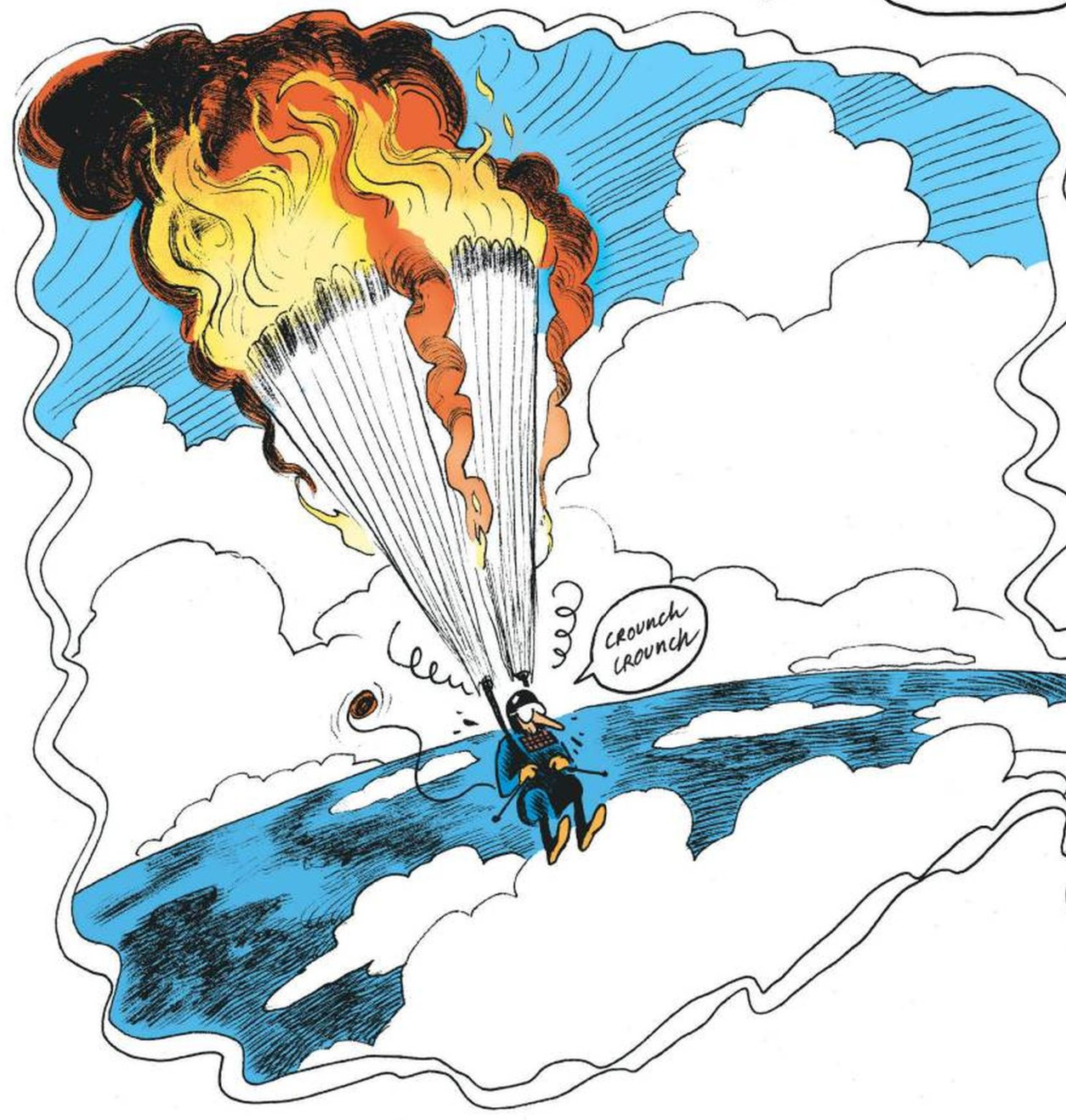
people who feel bad
who keep choosing to feel bad
Are we really happy with an excessive lifestyle?
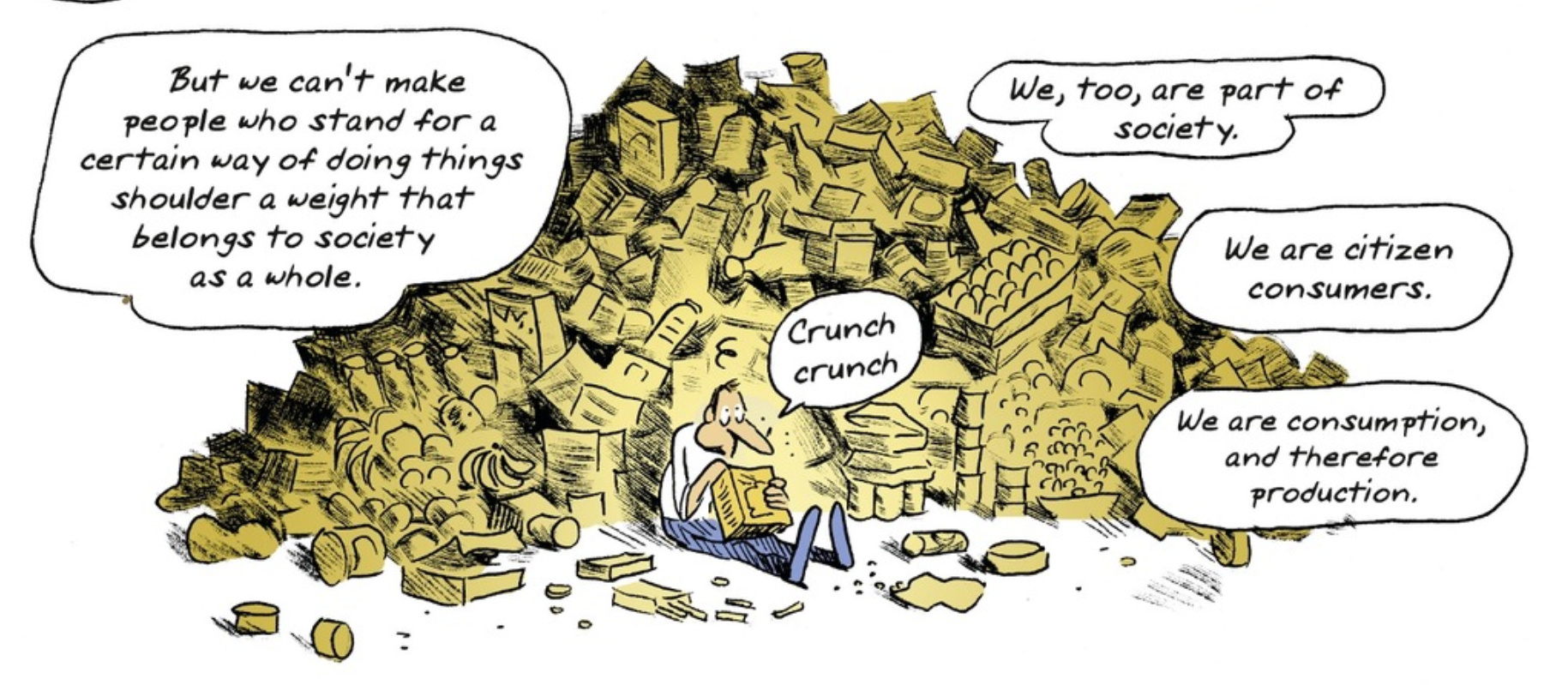
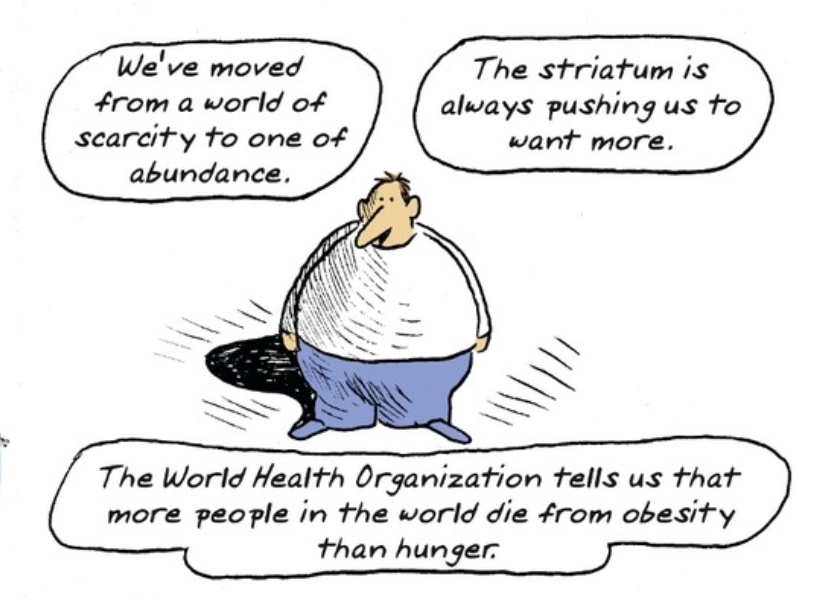
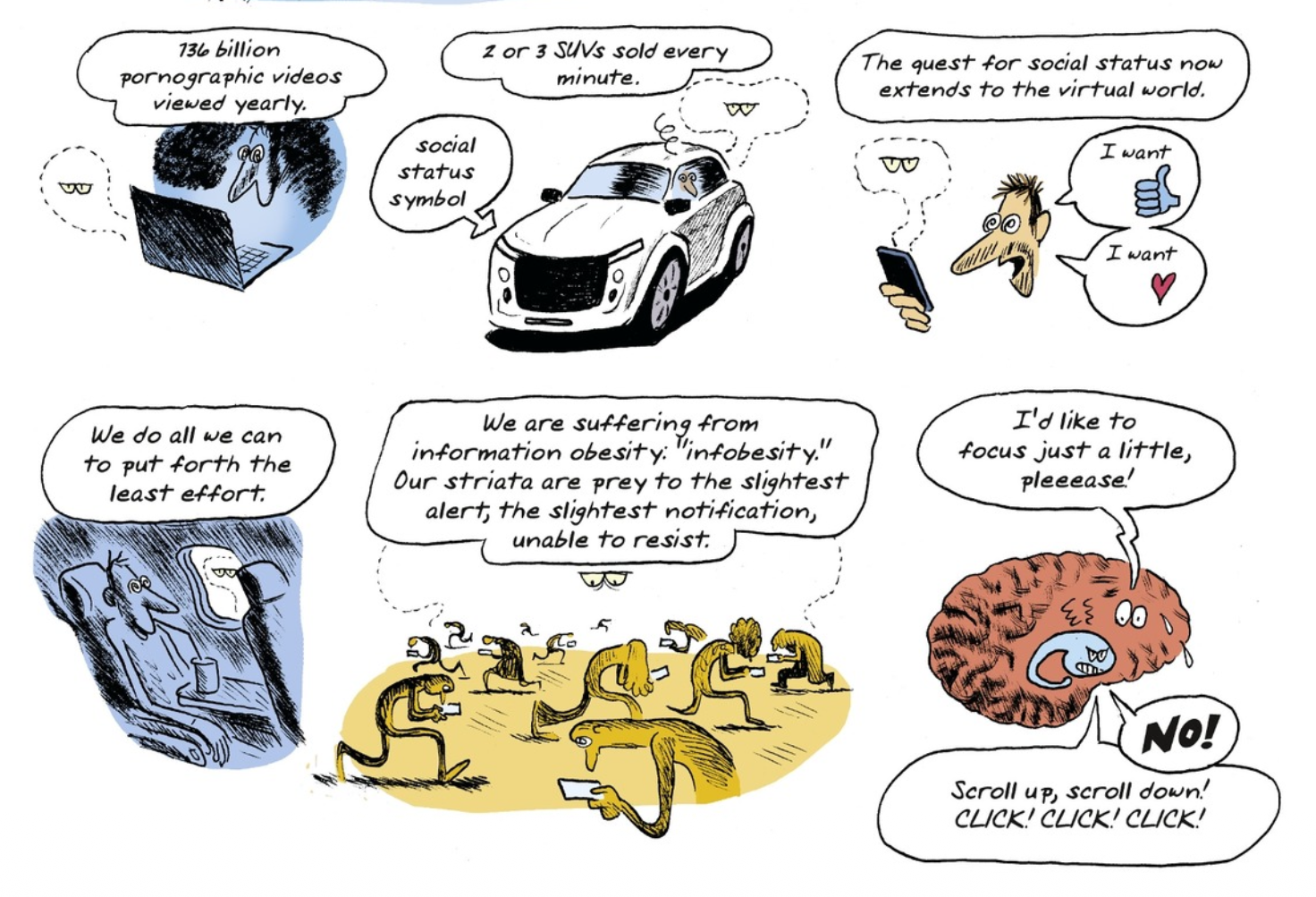
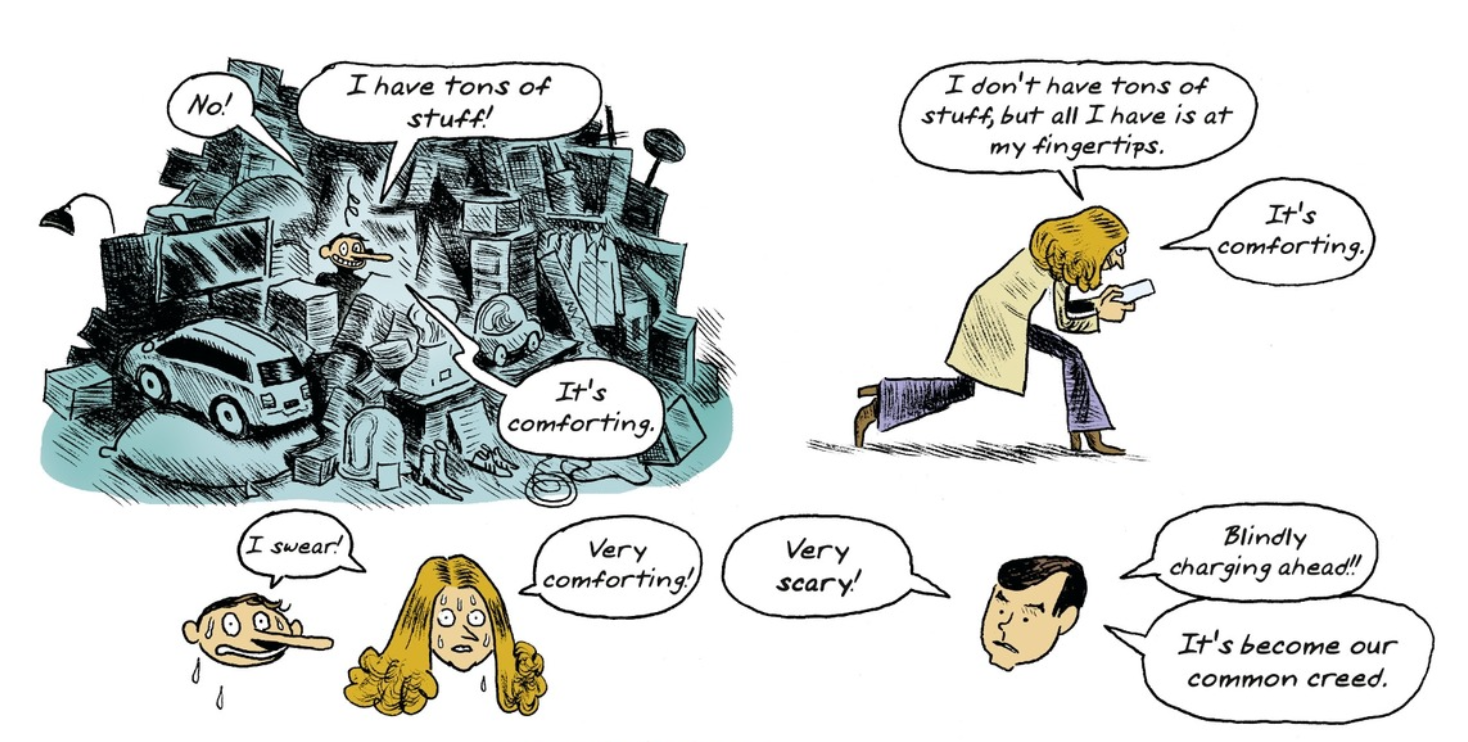
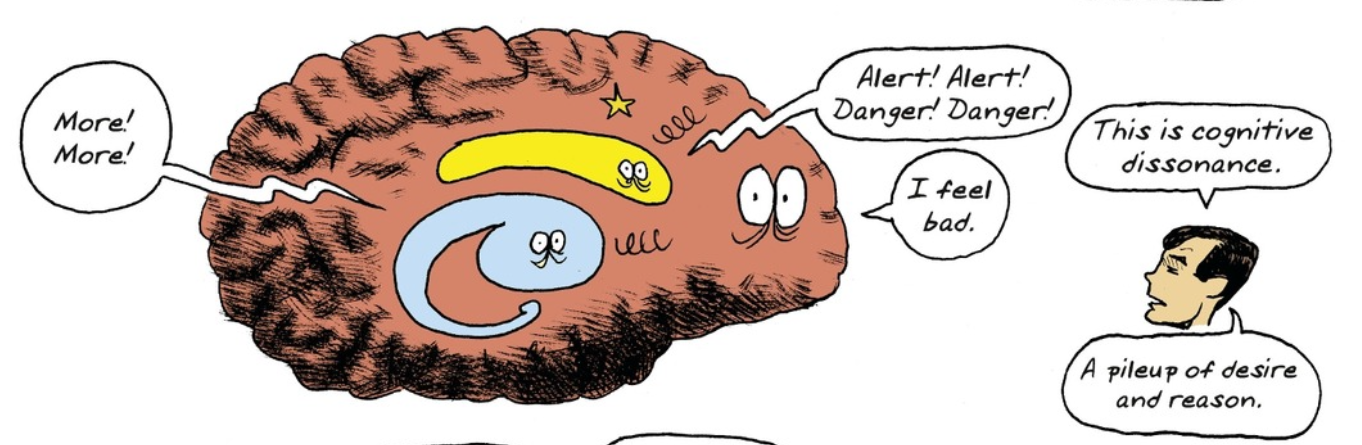
The elected officials of the countries and of the European Union:
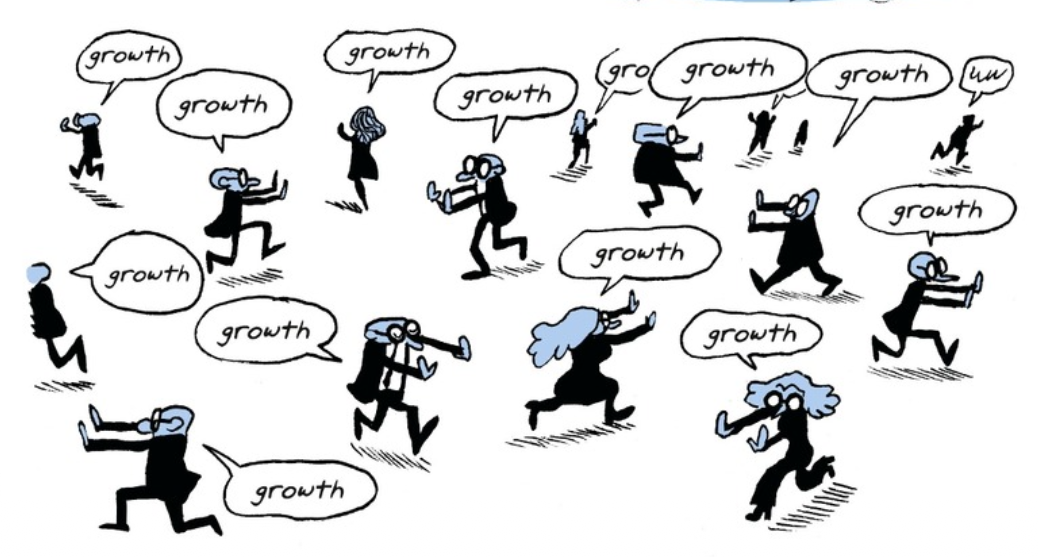
The underground stocks of oil, gas, coal and ores are running out and have already passed their production maximum:
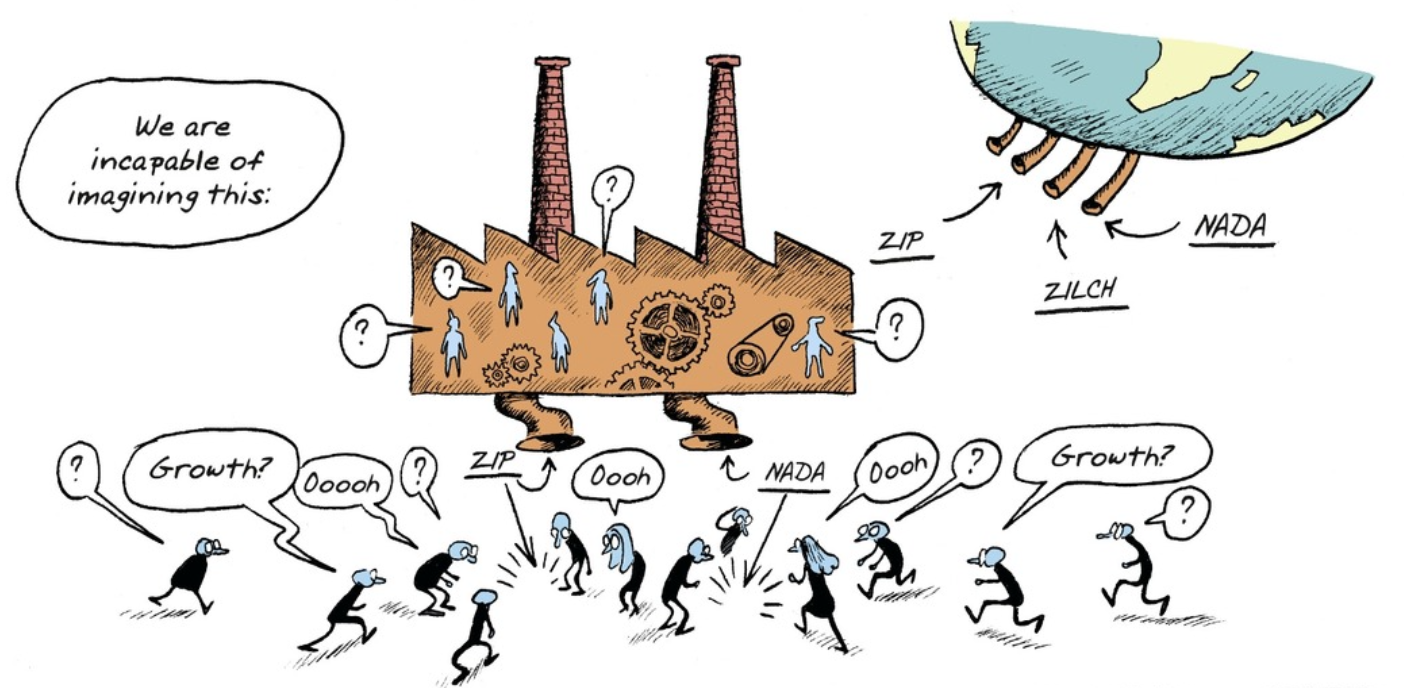
When there is no longer enough fuel to run the machines, growth is impossible
Zero anticipation from Europe
The stocks of the Earth's resources will soon be empty — do we wait to starve, or do we get organised now?
We can choose to feel good
by adopting a measured way of life
by acting with this majority taking shape a little more every day
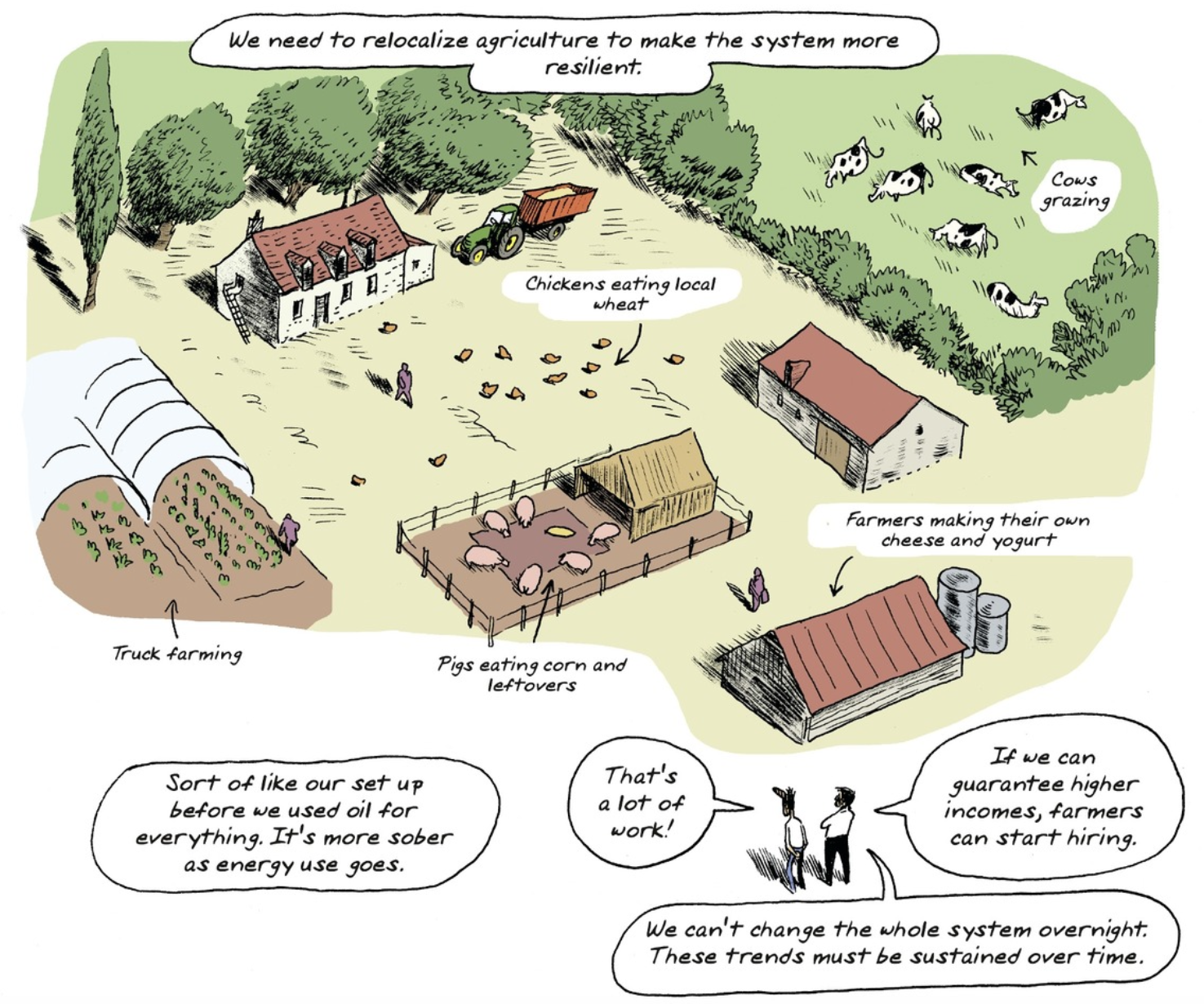
by buying food produced as close to home as possible
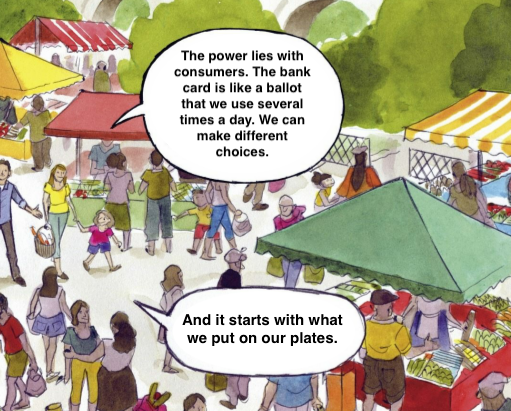
by buying food produced without pesticides
by buying unprocessed food and cooking it ourselves
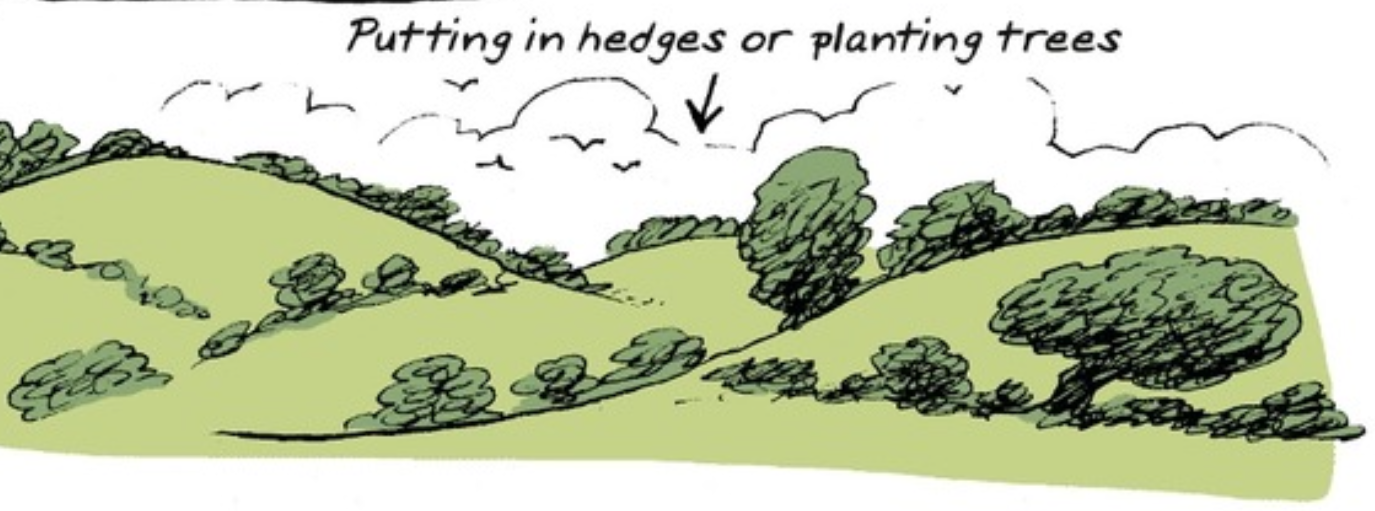
by replanting tree species resistant to a warmer climate
Education
The more the population grows, the more deforestation increases
Thanks to oil, agricultural yields were multiplied many times over and made the world population explode:
1 billion => 8 billion in 200 years
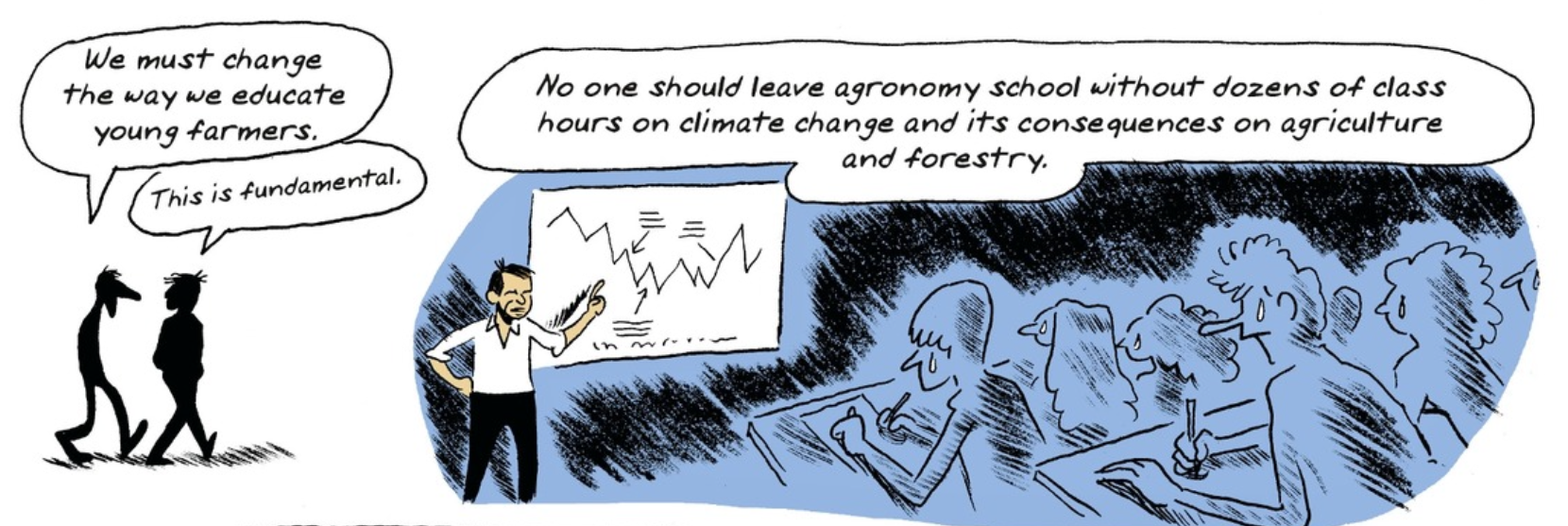
Without oil,
we will be forced back
to the way of life of before 1850
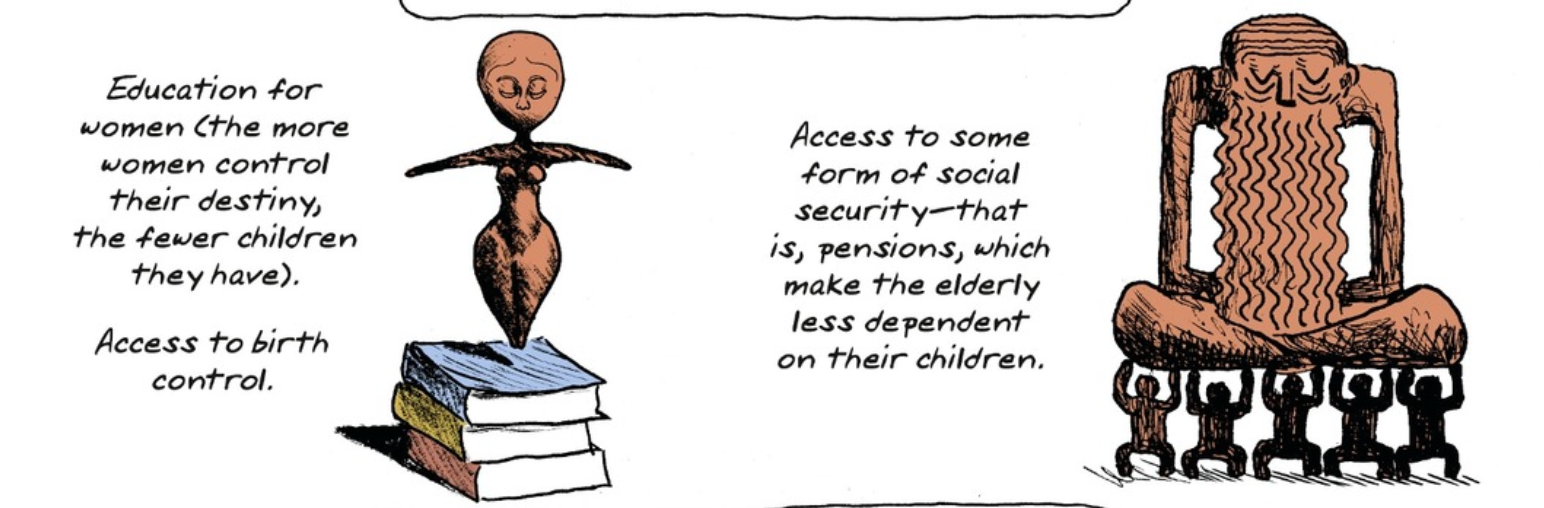
In 1850 there was "only" 1 billion human beings to feed
Without oil,
with agricultural
yields devastated by the disrupted climate,
how do we feed 8 billion individuals?
Eat and consume less
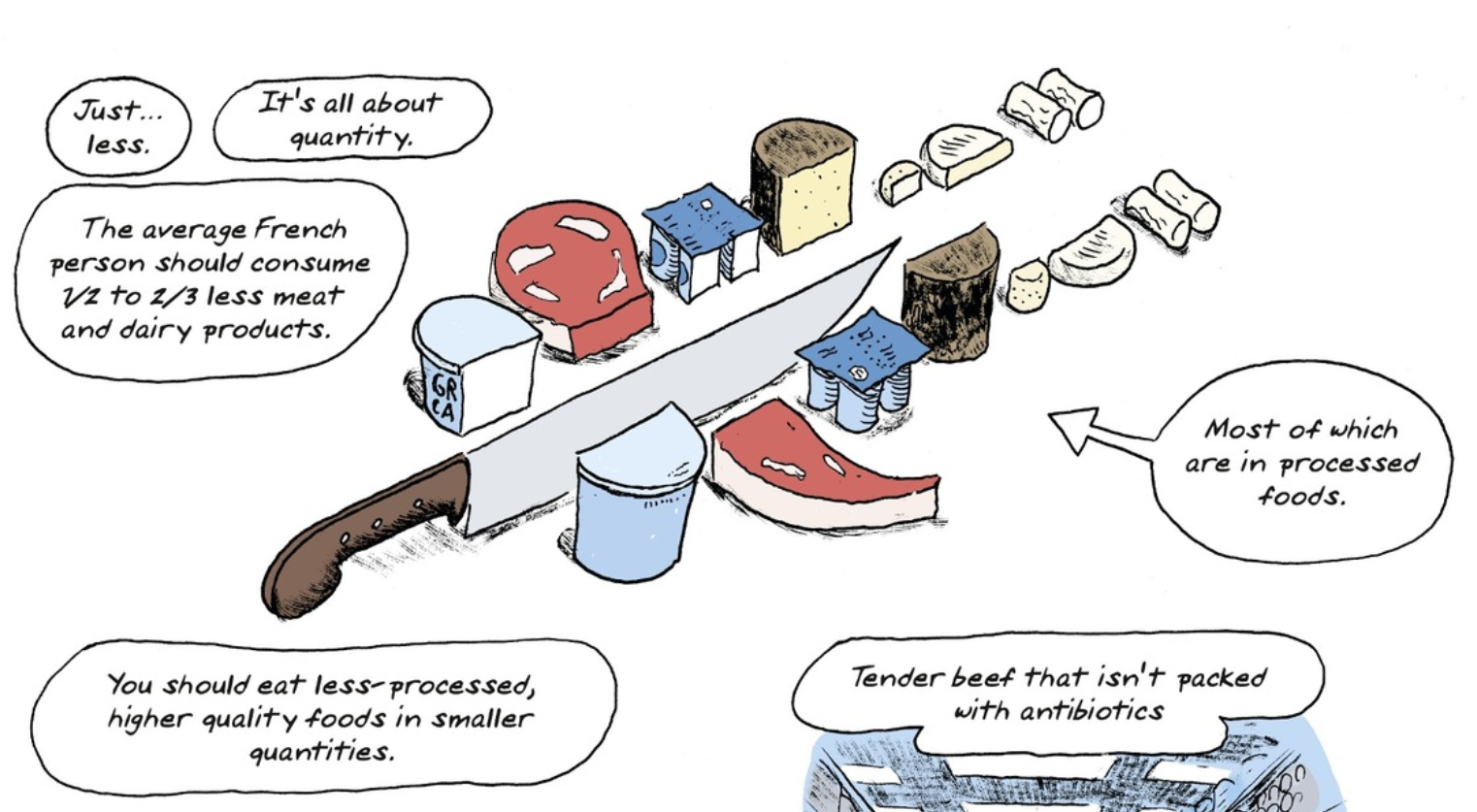
by buying less sugar, meat, dairy and drinks
by buying only objects truly essential for living
=> better health for ourselves and for our wallets
Heat pumps - Insulating buildings
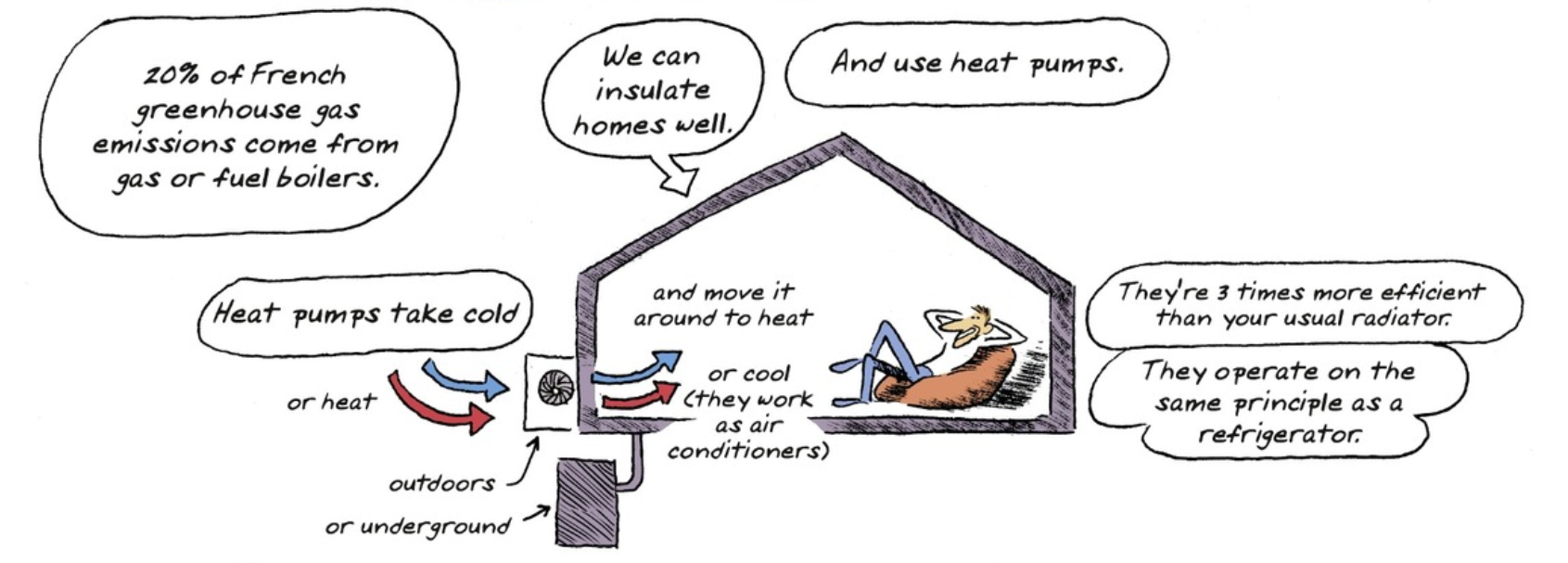
by insulating our homes
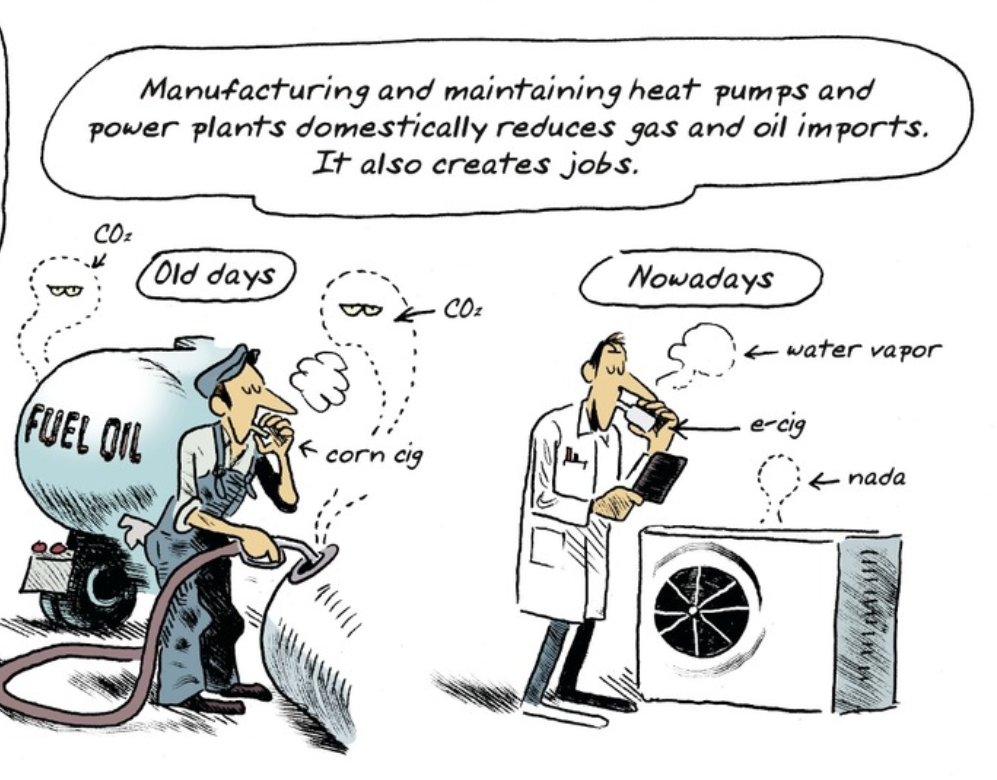
by buying heat pumps made as close to home as possible
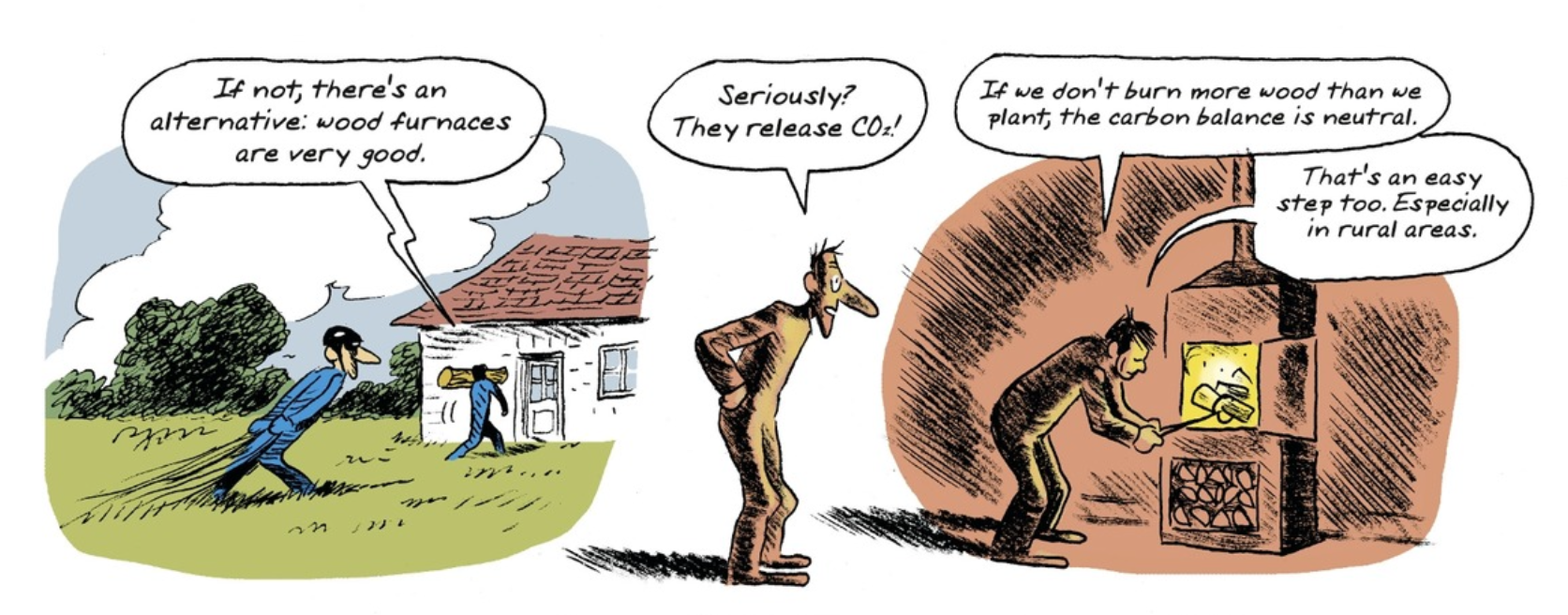
by buying wood-fired boilers made as close to home as possible
Bicycles
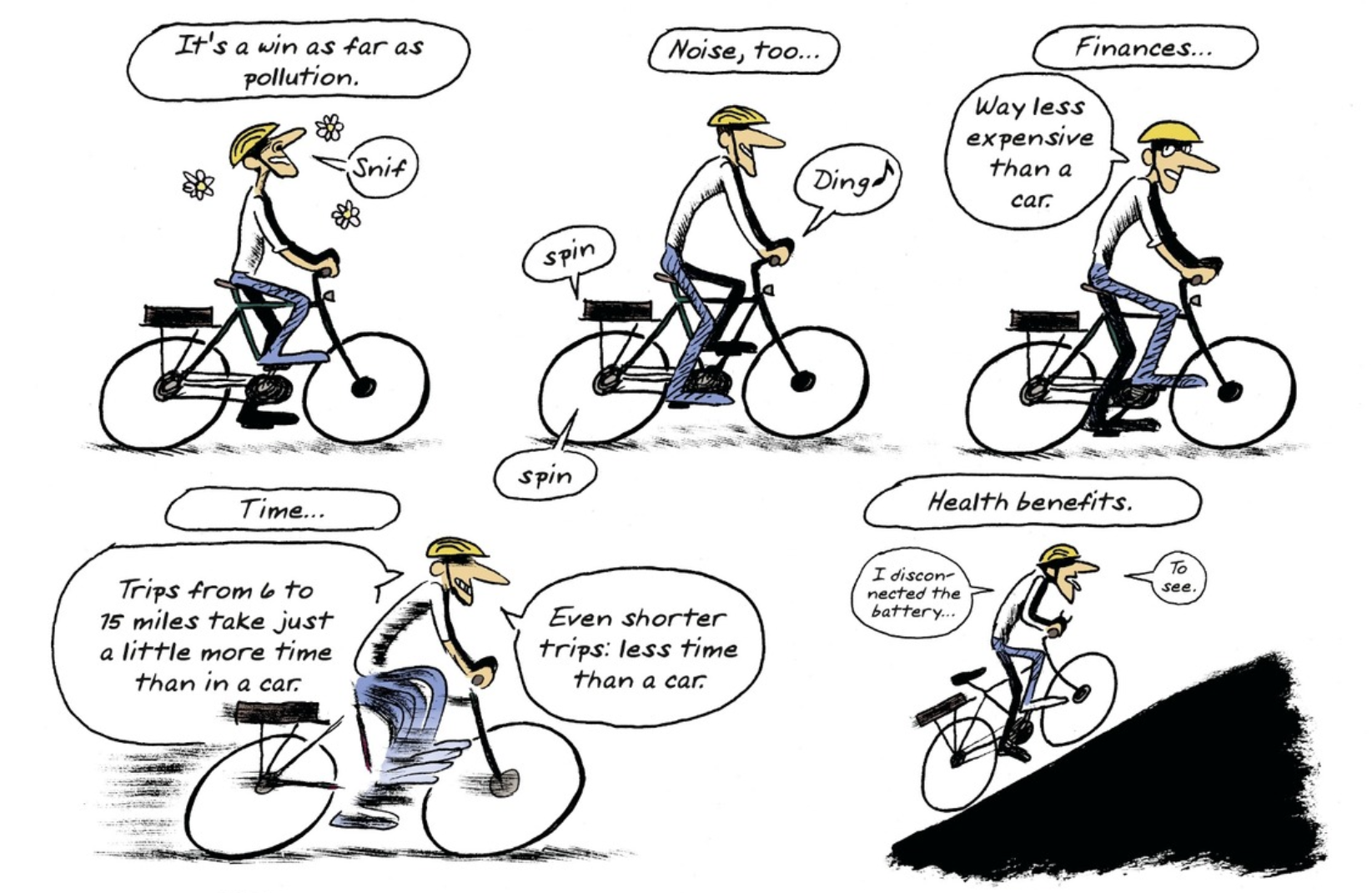
by buying bicycles made as close to home as possible
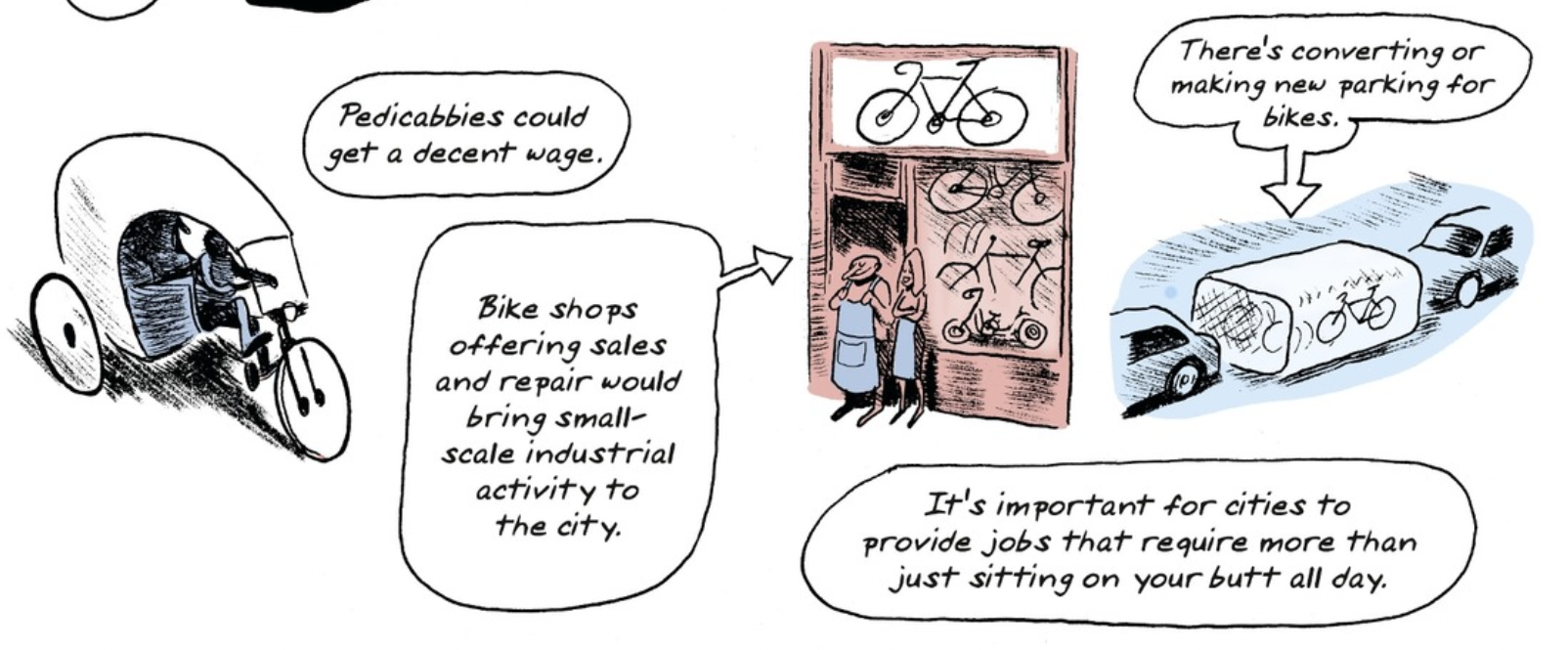
## A small electric car
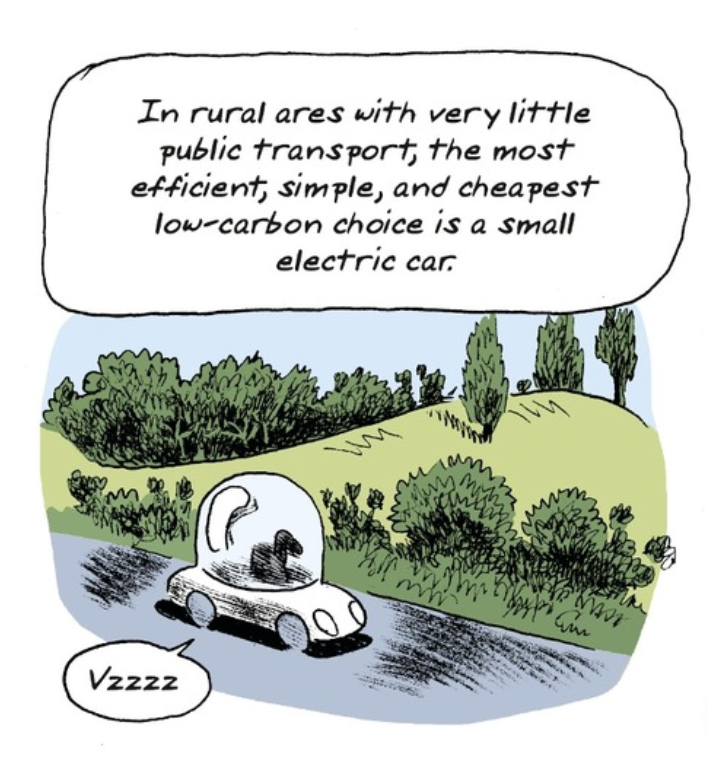
by buying a small electric car made as close to home as possible
Cohesion
Let us stay united and help one another
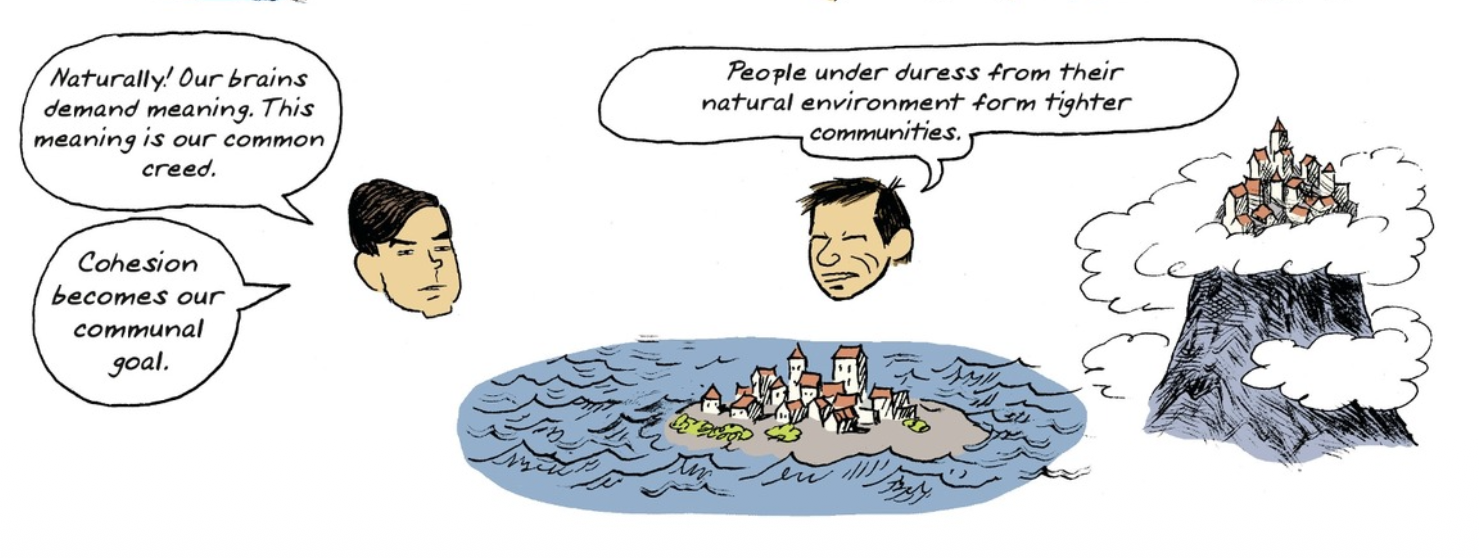
Images from the graphic novels: World Without End ("Le Monde Sans Fin") and Le paradoxe de l'abondance (The Paradox of Abundance)
# Decentralizing Power: The Only True Democracy
_What is peace? If one is a Kantian, one will say it is fusion into a higher entity. The peace of treaties and intertwined interests, eternal peace, the peace which, honestly, never works...._
_But if one is a Tocquevillian, one will think rather that peace is leaving others in peace._
_— You believe that Saint-Firmin's interest is to connect to the rest of the network. You may be right — no doubt you are. But it so happens that the inhabitants of Saint-Firmin judge otherwise. Are they stupid? Possibly. But that stupidity is their own. It seems long matured. It therefore possesses a value in itself. That is why I am in favour of letting Saint-Firmin make its own mistakes. You cannot make people intelligent against their will. You must let them make their own experiments. Who knows? They might surprise us._
_— This is about protecting the population._
_— Protection? But this gentleman is perfectly right: they are adults.
If they were granted the right to vote, it is so that they use it and decide their own affairs. Tocqueville speaks with nostalgia of the village assemblies which, under the Ancien Régime, met every week, deliberated on collective matters, and made decisions that had the force of law. In those days, there was less rule of law, admittedly, but more democracy!_
---
_In Romania, her parents were constantly subjected to blackmail by the local authorities to keep the permits needed for their garment factories. Maria would never have imagined such practices in France._
---
_The journalists of the national press, always eager to buy back their conscience, loved the idea of a small local elected official fighting the Parisian elite to which they themselves belonged._
_They made Maria into a touching Don Quixote, an unwitting embodiment of the degradation of public services. They were always disappointed to learn that she was not affiliated with a far-right party, which would have had, for their readers, the merit of simplicity._
_They never transcribed her long declarations on the commons, no doubt judging that she was exceeding her domain of competence and that, if Elinor Ostrom had to be discussed, they had at their disposal a whole host of far more legitimate intellectuals._
---
_Having become a livestock farmer by the sweat of his brow, without inheritance or capital, he cannot get over having had to give up processing his own milk following a health inspection that went wrong. He must now sell it to the cooperative for a miserable price and drags 25-year loans behind him. He feels cheated, mistreated, despised. He finds his lot all the more unjust as he has the feeling of doing everything by the book, discreetly, without ostentation. He raises his ewes in the open air, "like organic", he often quips, while firmly refusing to pay for the AB label, which he has renamed "the Bobos' Scam". He spends nights keeping watch during lambing. He plays France Musique continuously in the barn while listening to RMC and Sud Radio at home, as if the animals were entitled to more spiritual elevation than human beings. On the other hand, as soon as he sees a Parisian step out of their SUV, he gives a good kick to a ewe's flank to amuse himself with their outraged look. Matthieu is able to recognise each of his animals but never calls them anything other than their number. He considers that the elimination of all sentimentality is part of his professional duties. He allows himself only one tender gesture: hanging a little bell around the necks of his favourites._
_Jobard is the complete opposite. On the labels of his products, one can admire silky-coated Normande cows grazing beside a stream, whereas his black-and-white Holsteins, milk robots, rarely see the light of day. Jobard stuffs his cows with antibiotics and methodically pours fertilisers and pesticides onto his fields. The Crème Jobard found in all the supermarkets of the region — "the cream of the bocage" as the logo indicates — Matthieu would not taste for all the gold in the world. "It's rat poison," he repeats. And yet Jobard is the king of CAP subsidies and drives a Mercedes. He is the one who won._
---
_Léa has come to know the farmers' mutual insurance fund, the object of universal resentment. The risks of the weather they accept with fatalism, like all the generations that preceded them. The administration, the fanciful rules issued by Brussels, they end up tolerating the way one submits to a colonial power — with the vague pride, all the same, of being a citizen of the empire. But the MSA — they will never forgive it its always-too-heavy deductions, its always-unjust calculations, its always-incomprehensible answers, for they have the impression of being robbed by their own brothers, peasants like themselves, traitors._
---
_Who could miss this world where the extreme comfort of a few — champions of progress on TV sets — implied the misery of a whole little people of obedient warehouse workers? How can we forgive the masters of our era the worst of deceptions: having made their servants believe they were free, that opportunities were equal for all, that the State protected the weakest, and that the order of things was just?_
---
_Power has darkened Maria. A modest power, admittedly, but do not all powers resemble one another — that of the President of the Republic as much as that of the Yanomami chief? Maria has had to contend with duplicity, indifference, selfishness, cowardice. Why did she persist, why did she persevere in the pursuit of her impossible commons?_
_There she is now, caught in the utopians' trap, seeking to impose generosity by constraint, goodness by force._
---
_A former human resources executive who became, in Parliament, vice-president of the economic affairs committee, Boutaina Hadj is a figure of diversity that this government, always suspected of conservatism, urgently needs to showcase. A daughter of the Paris suburbs, raised in social housing with her four brothers and sisters, she got into one of those second-tier business schools that have become the last airlocks of meritocracy, the elite institutions now displaying "full". Her cheeky self-assurance earns her a certain cross-party respect. The press searches in vain for her past declarations on environmental questions. On the economic affairs committee, she has mostly shone through her defence of major infrastructure projects._
_Some lament this succession of incompetents at the head of the ministry; others, more seasoned, welcome the media aura of their new boss, which could rouse certain dossiers from their lethargy._
_Ambitions and anxieties can be read on every face. The lowliest deputy bureau chief calculates how the very long chain of appointments, promotions, transfers and leaves of absence might affect him. Admittedly, ministers do not have, as in the United States, the absolute power to appoint or dismiss the members of their administration. But everyone knows how things are done. This one will leave for the minister's office, that one will return from it; she will take over the direction of the Natural History Museum; he will lose the presidency of Météo-France. Each of these movements will generate a multitude of eddies in which some will drown and others will surface._
_Only one thing seems certain: Martin's days are numbered._
...
_Martin arrives at the office later and later, lunches longer and leaves earlier without incurring the shadow of a reproach. From his computer, he books restaurants and concerts, sinks into the LinkedIn news feed and plans his holidays. He lets himself be drawn into an Oblomovian nonchalance, endlessly postponing the work that remains and that seems overwhelming to him. Soon, he will be taking naps._
...
_Martin discovers on the Le Monde website, which he now consults every five minutes to stave off boredom, a declaration by Boutaina Hadj classed among the "urgent" dispatches. The new minister has just revealed the full depth of her environmental thinking by declaring that "pesticides are like medicines: you need a little, but not too much." Bourioux, for all his cynicism, would never have said such nonsense. The FNSEA immediately hailed "a common-sense ecology"; the far left published a routine post denouncing "a neoliberal government sold to agribusiness"._
_Only a few weeks ago, Martin would have rushed to draft a press release in which, under the guise of clarifying the formula, he would have recalled the ministry's action to regulate phytosanitary products. His ambitions now in ruins, Martin better measures the vanity of his work. So many years of interministerial committees where, with his allies from Health, he battled against Bercy and the rue de Varenne to better control the pesticide metabolites that end up in groundwater; so many years sabotaged by a soundbite, a formula without rhyme or reason, a formula that has the appearance of common sense but continues to propagate the lie of a benign, restorative chemistry._
_For the first time, Martin doubts the public service._
_He wonders whether the Water and Biodiversity Directorate is not a mere screen to mask the extent of the damage, whether his colleagues too are holding back from thinking the unthinkable. In the end, what was he trained for at the ENA, if not to dress the chaos of life in a veil of rationality, to provide society with the arguments it needs so as not to take horror at itself?_
_Our pains, our errors, our crimes take on meaning in the boxes provided by the forms. The administration is a smiley placed on the absurdity of the world._
---
_Laurent feels crushed at the prospect of entanglements with the Public Treasury. Who knows whether such revenues will not fall foul of some anti-money-laundering law, whether it will not be necessary to prove that each of the donors is not a Uyghur terrorist, whether the municipal council will not have to answer to suspicions of foreign interference? Such an unusual procedure, in such a tense local political context, can only cause trouble. As much as Laurent is capable of spending hours correcting a computer code error, the complexity of human laws terrifies him. He understands neither its logic nor its point._
---
_I would like people to be left alone. For them to be able to live and die without being permanently monitored, measured, advised, guided, governed._
---
_In a hurry to be done with it, he chose to be amused by all these classificatory refinements devised by the bureaucracy to frame, discipline and regularise life. Deep down, he thought indulgently, all these people are afraid. Afraid of what expresses itself, of what overflows, of what is. They are like the farmers with their pesticides: they would like to work on a nice smooth, clean surface; to handle only known and mastered elements following infallible protocols; and to watch perfectly aligned citizens grow before them, like ears of wheat. They do not understand the point of earthworms like us._
...
_Arthur still nurtured the illusion that the human being might show through the inspector. Yet what made her human, fully human, was precisely the delectation she took in exercising her administrative power._
---
_Arthur again perceived the gulf that already separated him from this generation that had grown up with "How to Blow Up a Pipeline", Andreas Malm's insurrection manual. In his day, no one wanted leaders. People still dreamed of anarchy and consensus voting._
_— That's a bit what the Leninists wanted to do with the State. As a result, they never let go of power._
...
_Had the cold monster of the ecocidal State begotten beings colder still? Would humans more human be born after them? Would the species one day rediscover the joy of living?_
---
_In a democracy, power grants its opponents the most vicious of privileges: the illusion of revolt. A tolerated revolt, comfortable and therefore benign. At least in Russia or China, one staked one's freedom on a tweet. Here, one merely exhausts it._
---
_If we could sell our products at their true price, we would gladly do without the CAP. It is a subsidy for the consumer, not for the producer._
---
_Matthieu had never hidden that he voted alternately for the right and the far right. He just wanted to be left to sell his cheeses, for his taxes to stop subsidising the idle, and to be left in peace for the rest. Yet the public authorities tormented him constantly. The DGCCRF tortured him over labelling questions, the DDPP asked him to fill in a nonsensical "foodstuffs handling declaration", and the CAP inspectors meddled in counting his flock. Last time, they had made a scene because a ewe born with atrophied ears was not wearing the regulation tag._
_— Since she has no ears, where do you want me to stick her tag?_
_— Perhaps, but it's compulsory._
...
_He had never read a single Rassemblement National leaflet, could not care less about immigration, but unhesitatingly gave his vote to those who, according to him, would raise "one hell of an almighty ruckus". His hatred of the administration, of its diktats, its intrusions and its cowardices outweighed every other consideration. All those who profited from it were classed among the collaborators without further ado._
---
_He searches in vain for objections and counter-arguments. He would like to prove her wrong, to still believe in a certain rationality in the elaboration of agricultural policies over the last half-century, but he can no longer manage it. He admits that, behind the proliferation of nit-picking regulations, the essential may have been obscured; that the general interest may have been to the Séquoia tower what God is to a church — an echo that resounds everywhere but is heard nowhere; that this administrative wall he helped build serves only as a screen for thieves and poisoners. He slowly opens himself to the hypothesis that the Republic is only a fiction useful for war and commerce._
---
_"I am still a civil servant after all: I can end my leave of absence whenever I wish and the administration will have to reinstate me in a post corresponding to my grade."_
_He realises with sincere astonishment his lack of real skills. He no longer quite knows what he can sell. He is not expert enough in engineering to act as project owner, not versed enough in hydrology to design a river development scheme, too little of a biologist to bring real added value to an ecological continuity restoration project.
Martin does not have the energy to launch, as he could, a real business — raising funds, recruiting specialised staff, forging partnerships with associations, hounding his old contacts._
---
_— The crayfish are back! Thanks to the fish ladder, of course. It always ends up being useful. You never know which species will benefit. That's the magic of nature._
_Martin is seized by a doubt. Old memories of meetings at l'Écaille come back to his mind._
_— The Pacific crayfish — isn't that an invasive species? he asks timidly._
_— What I know is that it eats our little white-clawed crayfish. It's like the Chinese worms and the Asian hornets. There's nothing good in any of that.
Martin still has work to do to reconcile what he knows with what he sees._
---
_Martin no longer needs the gaze of others. He feels no anxiety about it. He is freed from that endless quest._
---
_This rupture had freed him from many imperatives he followed out of habit and moral laziness. He had suddenly owned his own tastes and his own ideas._
---
_Thus do beings escape from the straitjacket of regulations, forms and identifiers._
---
_The emigrants would like to buy the plot from the municipality to build who knows what. But it is out of the question. The pasture belongs neither to the mayor nor to his council. It belongs to the inhabitants._
---
_He discovers a practice at once very ancient in its foundations and very new in its scientific form: regenerative hydrology. Behind this intimidating name lies a very simple principle: making do with the water we have. Adapting our landscapes, our crops and our ways of life to what falls from the sky or flows underground, rather than vainly seeking to tame the elements._
_Martin watches the conference talks on the subject on YouTube. There is talk of studies conducted on Bolivian farms, of watersheds and of keyline design, that method from Australia for laying out a territory according to the water cycle. In the videos, young researchers in sandals rub shoulders with grey-bearded veteran hippies. They form a sort of aquaphile sect, mixing chthonic metaphors with sharp epistemological concepts. Martin finds himself taking notes like a schoolboy._
_He is well aware that, from his office in the Séquoia tower, he would never have given the slightest credit to these visionaries. At the start of his career, he took part in professional water trade fairs. It was a sort of hazing for any deputy bureau chief. He would spend his day on the ministry's stand, in the institutional hall, a blue-white-red badge hanging around his neck. His role consisted, amid an infernal hubbub, of responding to the sales reps who came to present their latest model of regulation valve, UV filter or chlorination machine, and who always had grievances against the regulations. At the very back of these immense prefabricated halls where the billions of euros of the water market were churned, one generally found a green pavilion devoted to "nature-based solutions", where a handful of activists discoursed on the self-purifying power of natural environments or the virtues of de-paving cities. Serious people like Martin never set foot in this no man's land, financed at a loss to defuse criticism and prove the organisers' open-mindedness._
_Now confronted with a vital problem, Martin can no longer afford snobbery. He walks into the green pavilion. He pricks up his ears. He opens his eyes wide._
_Sometimes, the aquaphiles go out into the field. They take over a farming cooperative, an eco-site or a communal wasteland and launch into a week of open-air works. It is a small army with its infantry armed with simple spades and its mechanical cavalry — excavators, dumpers, road rollers. They dig, pack, excavate, backfill, uproot and plant, in a frenzied atmosphere of pagan scouting. When they leave, the landscape is transformed. It has become covered with hedges, mounds, swales, banks, basins and saplings, revealing curved patterns that look like enigmatic geoglyphs but whose forms are mathematically determined to direct the flow of water and create natural reservoirs. Where the naive walker sees only an unkempt landscape, the aquaphiles imagine the interlacing of springs, brooks and ponds which will make it possible, with constant precipitation, to irrigate the crops, replenish the water tables and depollute the rivers._
---
_Martin discovers the extent of barter, undeclared work, buildings without permits, arrangements on the quiet. The more the mayors are buried under circulars and forms, the more their constituents seem to live outside any legal framework, in a semi-anarchic state that Martin is not far from envying them. The countless standards that he and his ministry colleagues laboured to define trace a sort of abstract coherence, feeding administrations and consultants, but long since detached from any kind of reality. On the ground, people do not exactly disobey; they merely pretend to obey, which allows the inspection bodies to pretend to inspect._
_Even in Léa's practice, officially a fifth-category "establishment open to the public", Martin could not help noticing that the accessibility and evacuation arrangements were ostentatiously botched and repurposed. Léa has posted a few unfinished diagrams and expired certificates at the entrance, half covered by a poster of medicinal plants. The compulsory green sign indicating the emergency exit has been placed above a Buddha niche. The law has become a comic object. If Martin had the time, he would write one last note for the Jean-Jaurès Foundation, where they so love to discuss the just law. He would title it soberly: "But who applies the law?"_
---
_— You must file a complaint!_
_That is all he can find to say._
_— With the police? Are you out of your mind?_
_For Léa, the police boils down to the cops — the ones you always had to avoid on the estate, the ones who amused themselves with body searches when they came across girls, the ones through whom trouble came. A rival gang, hostile and powerful. That the cops might help her escapes her value system completely. Léa has always got out of trouble on her own, defended herself on her own, avenged herself on her own._
_Martin repeats that it is a crime. Léa knows it well. But she has no desire to tell this story in a police station, still less before an assize court. No desire either to expose the details of the assault, or to defend her version of the facts, or to justify her attitude. She would feel as if she were being violated a second time. She prefers ice baths to try to erase the images that keep returning and keep wounding her._
_— How would it help me for him to go to prison? He'll come back here, one day or another._
_— You must do it for all the other women!_
_— I couldn't care less. I don't do politics._
_— But what if you run into him outside? What will you do?_
_— Just thinking about it makes me want to puke. I don't know. It'll depend on the flow of energy. Maybe I'll flatten myself against a wall. Maybe I'll run away. Maybe I'll kill him with a good sharp piece of granite._
_Léa does not look at all like she is joking. Martin is thrown. This is no longer about the Code of Territorial Authorities but about the Penal Code, the keystone of an organised society. It is as if the rule of law, with its noble procession of fair trials and proportionate punishments, did not reach the depths of the territory. As if justice were a matter of intimate considerations and its definition subject to each person's opinions. In that case, what remains for the State, the national community, the general interest, living together? Nothing. Absolutely nothing. Martin realises that while his former classmates vie with one another in discussing institutional reforms, the Republic disappeared long ago, as discreetly as irremediably._
---
_The concept of social ecology brought together absolute respect for nature with maximal decentralisation of decision-making processes, the municipality representing the primordial level of society.
There would no longer be nations, only self-managed ensembles operating by direct democracy.
For all that, Bookchin did not reject technology and advocated neither a universal return to the land nor the hara-kiri of the human species. He considered that humanity should organise itself in accordance with its natural dispositions — that is, through association, consensus and mutual aid. Just as nature tended intrinsically towards freedom, individual emancipation could only come from a peaceful relationship with the environment. To integrate into one's ecosystem was also to build the optimal form of sociability. Far from stifling them, communities would thus favour the emergence of singular personalities._
---
_Martin also remembers that Elinor Ostrom received the Nobel Prize in economics just as he was starting his work at the Séquoia tower, within what was then still called the "Ministry of Ecology", destined to become successively, as political renunciations went by, the "Ministry of the Environment" and then, when all hope of rapid transformation had been abandoned, the "Ministry of Ecological Transition" — in other words, the ministry of that which will never come to pass (can one imagine a Ministry of Educational Transition?).
The press had congratulated itself that a woman had finally obtained the supreme award, without dwelling too much on the substance of her thought._
---
_A political scientist by training, Elinor Ostrom had offered an elegant solution to the tragedy of the commons, that old chestnut of economists according to which a scarce collective good in open access will inevitably be overexploited. Rather than entrusting the management of such a resource to the State or the market, Elinor Ostrom had discovered the existence of an alternative solution founded on the deliberation of the actors themselves. For example, fishermen confer and together draw up rules to prevent the fish stock from being depleted._
_From the first pages of her book, Ostrom details the tragedy of the commons, an expression coined at the end of the sixties by a biologist, Garrett Hardin. If a common pasture is left open to all, each herder will graze as many animals on it as he can, so that the land will soon be exhausted and, in the end, everyone will have lost. It is therefore necessary either for the public authorities to organise grazing rotations, or for the allocation of private plots to incentivise each owner to manage his property better. It was on the basis of this reasoning that the British government undertook, from the 17th century onwards, to abolish all common plots. This enclosure movement precedes and prepares the rise of industrial capitalism by placing property rights at the heart of economic logic. As a good social democrat, Martin finds nothing to object to, except that ex post redistribution mechanisms will have to be provided for._
_Ostrom recalls that the tragedy of the commons is itself inspired by the "prisoner's dilemma", a classic of game theory which shows that two economic agents held prisoner (that is, isolated from each other) will prefer to make sub-optimal individual choices rather than engage in a cooperation that would bring each of them more, but to which they cannot be sure their partner will submit. This dark vision of human relations, reduced to a perpetual bet on the other's betrayal, has fed public policy since the second half of the 20th century. A third-party actor must intervene to impose and guarantee cooperative mechanisms that will be in everyone's interest. Here again, Martin sees nothing extravagant._
_It is then that Ostrom's stroke of genius intervenes, of such elegant simplicity. The prisoner's dilemma is indeed irrefutable — but on condition of being in a prison. Yet our society is not a prison. We talk to each other, we look at each other, we size each other up. We establish among ourselves a thousand informal conventions that allow us to live together. We can create trust through words, gestures and attitudes that escape the domain of contract. Faced with a common good whose use they share, economic actors able to communicate with each other, to discuss and to argue, should therefore find a way to come to an understanding, establishing by themselves the rules that will make it possible, to return to Garrett Hardin's scenario, to avoid overgrazing._
_Ostrom's whole strength lies in illustrating this somewhat utopian theory with cases as concrete as can be. She draws them from history, studying systems of common management that survived floods, droughts, wars and epidemics, some of which endured for more than a thousand years. She also goes looking for them in contemporary societies. She is an explorer. She went to observe irrigation methods in Nepal, mountain villages in Switzerland, fishing communities in Indonesia. She conducted field studies in Kenya, Nigeria, Australia, Bolivia, India, Poland, Mexico and Zimbabwe. She investigated the police departments of Chicago, Grand Rapids, Nashville, Saint Louis and Indianapolis. At the University of Bloomington, in that backwater of Indiana where she taught for nearly half a century, she founded not an institute or a research centre but a "workshop", where students are asked to go into the field and craft their concepts from reality. Through all the concrete cases patiently collected by Ostrom and her teams, Martin sees rising before his astonished eyes the baroque and fascinating reality of human beings capable of organising themselves without civil servants._
_The commons do not, for all that, constitute a space outside the law where Homo sapiens would have miraculously become virtuous. They are characterised, on the contrary, by the tenacity of their members in building a governance suited to their specific needs; ever-shifting institutions, defined and redefined through interminable deliberations, but which give birth to norms all the stricter for being drawn up by consensus. Just as the citizen of a State can generally count on the complicity of his peers to cheat or circumvent the law, so the user of a commons, made responsible by the management of a scarce resource, will not tolerate the slightest deviance. Sanctions are pitilessly implemented by the community itself. "The complete opposite of France, where motorists flash their headlights at each other to dodge the speed cameras," Martin says to himself._
_Refusing to let himself be entirely convinced, he concedes that such a method might just about work for small, human-scale entities, but reckons it would become inoperative in the vast ensembles of the modern world. It is exactly at this crossroads of his intellectual journey that Ostrom lies in wait for him. At the end of the book, she describes the functioning of "polycentric" organisations that multiply autonomous centres of decision. This is proof indeed that one can grow without abandoning the principles of the commons. The essential thing is never to sediment into a centralised and rigid bureaucracy where theoretical expertise replaces empirical experience._
_All the objections that come to Martin's mind are thus meticulously refuted by Ostrom, page after page, examples in hand. He has the troubling impression that the author is reading his thoughts and answering him directly. He then comes upon a seemingly innocuous sentence that petrifies him: "As long as a theoretical explanation showing the value of self-organising processes is not fully provided and accepted, major public policy decisions will continue to be founded on the illusion that individuals cannot govern themselves and need an external authority." In sum, Ostrom spent her life demonstrating why people like him, Martin, are not only useless but harmful. She bears him no grudge. No aggressiveness, no dogmatism in her writing. It is worse. She pities him — his naivety, his ignorance of anthropological truths, his so primitive belief in the virtues of an external authority that would organise society like God creating the world. She would almost apologise for having to open his eyes._
---
_Scalded by the socialist State and disappointed by unbridled capitalism, it is not surprising that Romanians are looking for a third way. Ostrom suits them well. She is radical but not leftist. She detests charismatic leaders with their grand plans to save humanity. She remains influenced by the very liberal Hayek, by the whole public choice school. She distrusts administrators and engineers who would impose their cathedrals of synergies and their labyrinths of processes. She simply seeks to define the conditions of possibility of a spontaneous order, neither imposed from above nor disorganised from below. A timid, almost conservative ideal, which lets the different communities define themselves without dragging them by force down the road of progress.
One need only see her with the King of Sweden in the photos of the Nobel reception ceremony. In the midst of an assembly of men in dinner jackets and women in long dresses, she wears a sort of shapeless African boubou with, as her only adornment, around her neck, an indigenous necklace made of shark teeth. She respects the customs, addresses the king as "Your Majesty", politely greets the prestigious guests come to applaud her, but her outfit is in itself a middle finger to several centuries of Western civilisation. Moreover, she does not even pocket the cheque, as if this money risked corrupting her. She gives it to her Bloomington workshop._
---
_It was he who slammed the door of UCLA, the prestigious Californian university, when the academic hierarchy opposed his theories on the necessary decentralisation of urban policies._
---
_Elinor Ostrom did not merely sign hundreds of unreadable articles. She is an activist. She trained entire generations of students in her workshop. She founded an intellectual movement, the Bloomington School, now abundantly cited in academic journals. She provided a methodological instrument, prudently decked out with an innocuous acronym, IAD, Institutional Analysis and Development; in reality, a powerful tool of subversion for transforming organisations. She established a vocabulary, that of the commons, which is today taken up by political actors around the world and which makes its way through our unconscious minds. In short, she planted a solid splinter in the foot of capitalism — not very painful, but impossible to remove, enough to make it limp and perhaps, one day, stumble. Ostrom in her boubou sends you her regards, ladies and gentlemen of the Nobel._
---
_From his barn, Martin thinks he can divine the coming revolution. Just as Christianity conquered the world with a message as simple as love of one's neighbour, the Bloomington School posits, behind rather technical concepts and diagrams, a devastating principle: trust in others. One must trust. Postulate that the most modest citizens are capable not only of organising themselves on the ground, but also of deciding their own objectives together. It is true for the Spanish farmers of the huertas, it is true for the Turkish fishermen, it is true for the Los Angeles cops. The message is universal. The act of faith is unconditional. "Rather than imagining that some individuals are incompetent, malicious or irrational while others would be omniscient," Ostrom explains, "I postulate that human beings are all endowed with the same capacities for reasoning, which must allow them to grasp the structure of a complex environment and solve its problems." The complete opposite of what Martin learned at the ENA._
_Or again: "The central goal of public policy should be to facilitate the development of institutions that bring out the best in each of us." Until now, Martin thought the central goal of public policy was to prevent the worst in each of us from expressing itself._
_This is no longer economics. It is a philosophy. It is a religion. Martin feels transported when, right in the middle of her Nobel acceptance speech, Ostrom starts to rhapsodise: "Trust. Repeat that word again and again." One imagines crowds in a trance, screaming "Trust! Trust! Trust!"_
_Martin knows that with this word, everything collapses. No more prefect, no more OFB, no more water agency, not even municipal utility management. Only human beings gathered together, deciding on the use of their resources and defining the best way to integrate into their environment. Ostrom denies proposing panaceas. She gives no turnkey solution. She does better: she enables people to find their own. She justifies, theoretically and empirically, the superiority of their own choices, even if the formulation of these is clumsy and incomplete. She provides a weapon against the quibbling of well-trained minds. This religion does not promise much, but it changes everything._
---
_There remains then for Martin one decisive question, the ultimate touchstone of the Ostromian cosmogony: how to apply the principles of the commons to Saint-Firmin? The village's hydrological situation at the head of the watershed, its modest size and the looming crisis constitute, in theory, ideal conditions. Martin thinks, however, of his uncle with his cut-and-dried opinions, of Louis increasingly reclusive, of the faithful Liliane whose open-mindedness is not her first quality, of Matthieu resistant to dialogical thinking, of Mr Torricelli enamoured of plans and technique, of Salim whose collapsological passions are hardly aligned with the interests of the rest of the community. He cannot picture them debating calmly, rationally. However much he persuades himself, not without a certain intellectual humility, that he is prey to horrible centralising prejudices, he doubts. Trust?_
_Ostrom passed on to her disciples eight articles of faith for the functioning of the commons. To get to the bottom of it, Martin reviews them methodically._
_Article one: Clearly define the boundaries of the group and of its resource._
_No problem on this point. Saint-Firmin's land registry and electoral roll will see to it. It will only be necessary to settle the case of the architect from Argentan who, since her victory over the church bells, seems to be neglecting her mill, where she is seen only once or twice a month. Is she part of the group?_
_Article two: Adapt the rules of governance to local conditions._
_Martin is aware of the scale of the task. Today, the only governance of water is the price of the cubic metre. To respect this article, it will be necessary to abandon the meters. To provide for schedules or quotas, discussing each person's needs at length. Will Miss Norton have the same water rights for watering her plants as Jobard for running his farm?_
_Article three: Ensure that all those subject to the rules also possess the power to modify them._
_This is the most revolutionary and most obscure article in Martin's eyes. The heart of trust. Not only are the rules defined collectively, but they must be able to evolve spontaneously. Martin cannot picture such a mechanism. He is out of imagination._
_Article four: Have the community's rules recognised by outside authorities._
_That is to say, Nathalie. That will not be the hardest part. "Pray and sort yourselves out," the prefect had told him. He takes it as carte blanche._
_Article five: Develop a system in which the members of the community monitor one another._
_An unappealing but pragmatic article. Given the Saint-Firminois' informer temperament, Martin sees hardly any obstacle._
_Article six: Establish graduated sanctions for offenders._
_Martin knows the drawback of fines. The rich, like his uncle, will prefer to pay rather than respect rules that inconvenience them. They will buy the right to waste. It will therefore be necessary to be more creative. To provide for sanctions in the form of water restrictions, for example._
_Article seven: Draw up a simple and accessible procedure for resolving conflicts._
_We are not going to set up a tribunal, thinks Martin. It would in any case be illegal — an inadmissible infringement of the State monopoly on justice. But a mediation arrangement, such as exists for small disputes, would be perfectly conceivable._
_Article eight: Distribute the responsibility for managing the resource across all levels, from the local cell to the whole interconnected system._
_Martin interprets this article as a call to involve all the municipalities of the watershed. Why not, but at a later stage. If Saint-Firmin succeeds in its Ostromian revolution, it will be necessary to go back and talk to Alexis Huet, this time from a position of strength._
_Martin turns articles two and three over and over in his head. He tries his hand at a few drafts of a local water charter. Nothing seems truly convincing to him. He feels like Alexander Hamilton drafting the great principles of the American Constitution, except that he has neither authority nor country. He wonders whether he has attained the wisdom of a founding father or whether, on the contrary, he is regressing towards childhood, inventing imaginary kingdoms for himself._
_His powers as mayor are of no help to him. On the contrary, they constrain him by conferring on him, as an officer of the judicial police, responsibility for public order. Martin realises full well that he cannot change mores by decree. That was Maria's monumental mistake, her misreading of Ostrom. Martin understands what she must have faced: Jobard and his nitrates, Miss Norton and her watering cans, Salim and his water basins, and all the others. But how could she believe she would subdue them by her will alone?_
---
_Martin's prospects begin to brighten when he discovers the notion of the "public entrepreneur", first explored by Vincent Ostrom before his wife took it up. The public entrepreneur was the missing piece of the puzzle, absent from Governing the Commons. It makes it possible to trace a political path towards the emergence of the commons._
_For Ostrom was never an anarchist. She does not underestimate the difficulties of coming to an understanding among equals. She knows the pitfalls of spontaneous order. She does not advocate a return to endless palaver. She admits that leaders emerge, that hierarchies form, that the community designates representatives to manage its daily affairs — half cops, half social workers. Trust, yes; laxity, no. Institutions must bring out the best in us, agreed, but also accommodate the worst. As Rousseau said, peoples of gods do not exist._
_The public entrepreneur must act on his community like gravity on flowing water. He is the force that carries everything along without directing anything. He suggests without deciding, gathers without commanding, observes without surveilling. He distributes the floor, formalises the conclusions, allocates the roles. He makes sure that everyone is heard and that no one cheats. He facilitates consultation and verifies execution. He is a mediator, charged with finding the points of equilibrium. He obtains only one thing in exchange, something a little old-fashioned but worth all the titles: respect._
_"That's it, I will be a public entrepreneur," Martin says to himself like a child dreaming of his future job. It is not for him to invent the rules. There will be no Hamilton in Saint-Firmin. On the other hand, it must be possible to fashion a community out of what is, for the moment, only a heap of scattered egoisms. It is now or never._
HUMUS - Gaspard Koenig (in French, no English edition yet)
AQUA - Gaspard Koenig (in French, no English edition yet)
# The Destruction of Our Survival Resources by Our Excessive Lifestyles
_Your fields stink of acid soils, wrecked by thirty years of filthy phytosanitary products and deep ploughing; soils that turn to dust in summer and mud in winter; soils that are no longer worth anything, that have become nitrate reservoirs and are poisoning our water._
_Everyone drinks 70 mg of nitrates per litre of water — that's the truth._
_That maize isn't used to feed human beings, and not even the animals. It goes straight to the anaerobic digester. More profitable, eh? Fine model: we put Saudi oil in the tractors, we pour Russian gas and Chinese phosphates on the land, we sow German lab seeds in it, we get fake plants out of it, we let them rot and we sell the whole lot as 100% made-in-France biofuel! It's fossil-fuel fencing of stolen goods, that's what it is._
_And the animals — they don't know the taste of grass, so we might as well feed them transgenic soy grown in Brazil that arrives at Le Havre by whole container ships. And all that gives you Crème Jobard, star product at your local Leclerc, local products aisle! The cream of the bocage! The cream of the Amazon, more like. The cream that destroys the tropical forest over there, the cream that pollutes the land here!_
_He loves his animals so much that he has crammed them in there, in the barn, udders swollen, waiting for milking morning and evening. He inseminates them a month after calving, one hand up the backside, the other on the semen gun! He takes their calves at birth! He sends them to the slaughterhouse at 5 or 6 years old, so they don't suffer too long!_
_At my place, we leave the animals outside, we feed them hay, we drink raw milk and we do our neighbour a good turn._
_The West is sick. It produces sick brains, sick animals, sick lands._
---
_Stop with your generalities! Jobard belongs to a lost generation, trapped by the banks and the farming federations. But he has had the courage to ask himself the right questions. He is in full transition towards reasoned agriculture._
_He is reducing his inputs, year after year. Ploughing less deep, centimetre by centimetre. Covering his soil with green manure in winter. Who knows? It may be to his land that the earthworms return first._
---
_One therefore had, paradoxically, to desire the collapse of industrial societies as the only credible way of avoiding the worst. The time remaining was counted less in years than in ppm of CO2 in the atmosphere. Ppm: parts per million. Millionths. A measure at once infinitesimal and colossal. Beyond 500 ppm, the planet would become a vast inhospitable steppe and only a handful of Homo sapiens would remain, taking refuge in Greenland. We had already passed 420 ppm. So we had to hurry._
_Salim had drawn two rules of action from this. The first was political. The greatest enemy was not the capitalists, who were cheerfully racing towards their doom. It was the degrowthers, irresponsible people working to prolong our ways of life at the cost of a few derisory adjustments._
_The second was practical. One had to be ready for the great unplugging, for the day when nothing would switch on anymore, when social organisation would vanish at a stroke like a computer crashing. The only question worth asking was that of vital needs. It was complex but, if one went about it well in advance, not insoluble._
_Coming out of that tormented summer, Salim therefore made definitive resolutions. He did not look for a permanent contract as his parents urged him to, knowing perfectly well that this "indefinite duration" promised by capitalism would soon be interrupted by its implosion. He did not want to move: Saint-Firmin remains a commune modest enough in size to hope that, when the time comes, the inhabitants will decide to help each other rather than kill each other. He also resolved never to start a family, synonymous with mouths to feed._
_Thus freed from any ambition other than his own survival, Salim finds existence surprisingly pleasant._
_So as not to remain a burden on his parents and to generate a minimal income, Salim contents himself with odd jobs. He did not even bother applying for welfare benefits, of little use once the administration has returned to nothingness. He prefers to be paid under the table and does not care about contributions, convinced that the pension funds will be swallowed up in the general bankruptcy well before he reaches the age to claim his rights. He takes care never to leave too much money in his account, which would be so much lost at the time of the great banking crash. He quickly converts every banknote into tinned food, seed packets and electric batteries._
_In the fairly extensive free time at his disposal, Salim amuses himself doing everything that will become impossible after the collapse. He wants to gorge himself on images of the world before._
_Blablacar, low-cost flights — he stuffs himself with streamed films and series, he stockpiles memories while rejoicing in his carbon emissions, which can only hasten the advent of the inevitable._
_Salim did try to convince his parents of the soundness of his theories and his way of life. A lost cause._
_He who reasons in millions of years cannot understand why people strive so hard to improve the living conditions of the little polluting mammal that we are._
_In his family, Salim is regarded as a failure and, in the village, as a simpleton. He could not care less. He is convinced that one day he will be treated as a prophet._
_He really is not fussy about the modalities of collapse. Financial crisis, destructive hurricane, computer failure, apocalyptic drought: anything suits him._
_Only one question continues to preoccupy him: why survive? Not for society, which deserves to crumble under the weight of its own injustices. Not for humankind, to whose perpetuation Salim has already given up contributing. Not for nature, which would gladly do without this species turned invasive.
For himself, then? But what joy will he be able to find amid universal misfortune?_
---
_The city eco-types were still looking for fake-rustic getaways where modern comfort had to be at once guaranteed and concealed. They still had not understood that nature was a means of survival more than a source of peace._
---
_They have been told so often that China, and behind it the rest of the world, was advancing towards an era of digital bliss, that they cannot help cultivating a certain nostalgia for the harsh life of ancient times._
_Everything went so fast. Their grandparents lived in the Middle Ages, in poverty and oppression. Their parents worked relentlessly to catch up a millennium in thirty years. Their task is to build a modern, pacified and prosperous society. China will decarbonise as fast as it industrialised. Flying taxis will transport the sick, brain chips will make everyone super-intelligent, robots will do the housework and educate the children. China will be reunified and will enlighten the world._
...
_The events of Saint-Firmin are no doubt the prodromes of European decadence, after 5 short centuries of inexplicable dominance._
...
_They are aware of the risk: letting themselves be won over by the irresistible allure of decline. They want to return without too much delay to civilisation, to the glittering buildings, the autonomous taxis, the connected fridges and payments by retinal recognition._
---
_Capitalism which manufactures slaves.
Extractivism which ravages the planet.
Globalism which crushes peoples.
Colonialism which renders people like him invisible.
Productivism which poisons the countryside.
Jacobinism which makes local liberties disappear._
---
_For the thirty or so executives seated in a circle, it is a moment of relaxation eagerly awaited, a bit like the museum outing when you are in secondary school. The mood is light. The advantage of these great challenges is that there is not really anything at stake. The meeting will end with neither winner nor loser. Nobody is playing for their budget or their job._
---
_If you do not want to listen to the scientists, do not invite them. We are all wasting our time._
_You are industrialists. However many corporate responsibility programmes you run, however good your decarbonisation figures and however promising the green techs you invest in, your core business is extractivist. You are programmed to destroy. You will go and draw the last available drop of water to build the last concrete building. Then you will count your profits. Your shareholders will be pleased with you. With their dividends, they will be able to buy rainwater collection tanks and reverse-osmosis purifiers to dissolve the forever chemicals. They will survive a little longer than the others. But not very long either. For one day, all will be swept away by the collapse of ecosystems — and you with them. You will realise too late that you are not only human resources but also beings of flesh and blood, living beings linked to all other living beings by a long chain of interdependencies. You will understand too late that no one can live on a lifeless planet.
In the meantime, no one will be able to convince you._
_I tried for so many years, in the course of hundreds of meetings that resembled this one and that ended, as this one will end, with a few self-satisfied bullet points in an internal report._
_Society takes you for rational people — too rational, even. In fact, you are the most irresponsible, the most obscurantist, the maddest among us!
I prefer to return to my lab to calculate the pace of the catastrophe. It is perhaps just as absurd, but more dignified. At least humanity will have been conscious of its own ineptitude._
---
_Imagine, for example, that Paris is submerged by the hundred-year flood of the Seine, the one we try at all costs to avoid by building derisory dams on the Yonne, the Aube and the Marne. The river will be all the more unleashed for our having tried to tame it. It will smash through its banks like a horse breaking its reins. This plant here, the flagship of the Île-de-France, the pretty showcase for managers' meetings, will be overwhelmed by the influx of rainwater. The valves will have to be opened, discharging untreated water, in an emergency. Imagine the streets drowned in thick mud, the makeshift rafts built from bits of Ikea furniture, two million inhabitants stuck at home without supplies or drinking water, cars full of corpses. It will be less amusing than Venice's acqua alta._
_Imagine then that the authorities announce a figure, a perfectly correct figure: an unprecedented reduction in traffic accidents in Paris. Is it true? Is it false?
The water re-use figures are of the same ilk. They are correct, all other things being equal. But other things will not be at all equal. And because of whom? Concrete-pourers like you. It is the perfect crime: you pump the water out of the aquifers, and you prevent the rain from replenishing them by paving over the soil._
---
_This is the Jevons paradox (1865): the more efficient an energy is, the more its consumption increases.
One day or another, the bill will have to be paid for everything we waste._
---
_Facts that no one wants to see and reasoning that no one wants to hear._
---
_Shame at these hypocritical nods, shame at this ridiculous badge, shame at these new colleagues and their smugness, shame at belonging to a species capable of devising strategies so perverse, so falsely virtuous, to satisfy one passion: the desire for domination._
_Greed does not explain everything. The real objective is to dominate men, dominate nature._
---
_He has never needed to work for a living, regards his professional life as an occasion for inexhaustible amusements, and fulfils his duties as communications director with an amorality that makes him very skilful. He is a harmless heir, averse to excess, always affable and impulsive. He fears only one thing: earnestness.
However much he distrusts grand theories and cultivates a quiet cynicism, he nonetheless possesses a minimal bedrock of definitive ideas that he feels, for once, ready to defend. Of course we need airports, motorways, office towers. It is development. Everyone is entitled to it. Even Iran, Arsham adds bitterly._
_Martin puts down his spoon in vexation. He is not short of arguments, especially with the floods and droughts following one another dramatically in Iran.
But an unusual weariness leaves him speechless._
_Now that all eroticism has vanished, he perceives the wall of misunderstandings that separates them._
_Arsham always nodded when Martin shared his convictions or his indignations, but he could have told him exactly the opposite. In fact, this guy thinks nothing — only what it is customary to think when one never makes the slightest effort._
_Love has gone; friendship does not survive. Martin finds him ugly and stupid._
---
_A documentary on space tourism._
---
_She regularly posts photos of her business trips to San Francisco, Singapore or Johannesburg, and of her holidays in Mexico or Thailand. She is living the last hours of globalisation in the greatest insouciance._
---
_Nathalie's father, a mere senior auditor at the Court of Accounts, was ruining himself to maintain his status as a "button" in a stag-hunting equipage and devoted his conversation exclusively to two insoluble problems: the health of his horses and the balance of public finances. Her mother held a middle-management post in the marketing department of a luxury multinational, where she had to convince consumers to buy products she despised. Both compromised with their era only in the sole hope of preserving and passing on the values that condemned it. Nathalie had quietly abandoned her parents' faith but retained from her upbringing what she called the "sense of duty". Duty to what, for whom, in the name of what God or what axiom — it hardly mattered._
---
_The volume of water on Earth is considered stable. The H2O molecule is heavy. It does not escape. For several billion years, a thousand billion billion litres have been circulating on the planet, and it is not the minuscule actions of Homo sapiens, with its dams and its nuclear power plants, that will change a single zero of it. There is nothing to regenerate, because nothing is destroyed. It is the story of Julius Caesar's glass of water. Do you know it?_
_Does this glass in front of me contain the same water as the last cup drunk by Julius Caesar before he was assassinated?_
_A glass of water contains ten to the power twenty-five water molecules. The figure one, followed by twenty-five zeros. To give you an idea, that is more than the number of grains of sand on Earth. Let us suppose that today these molecules, returned to the ground two thousand years ago and redistributed through the great cycle of evaporation and precipitation, are dispersed equally among the thousand billion billion litres of the rivers, aquifers and oceans. A simple division suffices to conclude that each of these litres of water must contain on average ten thousand of the ten-to-the-twenty-fifth original water molecules. So in a glass like this one, we find roughly two to three thousand of the H2O molecules present in Julius Caesar's last cup._
_The only real difference, she continues, is that Julius Caesar drank water without chlorothalonil, without metazachlor, without trifloxystrobin, without ametoctradin, without isoxaben, without triallate, without chlorotoluron, without carfentrazone, without captan, without polyfluoroalkyls — and I could go on with worse._
_— We do monitor all that, all the same, protests Martin out of an old corporatist reflex._
_— You know very well that this is not the case. Most pesticide metabolites are subject to no surveillance at all._
_— The ANSES has defined thresholds. 0.1 micrograms per litre, as a general rule._
_— For the so-called relevant pesticides! But the others? The so-called "non-relevant" ones?_
_— There are what we call guide values…_
_— They correspond to conveniences of measurement, not to scientific realities. What counts in any case is not the dose of this or that substance, it is the cocktail! You see, by piling up thresholds, we build staircases. And where do these staircases lead? To hormonal disruptions, infertility, cancers, neurodegenerative diseases, antibiotic resistance._
_— Let's not exaggerate, says Martin without conviction._
_— And the PFAS, the forever chemicals? They are not even catalogued!_
_— Those — if we started analysing them, there would be riots._
_Martin knows well that the potability of water is an administrative notion, not a health one. It was, at the ministry, the best-kept taboo. Now he has the right to think it, and even to say it._
_— Our organisms try to adapt; they may succeed in a few thousand years, but in the meantime they endure the assault of hundreds of new molecules whose toxicity we barely know. Even if we banned them now, all these xenobiotics invented by man and unknown to natural evolution will remain in the soils, in the waters and in our bodies for centuries to come. Did you know that 4,4-DDE has been found in the hair of every MEP tested? 4,4-DDE is the metabolite of DDT._
_— But DDT has been banned for over forty years!_
_— That is what we call persistence. As a result, our microbiomes are completely disturbed. We are as disrupted as the climate. If Julius Caesar drank a glass of our water, he would drop dead, poisoned._
_Valérie launches into a long monologue against chemical agriculture, which revives Martin's worst memories — of when she explained, in the middle of a consultation meeting with the FNSEA, how the inputs were derived from the lethal gases developed by the army during the two world wars._
_He searches in vain for objections and counter-arguments. He would like to prove her wrong, to still believe in a certain rationality in the elaboration of agricultural policies over the last half-century, but he can no longer manage it. He admits that, behind the proliferation of nit-picking regulations, the essential may have been obscured; that the general interest may have been to the Séquoia tower what God is to a church — an echo that resounds everywhere but is heard nowhere; that this administrative wall he helped build serves only as a screen for thieves and poisoners. He slowly opens himself to the hypothesis that the Republic is only a fiction useful for war and commerce._
_— In fact, concludes Valérie, all the water we drink, everywhere in the world, whether from the tap, from bottles, from rivers or from the sky, is disgusting. The poisoning is universal. Chemical substances have even been found in the rain falling on the Tibetan plateau. Perhaps we don't die of it, or not too much. Is it any less serious for that?_
_Martin thinks back to the intervention of that young woman under the covered market of Saint-Firmin, already two years ago. She was right: water can, water must be pure. If there is no more pure water, it is because purity has disappeared from the world._
---
_The enormous Holsteins queue one behind the other on the milking platform, with a patience and courtesy rarely encountered in human beings.
The tentacles of the milking machine begin to detach one by one, swinging at the end of their cords like the oxygen masks in aeroplanes. The Holsteins remain motionless, without a sigh, a movement of the neck, a bending of the hocks betraying the slightest relief. They seem genetically programmed to feel nothing. They have made a pact with the machine. They are machines._
---
_— In any case, Martin continues, gathering his courage, we cannot go on with this nitrate level._
_— It doesn't come from my place. There is a protection perimeter around the spring. I have always respected it._
_— Five thousand square metres! Half a hectare! It's ridiculous._
_— Anyway, nitrates have never killed anyone._
_— We don't know. There is a carcinogenic potential…_
_— Life is carcinogenic. With your precautionary principle, we'd do better not to be born._
_— One day or another, the prefect is going to come down on us._
_— Didn't you tell me she was your friend? Besides, she's quite happy that we feed the world. Ammonium nitrate means three per cent more yield and one per cent more protein. Full stop._
_— Seventy-five milligrams per litre, as on the last reading — that's illegal, you know it well._
_— I'm not the one to be lectured on respecting the law! I have enough trouble respecting their spreading calendars that change all the time. Not to mention the no-go zones, the grass strips, the watercourse margins, with those idiotic measurements that vary according to the degree of the slope, the composition of the fertiliser and the captain's age. All these rules laid in offices make no sense._
_— This is not about rules. It is about the village's water. With your pumping, your drains and your inputs, it is you who are stealing it from us, today. Now you must give it back._
_— You'll admit it's a nice trade, chartered accountancy. You don't get your hands dirty. You live off bureaucracy and you help the rich escape it. Meanwhile, clodhoppers like me work every day of the year, we're covered in debts, drowned in paperwork, we get inspected by the white collars of the prefecture and showered with insults by the city bobos; our wives leave and our children spit in our faces! We should go on strike, like the railway workers and the teachers; we should block Rungis and starve you out — in three days you'd be on your knees. But we can't. We can't let the weeds grow in the fields, the harvests rot and the cows bellow, their udders on fire. So we stay there, in our overheated tractors, our lightless barns and our stinking milking parlours, and we carry on the labour of the ancients, we wrench treasures from this bitch of a nature, we turn manure into sterilised milk, so that the chartered accountants, the énarques and all the lesson-givers have well-stocked fridges. And then they come and call us thieves!_
_He recognises, sprung intact from his uncle's mouth, the cry of anger of the peasantry, that centuries-old cry that has never ceased, the cry of the jacqueries and the demonstrations against Brussels, the cry of the land and of those who work it, condemned to the same destiny, as if, whatever the eras and the grievances, this union of man and nature could never take place without suffering._
_— I underestimated what the city can do to a country lad. You've gone over to the other side. You talk to me about drains and inputs like the bastards from the OFB, like all those who know nothing about it._
_Martin realises that, without paying attention, he has crossed a tacit line. In Paris, you get a second chance in a conversation. Not here. Words become definitive. They can clutter an existence for whole decades — chewed, re-chewed, ruminated, reduced to pulp but never digested._
---
_Abroad remained for Kevin a fairly abstract notion, which he regarded with benevolent indifference. He would gladly have gone there if he had had a good reason to. Failing that, he saw no point in devoting so much time, money and energy to translating himself from one point of the globe to another. For anyone with the patience to look around, exoticism was everywhere. The smallest watercourse resembled the Iguazu Falls; the smallest encounter would have filled a novel: a question of scale._
_During his holidays, Kevin hiked in his native Limousin, camping by the wayside. For the price of a snack, he travelled through ever-changing landscapes, listened to village gossip while filling his flask, studied the comings and goings of animals at nightfall. From one valley to the next, he changed worlds. As Arthur said, quoting Leibniz (or another of those philosophers), there are no two identical blades of grass in the universe. Why would he have gone looking for blades of grass in Peru or Thailand? Examining his IGN maps, Kevin had realised, not without melancholy, that a whole lifetime would not be enough to explore the region's trails._
---
_Once one of the most fertile lands in France, the Saclay plateau had been transformed into a functional desert, an endless retail zone where the shop signs had been replaced by "Polytechnique", "Telecom" or "École normale supérieure". It claimed to gather the best brains in France, students and researchers alike. But what becomes of a brain imprisoned in an implacably geometric space, blinded by the wan neon of the corridors, immersed in a forest of cranes? An atrophied supermachine, ready to reproduce with other supermachines to design a world of supermachines. Was this the mission now assigned to the future agronomists of AgroParisTech? To learn the right talking points on regenerative agriculture in order to transform French farms, with a clear conscience, into meat factories covered with solar panels?_
---
_He saw in the distance the gigantic harrows breaking up the stubble after the harvest. A derisory attempt to reinject organic matter into a soil long since exhausted and in any case promised to concrete. As well give mouth-to-mouth to a corpse._
---
_The uprooting of hedges during the land consolidation operations of the sixties, to ease the passage of tractors over the enlarged surfaces of the farms, was today unanimously regarded as a considerable error, responsible for floods and landslides. Even the most productivist of the AgroParisTech teachers agreed on the major role hedges played in ensuring biodiversity._
---
_Contrary to their apprehensions, Arthur and Anne had formed sincere friendships in the village, as equals, free of all the calculations the city imposes. Friendships of mutual aid, where each gives what they can. For to choose the smallest material, to repair the smallest tool, to prepare the smallest crop, they were constantly in search of help and advice. Never during their studies had they made such an intellectual effort, borrowing from every domain of knowledge and demanding perpetual adaptation to the needs of DIY._
---
_Kevin had already learned to know this very Parisian character: an executive with a linear career, an agile but narrow mind; an anonymous stoker of capitalism reaping only its crumbs, and compensating for the mediocrity of his trajectory with the conviction of being at the vanguard of social progress. Five-thousand-euro-a-month revolutionaries, they were the heralds of disruption, the pythias of corporate responsibility, the prophets of the world of tomorrow, always one innovation ahead. Where the general public was still discovering artificial intelligence, they were already ablaze for the quantum computer. By dint of subscribing to newsletters and attending conferences, they ended up acquiring a sample of references and quotations sufficient to fuel a dinner party._
_The most persevering had spent a few weeks of disconnected retreat elaborating their own theory of the universe, a hundred or so pages alas too innovative to interest publishers, and which led them to develop one final virtue: modesty. Suffice to say that all this unrecognised genius could not long be wasted discussing a sixty-thousand-euro loan for vermicomposting._
---
_You think I enjoy finding myself with those guys? Mummy-and-Daddy forked out thirty grand and they think they're stars. Half the guys in suits, the girls in heels like in the eighties. All incredibly uptight. And when they let loose at parties, they vomit everywhere._
...
_He heard about the parties to which he was not invited, the WhatsApp threads no one had thought to add him to, the rumours whose protagonists he did not even know. No one showed the slightest animosity towards him. They merely ignored him politely. In the great game of who-will-become-a-millionaire-first, he was not on the starting line. When he really had to be referred to, they said "the farm boy" or "the scholarship kid". He took no offence. He had no desire to become a millionaire._
---
_How many good guys had supplied the regiments of idiots thanks to whom peasants had been enslaved with impunity, witches burned, Black people chained, workers exploited, Jews exterminated and indigenous peoples driven out? Good guys are criminals who won't own up to it._
---
_— I still don't see how you'll earn your crust. With a few hectares of no-till..._
_— Next year, we'll be 25._
_— And so?_
_— We'll be able to go on welfare._
_— Fine ambition._
_— I'd rather be paid by society to do good to the living world than be paid by a company to destroy it._
---
_The State had ruined and humiliated him. He was not now going to pay it a single centime. Like his hero David Thoreau, who refused to pay his taxes to a slave-holding federal State, Arthur did not want to contribute to the vast machine of citizen surveillance and soil destruction. Civil servants were in his eyes collaborators of agro-industry, in league with the FNSEA. He was certainly not going to pay their salaries._
_Only Maria still tried to reason with Arthur. She defended social democracy. Whimpered about public services, solidarity, citizen participation, the whole classic conceptual soup of reformist-left academics. Arthur could no longer bear these discussions. He recognised neither the Republic, a screen for the interests of the ruling class, nor the so-called public services, mere bait for controlling the population._
---
_— In our day and age, Arthur exploded, I'm accused of having planted a hedge! He's the one who should be convicted for exterminating the soil!_
_— Justice serves the interests of the polluters. The State destroys that on which it is founded. This society is rotten! Founded on the exploitation of man and nature, it will either be overthrown by man or annihilated by nature._
---
_Already divorced, she wanted to hear no more of love and was considering, in a few years, using a surrogate mother to raise a child — or rather to have it raised by Filipino babysitters, the human-species equivalent of Mexican dog walkers._
---
_He conferred with environmental defence associations that suspected him of serving the industrialists' greenwashing and wondered about the welfare of the earthworms._
_He provided the introductory training for a horde of communicators, project officers, marketing specialists, public relations managers, chief operating officers and other blatherers who had joined Veritas and had never seen an earthworm in their lives._
---
_Kevin found in the Parisian elite a form of camaraderie long vanished from the countryside where he had grown up — a mutual aid all the warmer because, deep down, nobody needed anything._
---
_— The French don't know how lucky they are._
_— They have everything and they grumble._
_— They hate change._
_— Every time they're offered an intelligent reform, they bring the country to a standstill.
Kevin had no firm opinion on strikes. His parents had never taken part in the slightest social movement. Without stable employment, they felt in no way concerned by wage rises or the legal retirement age. They knew they were poor and would remain so. For them, going on strike represented a luxury definitively out of reach, reserved for those who had a permanent contract, owned their own house and went on holiday to Spain in August._
---
_He now knew how the Sciences Po alumni networks worked. Anne could not have had to search very long to find a well-paid job requiring no particular skills._
_He understood her reasons well and did not think of judging her. It was she who lost herself in justifications._
---
_Granted. Let us not even think of the trucks' emissions, the construction of access roads, the paving over of soil. Let us not even attempt to invert the reasoning by asking whether we could not instead reduce our waste._
---
_He had quickly deserted the traditional unions, including the toughest, which under the guise of changing the world rolled over at the first pay rise. He had attended the meetings of a few anti-capitalist parties, only to realise that they wanted to take power, not abolish it. He would gladly have joined a ZAD if there had been one in the region. Alas, the Norman pastures hardly predisposed one to revolution. He had thought of the black blocs of Caen, but the prospect of finding himself with an iron bar in his hands terrified him. He had then got involved in countless eco-anarchist grouplets. Those he had not left of his own accord had dissolved themselves after violent internal disputes. Salim had concluded that the propensity to split was inversely proportional to real capacity for influence._
---
_France, European champion of incineration.
One tonne of CO2 emitted per tonne of waste burned._
---
_Showing an ugly mug to the eco-bobos, readers of Libé, who had never set foot in the countryside. Confronting them with their unbearable hypocrisy._
---
_The press had already moved on to the next buzz: the private-jet holidays of the Minister of Ecology, who claimed it was the only way to "be able to get back to Paris at any moment"._
---
_We believe that representative democracy is not capable of making the necessary break. Voters are alienated by growth. The conscious expression of their will is thwarted by the incessant titillation of their desires. Their political lion's skin, as Marx said, is inhabited by their consumer flesh. They say we must slow down but they buy the latest phone. Oil is the opium of the people._
---
_The last generation able to burn fossils in relative insouciance, to dance until the end of the party._
---
_Those who live in cities and work in glass offices. And then those who go on TV to explain to us what we should think. All of them stroll about in the open air making sentences. They believe that without them, the world would stop turning. But the truth is that without us, they would have nothing to eat._
---
_That land, my friends, is gold. I am convinced the land will once again become the centre of the economy. Not tomorrow: in 5 years, 10 years perhaps. No matter — thanks to all the cretins bringing us in millions by playing with data, we can invest for the long term. The physiocrats of the 18th century were right: all value ultimately comes from agriculture._
_When there is no more energy, when the supply chains are broken and the telecommunications networks cut, when the cars have neither petrol nor battery, what will people think about? Posting an outraged comment on their dead screens? No._
_They will think about surviving — the common lot of humanity before the industrial revolution. They will flee the cities like rats. They will want land. Land to live on and to feed themselves._
---
_Hurry up and wipe your plates, carry on with your sterile little debates about finance and politics, enjoy it! Down to the last drop! It's nearly over, the bullshit of the bastards! You'll remember your meals at Costes when you're crawling along the roads. And I will remember you when you come begging me for bread and water._
HUMUS - Gaspard Koenig (in French, no English edition yet)
AQUA - Gaspard Koenig (in French, no English edition yet)
# Droughts and Water Shortages
_All life has fallen silent. The 40 degrees have gagged the bocage. Only a brushcutter droning in the distance recalls that humanity is the only species that does not know how to save its energy._
---
_— We can't even drink coffee anymore._
_— Above all, we can't water the animals anymore! It's time this nonsense stopped. I can't afford a borehole, myself. The ewes go to the stream. And when there's no stream anymore, like for the past month, what do I do? I draw on the mains!_
_— If you had backed me up against Jobard we wouldn't be here! He pumped out all our reserves with his drinking troughs and his maize._
---
_Hanging on the walls of the room, the tourist posters for Norman Switzerland, extolling its green pastures and meandering watercourses, cruelly recall a sweetness of life gone by. How can one not be seized with regret at having neglected those easy pleasures? What was there to complain about in those days, when the herds grazed perpetually fresh grass and one picnicked on the banks of eternal rivers? Who would think of tourism now, when we are fighting to survive? It is no longer Norman Switzerland; it is the Norman Sahara._
---
_On the fourth day, they drew as much as they could, opening all the taps in the houses full blast, from garden to cellar. After a quarter of an hour, it was over.
Salim is on the verge of doubting one of collapsology's most popular theories, according to which collapse would generate spontaneous and exceptional phenomena of solidarity. The collapsist networks teem with stories of devotion and mutual aid when the structures of the central State no longer respond — during a hurricane, a landslide or a military invasion. Contrary to received wisdom, one reads in the posts of anarchist activists, human beings do not fall into the war of all against all; they rediscover the sense of community, come down from our tribal past. This is not at all what Salim observes at Saint-Firmin, where the tribal past seems definitively forgotten._
---
_The inhabitants of the rue des Sources tried to bring an old private well back into service. They all fell ill — confirmation that the septic tanks now communicate with the old communal water tables._
---
_On Weibo, the reactions are increasingly exasperated. Let them die of thirst! It would be better to give that money to our own beggars. I propose replacing the French mayors with artificial intelligences. When do we invade these clowns?_
---
_The 6th planetary boundary has been crossed. Freshwater reserves have collapsed — both the green water contained in the soils, which travels through plants and trees, and the blue water naturally stored in aquifers and lakes. More than 5 billion people could therefore face difficulties accessing drinking water by 2050. As for France, it could within 20 years experience the climate of Spain, which would itself become a semi-arid steppe, if not a desert._
---
_The truth no one dares to say is that water is not expensive enough._
---
_Hydrogeological equilibria form over tens, hundreds of millions of years. Two little millennia are not going to change the path of the water or the nature of the soil._
_Old Jobard pitilessly drained his fields, upsetting a very ancient equilibrium to line up dreary expanses of rapeseed, wheat or maize, depending on the year.
Wetlands offer a refuge for biodiversity, eliminate pollution through phytopurification and regulate the water cycle thanks to their storage capacity.
Anyone can understand that a farmer does not want to sacrifice land for a few amphibians; anyone can also understand that a society does not want to sacrifice the land for a few farmers._
_In Martin's team, "Careful, wetland" had become a common expression to flag a booby-trapped meeting or an inextricable dossier.
He does not need Valérie to understand that the marsh must have ensured a more stable and regular supply to the spring by functioning as a gigantic reservoir, absorbing the high waters during floods and recharging the water tables during droughts. Enough to gain a few weeks on the whims of the sky._
_It was neither chance nor miracle: the ancients had chosen for their spring a naturally propitious spot. They were steeped in a vague science — empirical, instinctive, but nonetheless accurate. They could not have said which scrap of sentence, overheard in which conversation, or which trifling gesture, glimpsed during which collective chore, had taught them what they in turn put into practice. They needed neither explanation nor expertise. The experience of the hundreds of generations that had preceded them, made of thousands of trials, errors and corrections, sufficed.
They did not know how they knew, but they knew that they knew. The complete opposite of the engineers of the 20th century, puffed up with an abstract and devastating knowledge. Never give power to the top of the class._
---
_She remembers the trips back and forth to the well in her childhood. Clearly nothing has changed._
_My husband wanted his own borehole. But really, if everyone did the same, what would become of us?_
_That's how it starts — everyone with their own water, we pump like donkeys and we all end up dry. Whereas this way, we keep an eye on each other. We take only what we need. In the years without snow, we avoid drawing too much._
_Of course, the emigrants down in the valley who build any old how — they don't care. They deafen us with their European Union. Perhaps they think the water comes from Brussels... It will catch up with them._
---
_— Everyone is dry. The entire department is classified as in crisis. The crops are dying on their feet. I already have one water syndicate in total failure: 30 villages where we have sent the tanker trucks._
_The piezometers are in the red everywhere, and if the rain does not come next week, I no longer know how we manage. 30 villages, we cope. 300, we weep. I will not have enough tanker trucks and I cannot even see where they would go to fetch their water._
_— But the State must do something!_
_— The State... Forgive me. I no longer sleep. The State — what do you want it to do? The State cannot make it rain! Do you know what I spend my days doing? Preparing riot police and securing evacuation corridors on the departmental roads. That is where the State is at. Preparing the exodus._
_— The exodus to where?_
_— Not to Brittany, which is in roughly the same situation as us. We will have to go towards the Oligocene aquifer, in the Beauce, or towards the chalk aquifer, in the Seine valley. That is where water remains. I have alerted Civil Protection and contacted my colleague in the Île-de-France to catalogue all the emergency accommodation — gymnasiums, schools, etc._
_I must keep maintaining the illusion of public order, otherwise my teams will panic. But I am lucid. Without rain, it will be untenable._
_Matignon has prepared a state-of-emergency decree to give the prefects exceptional powers to restrict liberties. But it is not by restricting liberties that water will come back into the taps. In truth, the executive is in the thick of preparing the finance bill. No one has their mind on hydrology problems. The media are already jaded. You know how it works. The urgent drives out the essential._
_— So, is this the collapse?_
_Martin feels a chasm opening beneath him. His stories of inter-municipal bodies and transfers of competencies belong to a time that suddenly seems over — that of a stable and prosperous society where one had the luxury of quibbling. If Nathalie is right, all the decrees and orders so carefully drafted will quickly become null and void in the general chaos. Martin is in on the secret a few days before his fellow citizens, who naively carry on, as if nothing were amiss, respecting laws, contracts and red lights. He has the feeling that already nothing makes sense in the middle of this immense salon. The symbols evaporate. There remains only matter, dense and useless, doomed to scattering and disintegration._
_We are all alone. All alone in the face of nature._
_The prefect will soon be the State's widow. She had devoted her life to it. She had believed it immortal. And now it threatens to be swept away by the weather, overnight._
---
_The Saint-Firminois will not be the first. The Maya, though past masters of hydraulic engineering, had to abandon entire cities after overexploiting the rivers and wells. Their temples and reservoirs are now overrun by the tropical forest. One cannot ask more of the Saint-Firminois than of the Maya. The multi-year droughts announced by every IPCC study will condemn Saint-Firmin to becoming a ruin that, in a thousand years, the descendants of Xiu and Lin will come to visit with specialised guides._
---
_The techniques she promotes, the mounds and the swales — do you endorse them?_
_— Oh yes, of course, she says in a tone of the obvious. To sum up: in the years and decades to come, we are going to have more precipitation and less available water. So the solution is storage. The more natural it is, the better. It suffices to reconstitute a wetland upstream of the spring. You should try it in your village. You will gain a month of water, and the trick is done._
_Martin watches her take out her wallet, dumbfounded. The solution seems too simple to be true._
_— And also, re-meander! Remember what my master Tricart, the pioneer of geomorphology, used to say: it is a dialectic! Everything acts, reacts and interacts — water, air, earth._
_Recreating diversified flow patterns, natural banks, mobile alluvial bars, a varied riparian forest, a wooded river corridor, hydraulic annexes, etc._
AQUA - Gaspard Koenig (in French, no English edition yet)
# The End Of Oil
_When there is no more energy, when the supply chains are broken and the telecommunications networks cut, when the cars have neither petrol nor battery, what will people think about? Posting an outraged comment on their dead screens? No._
_They will think about surviving — the common lot of humanity before the industrial revolution. They will flee the cities like rats. They will want land. Land to live on and to feed themselves._
...
_Man has peeled the Earth as one peels an orange. He has removed its zest. All that remains is a pebble with silvery glints._
_Of course, to hide this immense fault, we maintain the illusion by pouring on fertilisers every year and growing GMO maize. The city-dwellers drive past and see fields rippling in the wind; they are content. Yields dropping a little? Give it another spray._
_And then one day, in a few decades — that is, one second on the geological scale — there will no longer be enough oil for all their chemistry.
Then we will discover that there is no soil left. The yields, those dear yields that were supposed to grow to infinity, will not decline: they will collapse. Nothing, zero quintals per hectare. The emperor has no clothes. Whom will they feed with this soil hard as concrete? No one._
_They will say: what if we put some earthworms back in there? Good luck, my friends. Earthworms do not like being rushed, you see. By the time you convince them, it will be famine. The food apocalypse._
_Climate change, tidal waves, droughts and floods — that is an appetiser; it does not touch the essential. What makes our humanity is not the temperature. It is the soil. Imagine a summer when the cereals refuse to grow. When the seeds stay all shrivelled in the bunker we still call a field. Just one summer. The cows, sheep, chickens — all our meat on the hoof will be the first sacrificed. Vegetarian menu for everyone. Grumbling from the people. The silos will be emptied to make bread. When the reserves are exhausted: riots. A few vegetables will remain under greenhouses: people will kill each other over a leek. Imagine the following winter, when rainwater no longer seeps through a soil turned mineral. You turn on the tap: nothing left. You go and see the neighbour: nothing there either — strange. You wait a day. Not two. The cities will empty in a few hours in indescribable chaos. There will be no one left to maintain the telephone, Internet and electricity networks. The planet will plunge into darkness. The masters of the world — those who own a vegetable garden and a well — will fend off the pilfering hordes of executives, engineers and workers driven out of the cities._
_The Romans knew it well: Homo comes from humus. Homo lives from humus. Then Homo destroyed humus. And without humus, no Homo. Simple._
_We are still enjoying, dead drunk, the reprieve granted us by the last drops of oil. Organic matter decomposed over 300 million years in the sedimentary basins, and drunk down in 2 centuries, in great gulps._
HUMUS - Gaspard Koenig (in French, no English edition yet)


*(Excerpts from the French edition of "Collapse" by Jared Diamond)*
# Other References
-----------------------------------------------------------------------------
## Jared Diamond
The Third Chimpanzee - Jared Diamond
Guns, Germs, and Steel - Jared Diamond
Guns, Germs, and Steel - epub (in French)
Collapse - Jared Diamond
-----------------------------------------------------------------------------
## Yuval Noah Harari
*The industrial era is only a tiny parenthesis in the history of humanity*
*Sapiens - A Brief History of Humankind - Yuval Noah Harari*
Sapiens - A Brief History of Humankind
Sapiens - A Brief History of Humankind - epub (in French)
Homo Deus: A Brief History of Tomorrow
Homo Deus: A Brief History of Tomorrow - epub (in French)
21 Lessons for the 21st Century
As graphic novels:
1 - Sapiens: A Graphic History - The Birth of Humankind
2 - Sapiens: A Graphic History - The Pillars of Civilization
3 - Sapiens: A Graphic History - The Masters of History
4 - Sapiens: L'Ère des Révolutions (The Era of Revolutions) (in French, not yet available in English)
-----------------------------------------------------------------------------
## Gaspard Koenig
HUMUS - Gaspard Koenig (in French, no English edition yet)
AQUA - Gaspard Koenig (in French, no English edition yet)
-----------------------------------------------------------------------------
## Elinor Ostrom
Governing the Commons: The Evolution of Institutions for Collective Action - Elinor Ostrom
Governing the Commons: The Evolution of Institutions for Collective Action - PDF - Elinor Ostrom
Governing the Commons: The Evolution of Institutions for Collective Action - epub - Elinor Ostrom
-----------------------------------------------------------------------------
## Shift Project
Shift Project - A Robust Plan for the French Economy
Shift Project - Plan for the Transformation of the French Economy
Shift Project - Agriculture
Shift Project - Publications
Risks weighing on the EU's oil supply
-----------------------------------------------------------------------------
## Workshops
The "2 tonnes" workshop, focused on solutions to implement
The "Nouveaux Récits" (New Narratives) workshop, to imagine what a better future could look like